Tag: Primer Tips
Pro Spotlight: A Well Made Mudroom
March 23, 2021Today on The Perfect Finish we’re excited to spotlight Christy from Oak Hill Millworks. She is an all-around design and DIY pro, with exceptional skill in woodworking. KILZ® Primer was key in her incredible mudroom renovation project, read on to learn more!
Did you know that a well-made mudroom can change your mindset? – Christy, Oak Hill Millworks
Hey there! I’m Christy, owner of Oak Hill Millworks, a creative venture based in the greater Pittsburgh area that aims to educate, entertain, & empower. Most of the topics I focus on have to do with woodworking & DIY, which is why we’re here! I want to share with you how I used tried & true KILZ primer to help drive my recent mudroom remodel home. KILZ is a brand that I have used since I can remember. My grandfather was a cabinet maker and he himself endorsed KILZ brand primer. It’s just one of those brands you can rely on, you know what I mean? And honestly… with how problematic life has been over the past year with so many unknowns, using KILZ is a simple solution in my mind.
Speaking of problems, my old mudroom and I did NOT get along. It was all function and no form. It still had plaster and wood lath from the 1950’s – I knew it was going to require brand new drywall and some new built-ins for me to be really happy with the remodel. I knew I would have some unknowns to contend with because remodeling an older home can come with surprises like unlevel floors, out of square walls, and insufficient wiring. When KILZ offered to help out by sending me their primer & paint, I knew I was in good hands because like I said, with so many unknowns, it’s reassuring to have something you can depend on.
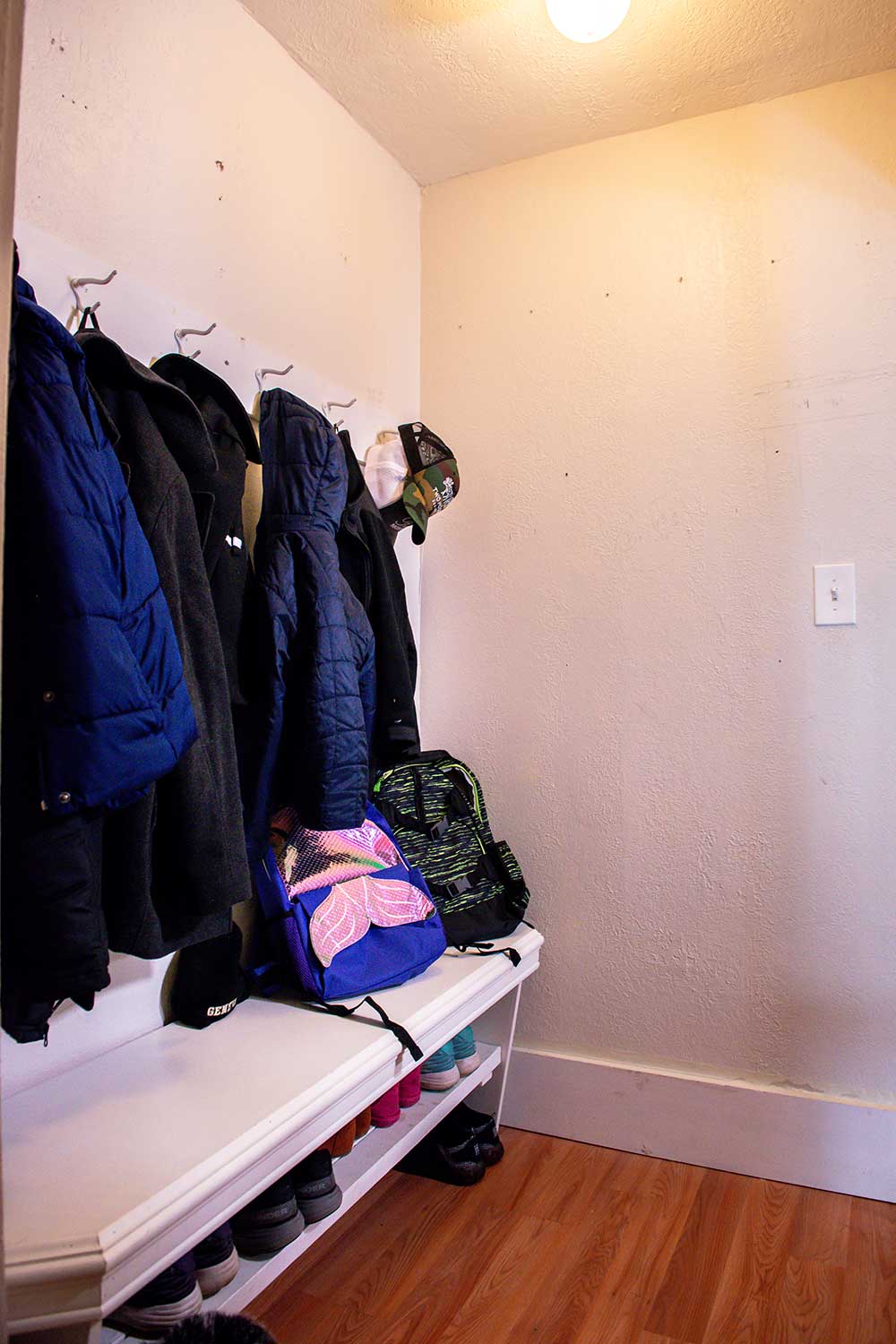
Day 1 was #demoday! I did my best Chip Gaines impression and just ran straight through the old wall. Noooo, I didn’t do that. After all, our living room wall was on the other side so I had to be pretty careful with the removal of the old plaster and lath boards. I even saved a bunch of the wood lath because I want to make something out of it to pay homage to the old mudroom. I had to remove the existing bench that held a lot of our shoes but just was a total eyesore. I removed old baseboard and trim around the door, did A LOT of cleaning, and began to prep for building the new mudroom from the studs up. Here’s what it used to look like.
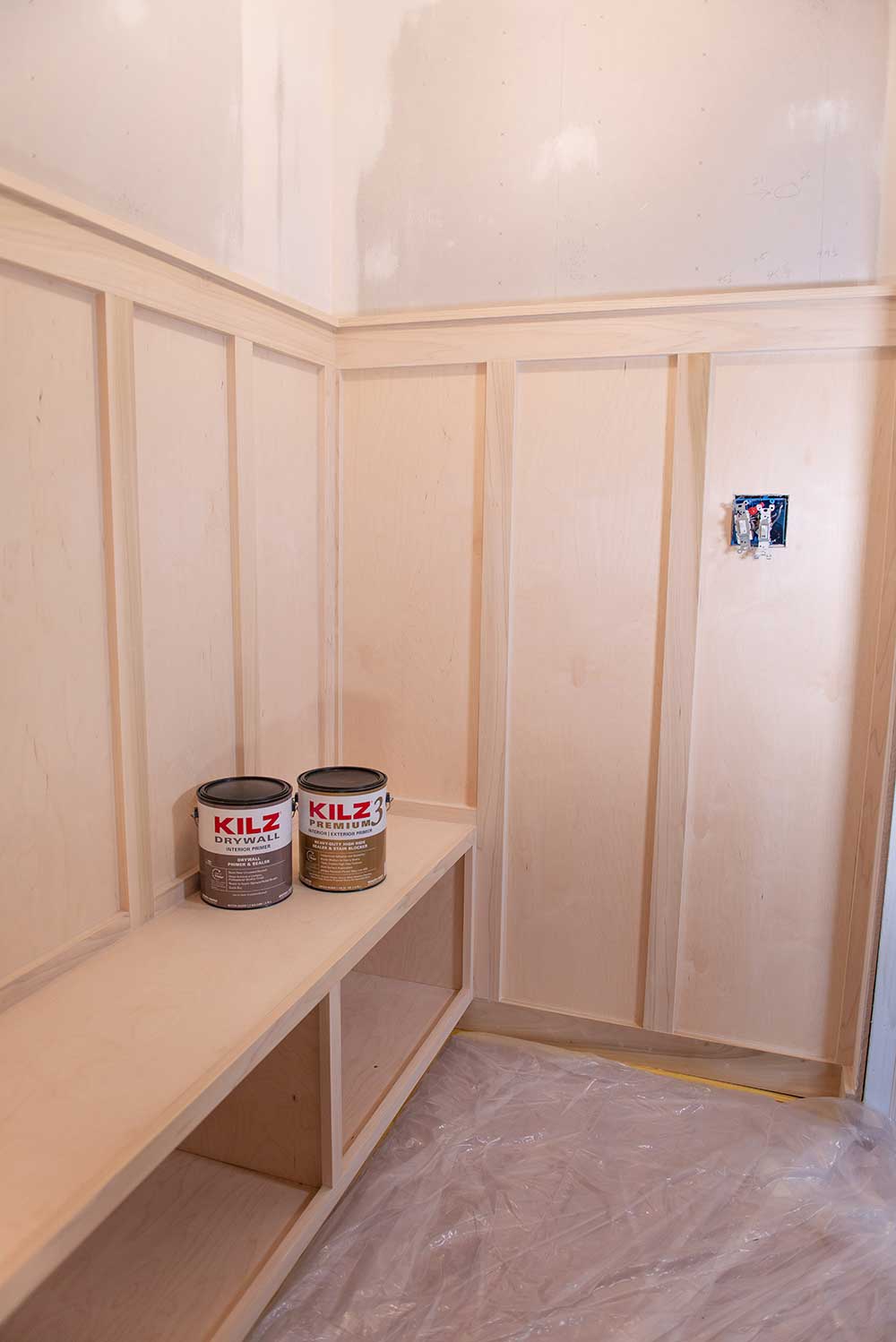
After the new drywall was in, I installed my newly built bench and gave the walls an aesthetic facelift by adding board & batten. An important step to remember when doing any sort of DIY house project with wood, whether it is trim or moldings, is that you are going to need a quality acrylic based caulking to fill in any seams before you prime. Careful when selecting one – most are silicone based, which primer won’t adhere to as well. And just one more hot tip here even though this is not a blog post about caulk but I care about your sanity so I gotta say it: don’t go wild and cut a large opening for the caulk to come out of. The smaller the opening, the easier it will be to lay a nice bead of caulk down with a smoother finish. One less thing to worry about.
When it was time to prime, I felt like I could finally relax. I’m telling you, using a brand like KILZ is like lounging into your favorite spot on the couch… it just feels right. Yes, this is the homestretch of your project if you’re looking into paints and primers. But make no mistake, you need to finish strong! Laying a solid foundation for your paint is of the utmost importance. And I can’t stress this enough…. Take the time to prep your space properly by laying down some inexpensive plastic drop sheets and using a quality painter’s tape to protect trim, baseboards, or whatever is nearby that you don’t want to get paint on. It – takes – time. It’s not fun! But your paint job will be better because of it and you’ll be happier in the long run.
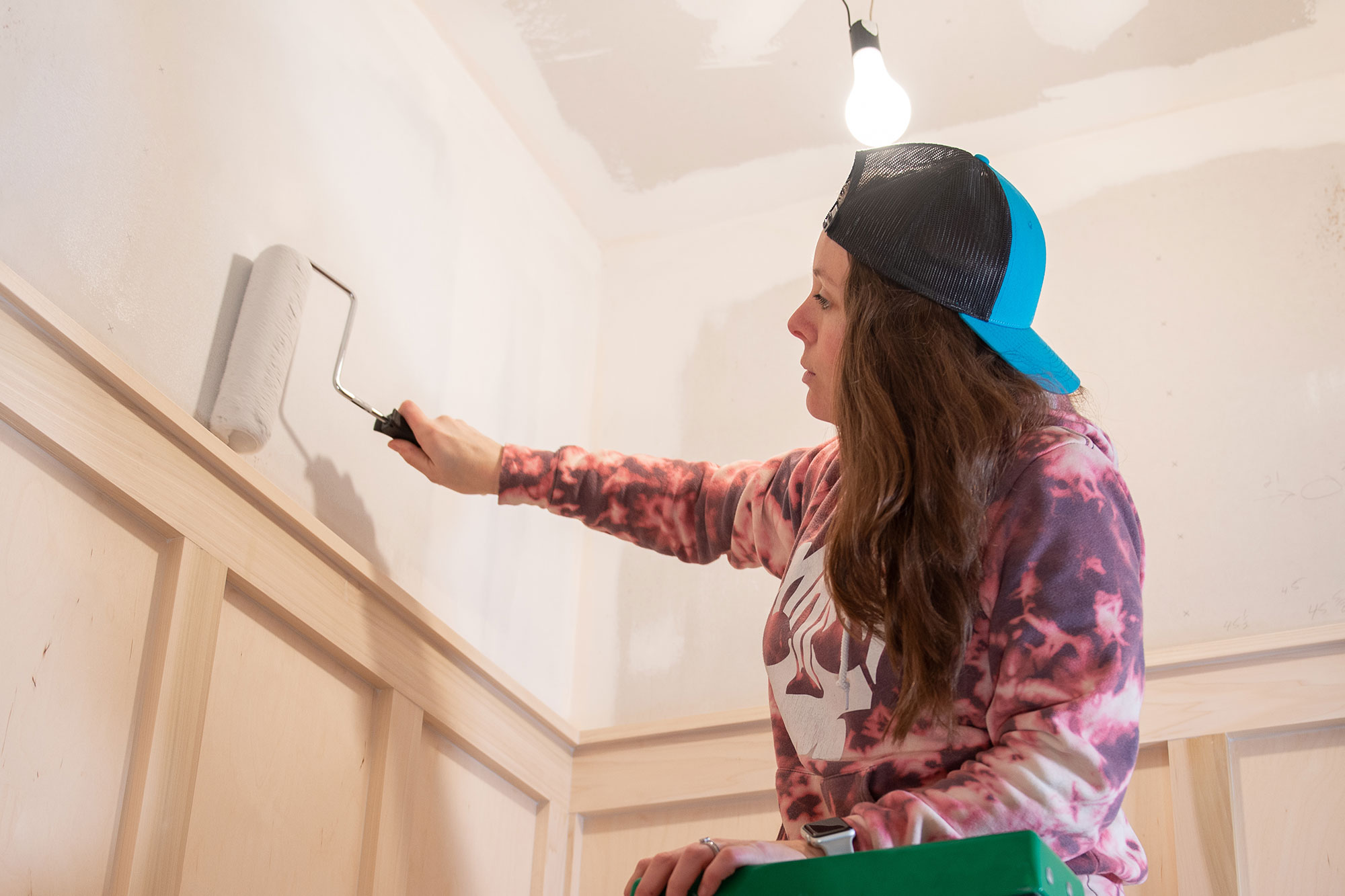
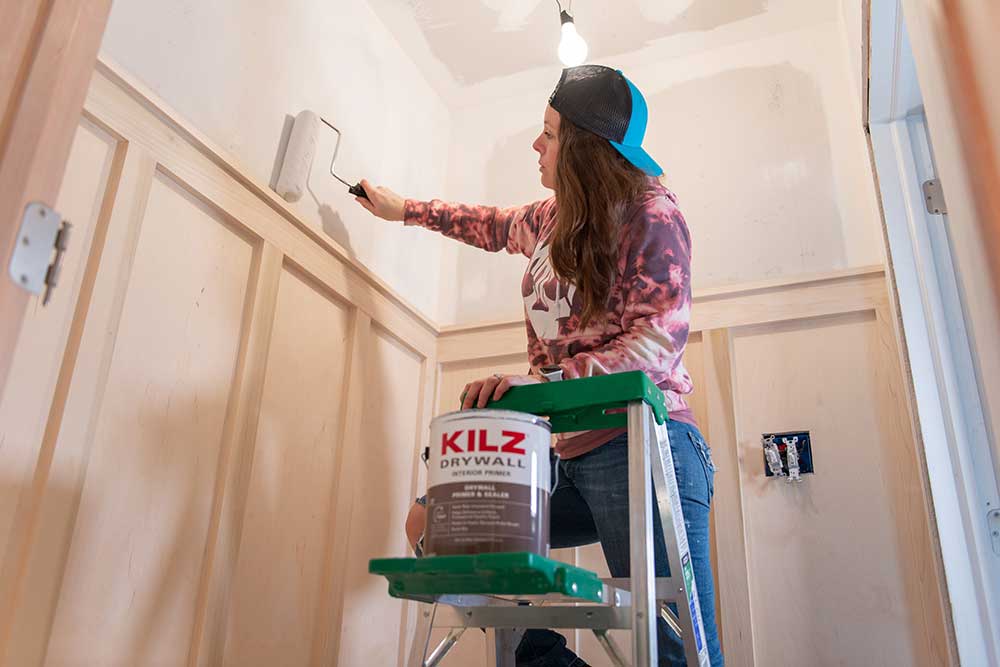
Have you ever used drywall primer before? Just a heads up, it is going to be thicker than you might expect it to be. I will say though, I have worked with thicker primers/paints and they have been somewhat unpleasant to work with because they are too thick and therefor difficult to roll on. I thought the viscosity of KILZ Drywall was just right and it was my first time using that specific primer so I was pleasantly surprised to see how quickly it coated the fresh drywall. I did two coats with fantastic coverage and that’s impressive for brand new drywall that tends to absorb the primer. And if you are wondering if your roller matters…. It does. I’ll let you know in the Q & A at the end!
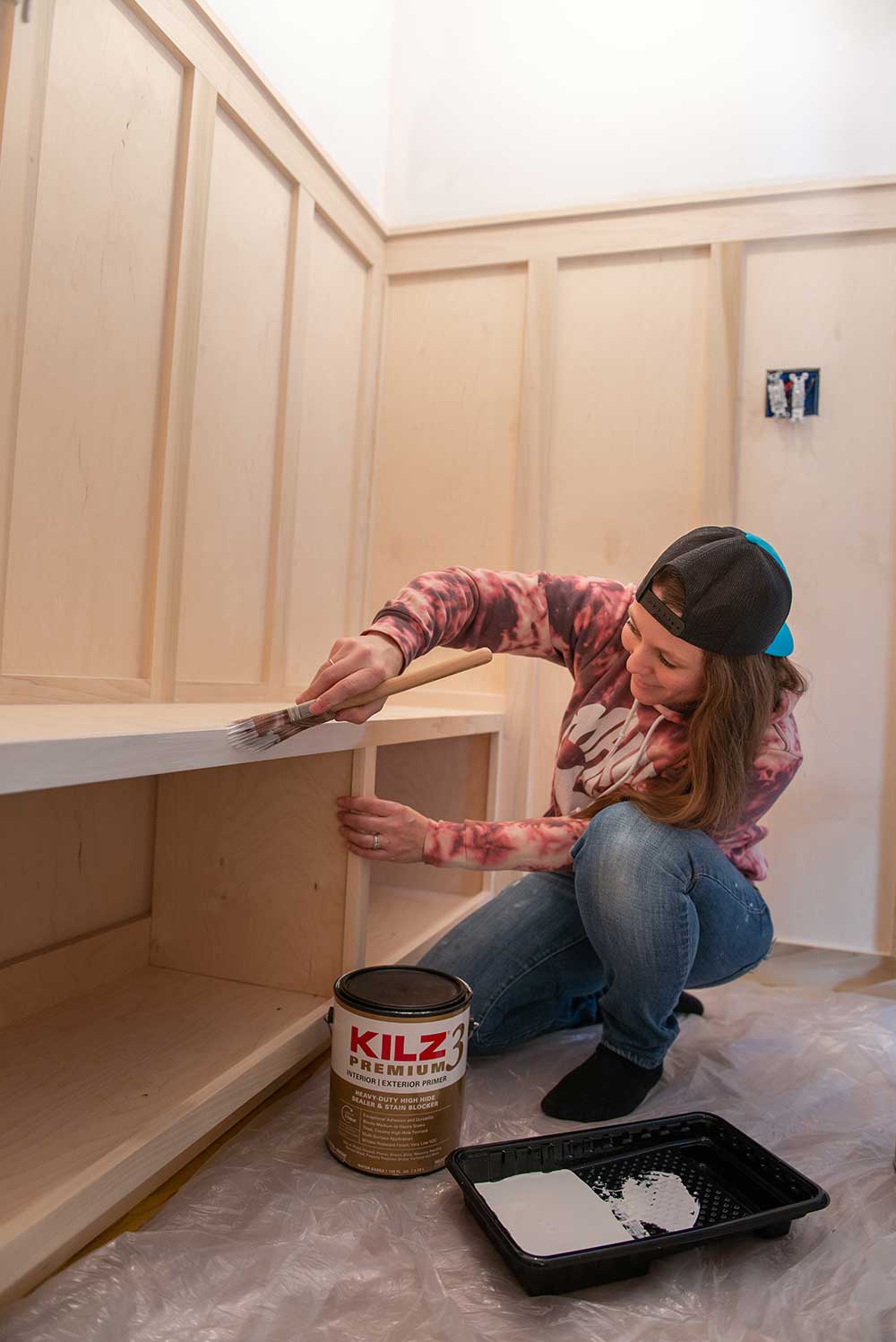
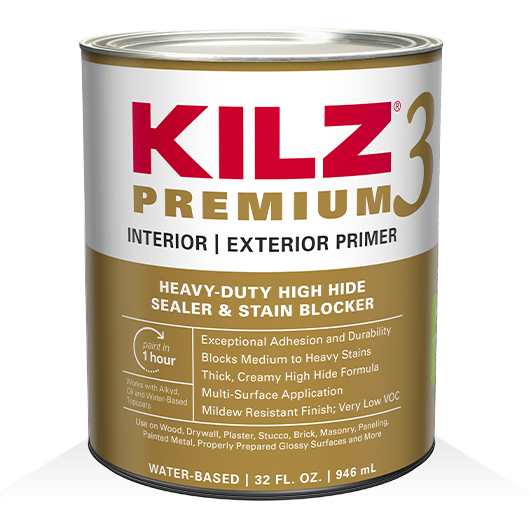
After the drywall got its first coat on, I grabbed KILZ 3® Premium primer and went to work beginning to prime the face frame of the new bench. A great primer like KILZ 3 Premium can make your DIY project a successful one, especially if you are using a knotty wood like pine. Knots in pine can release resins over time that can actually penetrate a layer of paint and leave you with an unattractive yellowish stain if you don’t use a sealing primer like KILZ to lay a proper foundation for your paint.
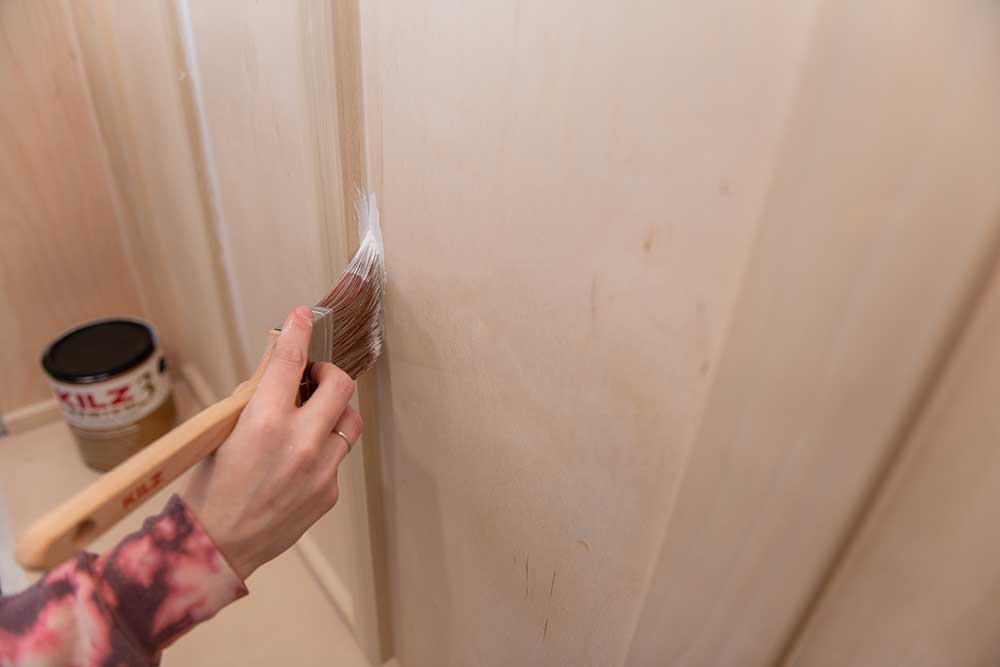
My next goal was to “trim out” the board & batten. This is when you use a brush to get into the corners and tighter spaces that a roller won’t reach. I like to trim out a few spots and then use my roller to fill in and slightly overlap where the brush left off. If you can manage to get the rolling going while the part you trimmed out is still wet, they will blend more seamlessly than it would if the brushed-on paint dries before you have a chance to roll the rest.
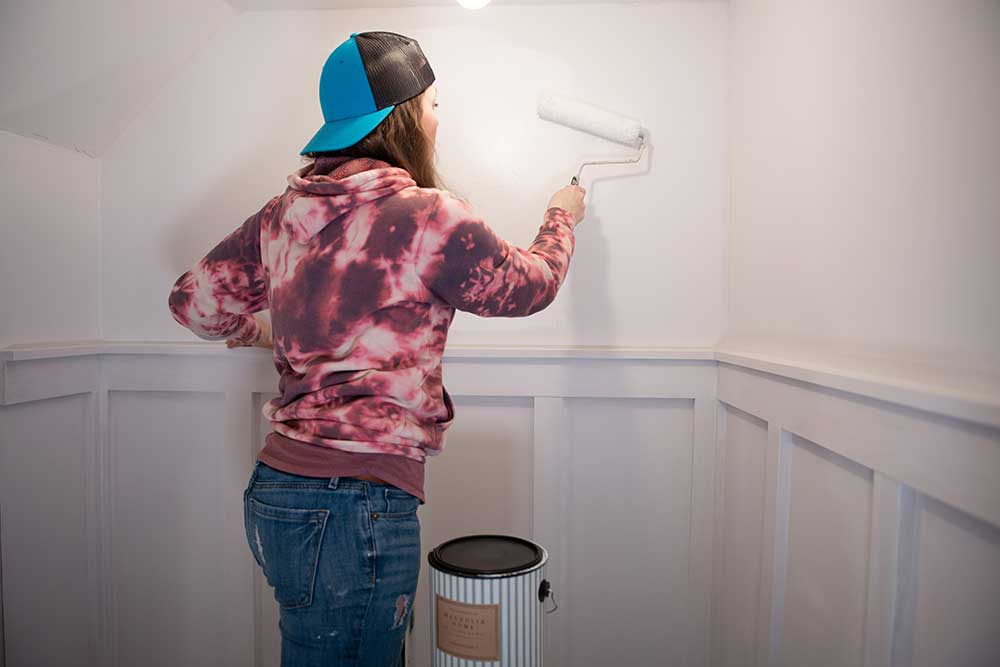
The primers both dried very quickly and allowed me to get to painting in just over an hour from when I applied the primer! It was incredibly helpful to be able to start AND finish priming and painting this room in a single day. I made sure to roll on the True White paint on the drywall first so that any accidental splatters would land on a primed bench below rather than a freshly painted one. If you don’t know this trick yet, you can always stick your roller in a bag or wrap it in foil and then put it in your refrigerator to keep the paint from drying if you need to take a short break.
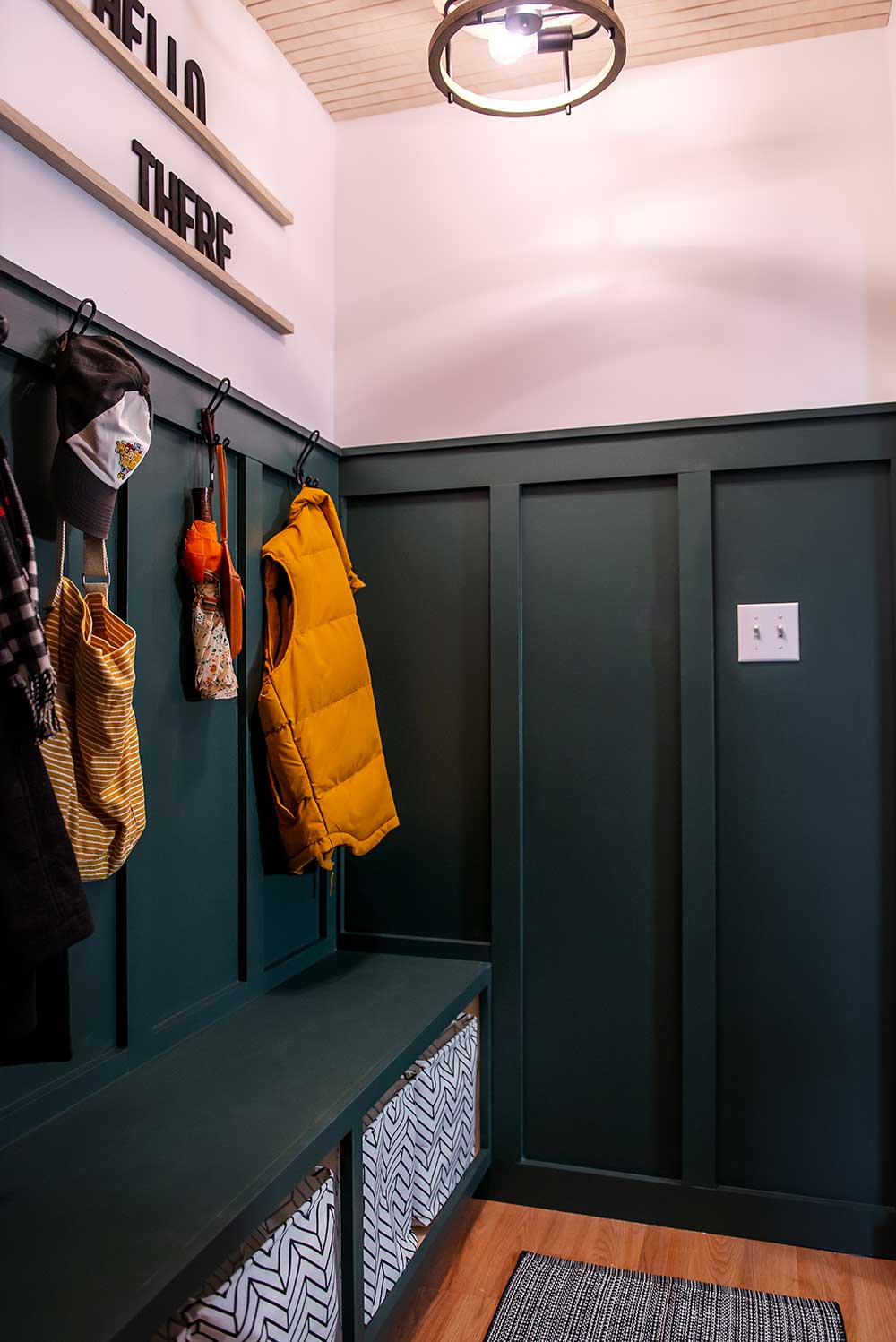
In three weeks, I had completely demolished the old room, rebuilt it, and given it new purpose. Instead of a messy drop-spot for our coats and shoes, my mudroom was transforming into a transition place. It was time to begin painting and I was growing more excited by the minute seeing my vision come to life. I had seen the new 1905 Green color from the Magnolia Home by Joanna Gaines® paint line and knew I had to have it for the board and batten and everything below it. All the things! I was gonna paint the town… green.
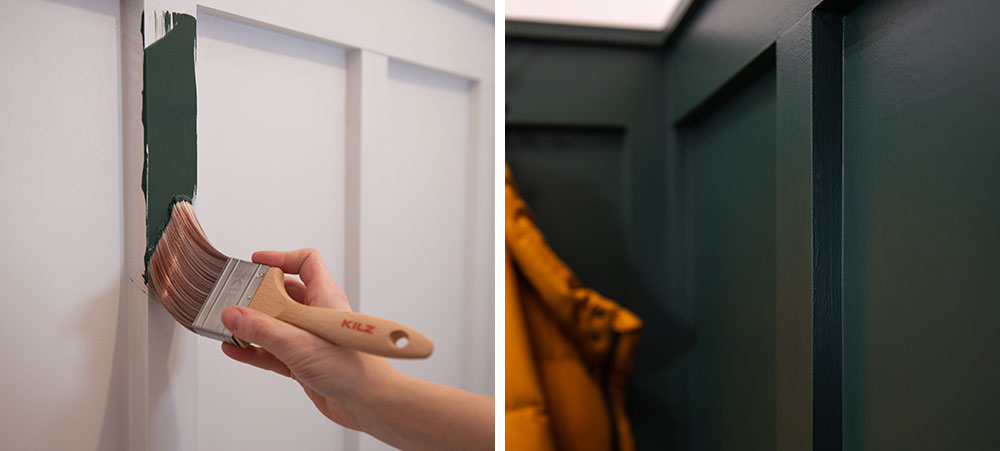
You see, when you take the time to properly prepare and design a space, you can redefine it. A mudroom can be more than just the designated place to kick off shoes and hang jackets – I believe it can be the room that shifts your mindset upon coming home Returning home to our old mudroom made me irritable because it was often cluttered and wasn’t my style. My new mudroom with freshly painted walls and customized to my liking all the sudden feels like a room with purpose. I don’t know about you but when I come home to clutter, my mindset tends to immediately be more on the negative side. It’s incredible what paint & primer can do to transform a space, and ultimately, your mindset.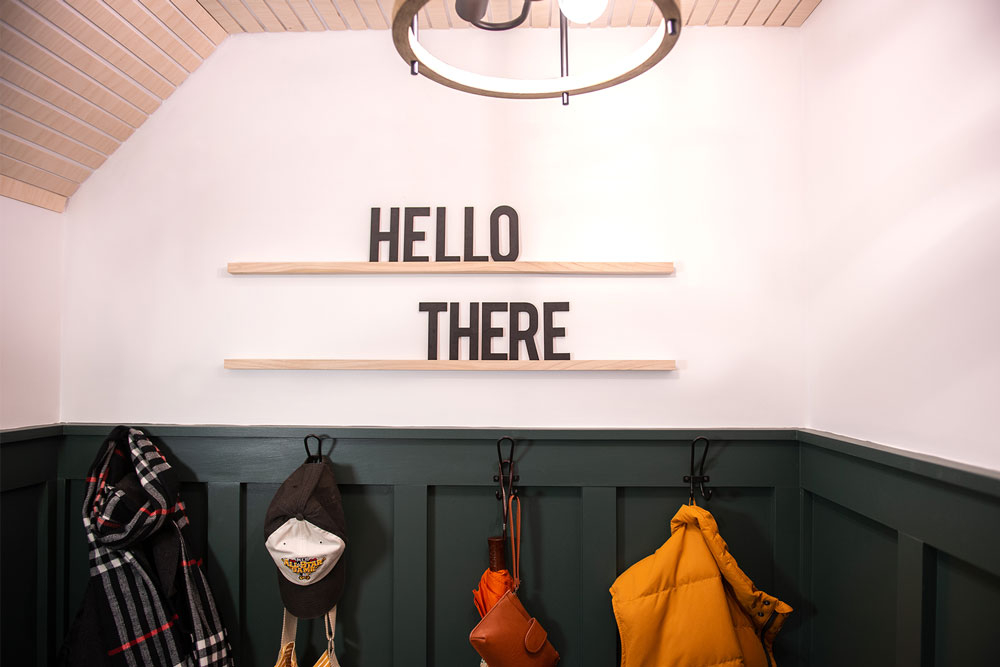
Quick Tips from Christy:
Q: I thought primer was just to cover up dark paint colors before painting with a new, lighter color. Do I really have to prime?
A: Yes. You do. Primers lay a foundation that is multi-purpose. Primer is not just to make the aesthetics of your paint more pleasing. Although this is true, you should primarily view primer as a sealant.
Q: A sealant?
A: Yep, something that seals another material like drywall or wood. KILZ brand primers come in a variety of types to serve specific substrates. For me, I needed a primer specific to coating new drywall. Drywall has zero protection against moisture and, in fact, is engineered in such a way that can actually make it pretty susceptible to attracting water. Priming with KILZ Drywall primer is going to protect your drywall from moisture. If we’re talking about wood, using KILZ 3 Premium can seal in tannins and resins that are naturally found in wood to lock them in so that they don’t bleed through your topcoat.
Q: Why is the moisture such a big deal?
A: Materials like drywall & wood are porous in nature. This literally means that if not sealed properly, they can take on water. What’s the big deal, you ask? Sometimes this is a really sneaky amount of water that you have no idea is accumulating in a space. Over time, water can grow mold… and I’m a nurse too so I’ll try not to bore you with the health implications here but mold can be extremely dangerous for people with breathing conditions like asthma.
Q: Does roller type/nap matter?
A: Yes, it does, and I’m not the type of person to buy the insurance plan for my cell phone if that gives you any indication on whether or not you can trust me when I say this: roller quality is real and you need to spend the couple extra bucks for the higher quality roller. A ½” nap will work in most interior painting applications.
Q: What’s one benefit of priming with KILZ that most people don’t think of?
A: A layer of primer beneath paint actually makes your topcoat more durable! With a young family, my walls see a lot of action. Sports bags get chucked at them, shoes get kicked off, and lots and lots of hands touch the walls. Durability is something that my paint needs to have!
Alright, there ya have it. Hope this was empowering, entertaining, or educational for you! Please reach out to me on Instagram at @oakhillmillworks with any other questions you might have. I’ll always do my best to help.
Christy
Always remember to refer to our website kilz.com or product back labels for additional information on which primer is right for your project and detailed instructions on how to apply our products.
RELATED ARTICLES
get inspired:
FOLLOw us:
@kilzbrand
SHOP

PRODUCTS

Ask the Pro: Misconceptions About Primer and How Many Coats of Primer To Use
February 12, 2021
Here on The Perfect Finish, we’ve shared what primer can do for your paint job, tips on choosing the right primer for your project and step-by-step instructions on how to prime various surfaces. In this post, we’re excited to turn the tables and talk about what primer is not – debunking seven common misconceptions about primer.
To discuss these often-believed myths and misunderstandings about primer, we sat down with John Golamco – Product Manager, Primers at KILZ. A member of the KILZ team for over six years, John is a true expert on all things primer and has a wealth of knowledge to share. Ready to learn more? Let’s get rolling!
Misconception #1: Primer is just paint without color in it.
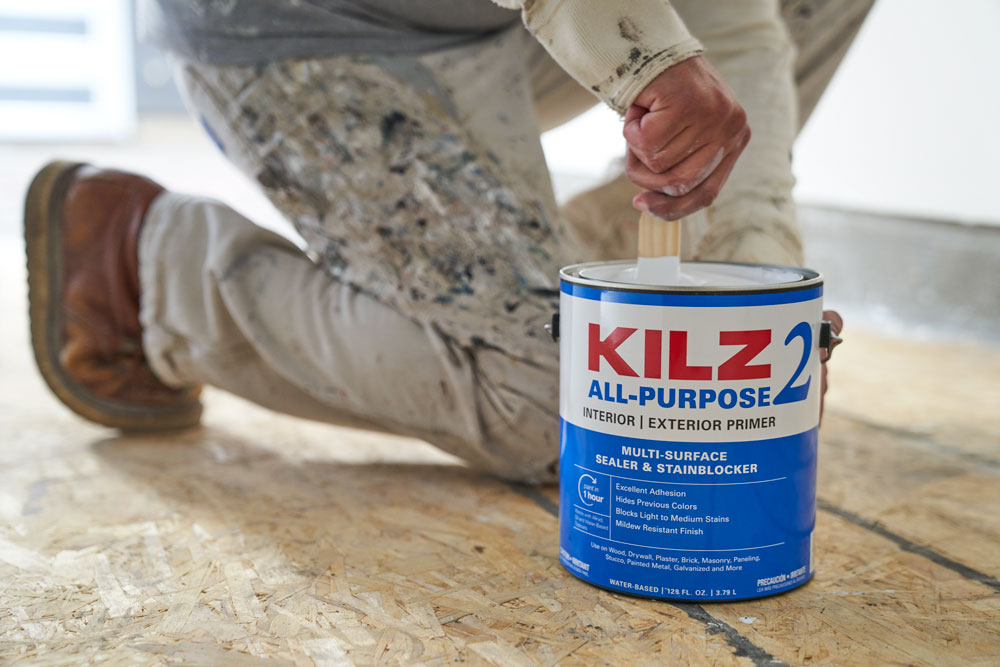
Although both primer and paint are classified as “architectural coatings” they are not the same. The formula of paint is different from the formula for primer. Paint is formulated to deliver color while primer is formulated to stick, better protect the surface, and in some cases block stains.
Misconception #2: Priming before painting takes too much time and won’t have a considerable effect my paint job.
Applying primer is indeed an additional step in the painting process but, depending on the surface condition and problem areas that might be present, investing in the primer step might actually save time and money. Applying primer to solve the problem (for example uneven, porous surfaces, strong colors or stains that might bleed through the paint, or adhesion issues that might cause peeling of the paint) before applying paint may prevent the need to re-paint or add several more coats of paint to get desired results.
Misconception #3: If I use primer over a stain and I can still see the stain through the coat of primer, the primer didn’t work.
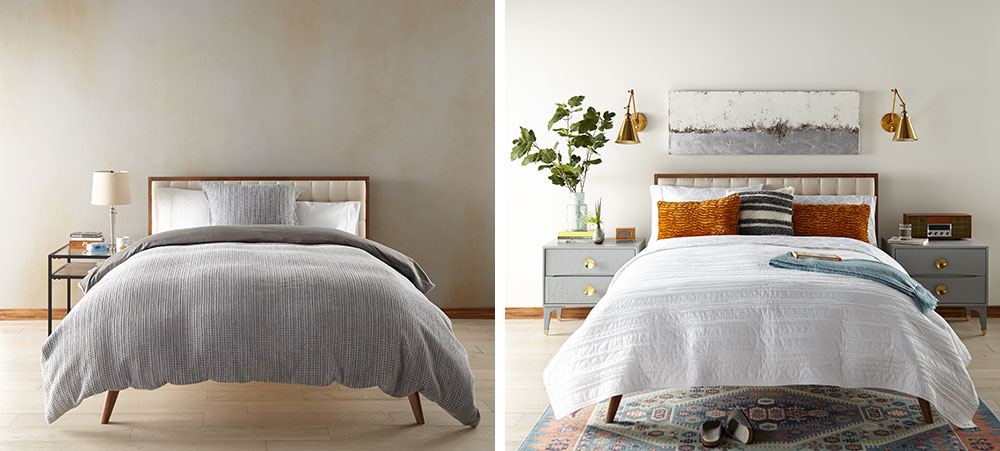
This is a quite common misconception about primer. A primer coat or coats is not meant to look like the finished topcoat paint. Primer is supposed to work underneath the paint to create a uniform surface, hiding strong or bright colors, block stains that might bleed through or show through the paint and enhance the paint’s ability to stick to the surface better and last longer. So even if the primer coat does not look like a fully painted wall, it will still perform the above functions. Then it is the paint’s job to completely cover the surface, deliver the color and look great.
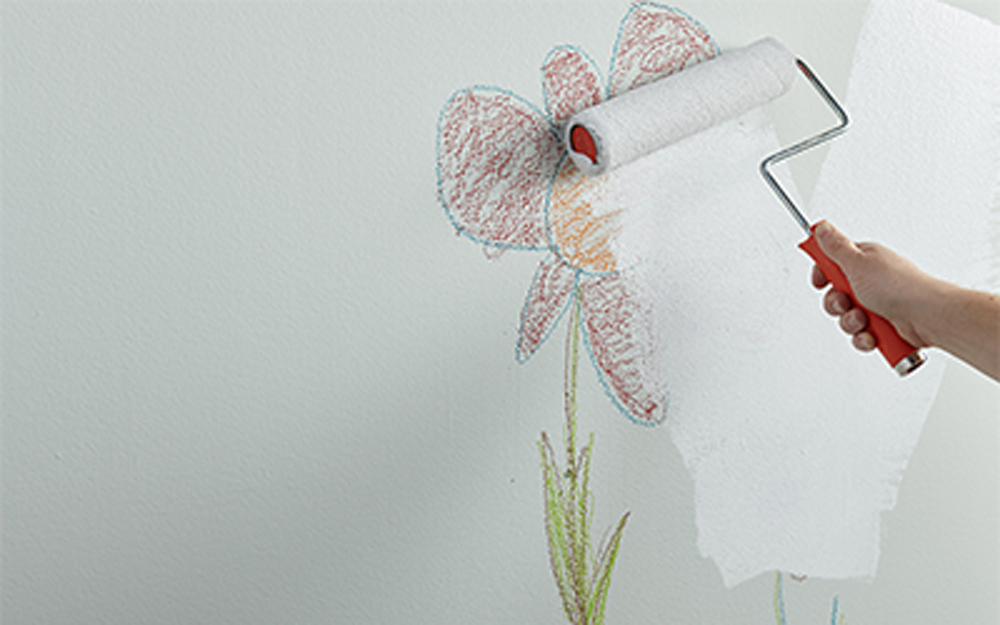
Misconception #4: Primer is only for the walls.
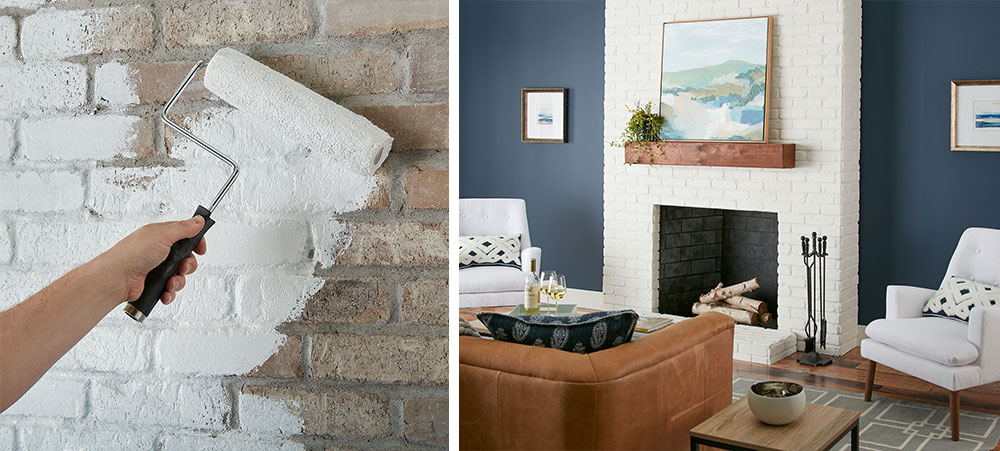
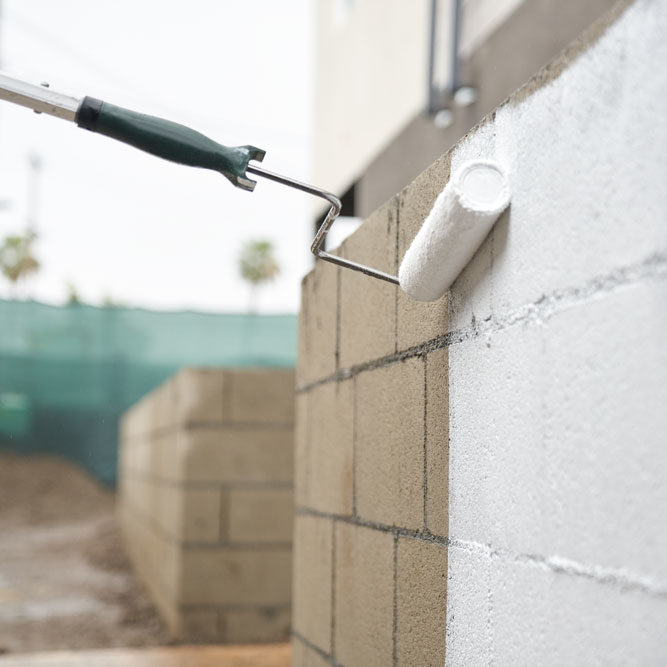
Primer is mainly applied to walls, but it is not only used for that surface. It can also be used on other vertical surfaces like wood paneling, brick or stone fireplaces or other masonry. Some types of primers are also designed to apply to horizontal surfaces like furniture, windowsills, floors and countertops. It depends on the type of primer and where it is designed to be used for – always read the label and follow label instructions.
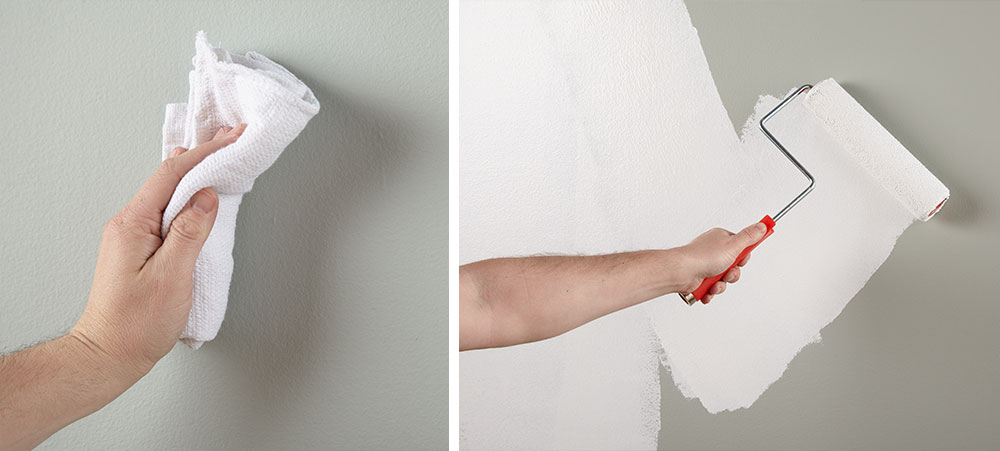
Misconception #5: I’m using primer, I don’t need to clean the surface first.
It is always important to properly prepare the surface before applying primer. At the very least, the surface has to be clean and free of dust, dirt and debris. Failing to clean the surface prior to applying primer may compromise the adhesion of the primer to the surface – which could lead to peeling and blistering.
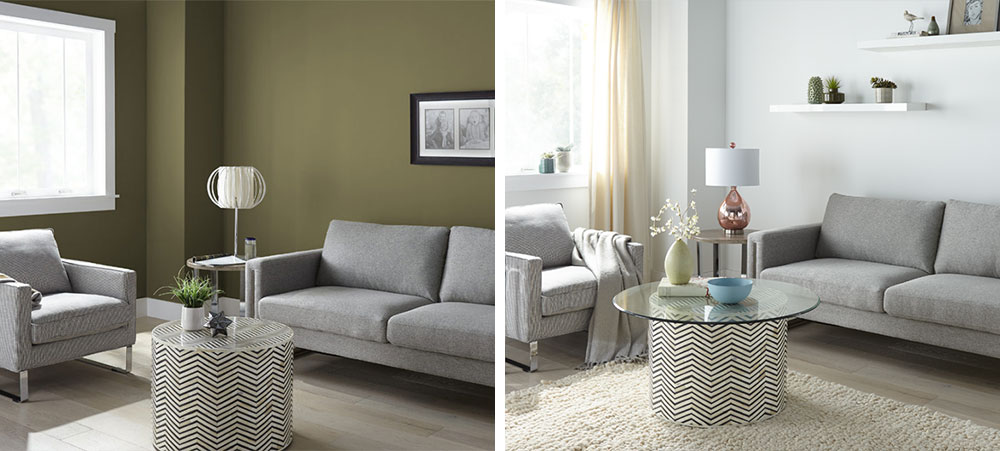
Misconception #6: I need to add multiple coats of primer if I can still see my previous color.
Depending on how strong or bold the previous color is, it may be necessary to apply more than one coat of primer. However, it is not necessary to over apply the primer with so many coats. As long as the primer applies uniformly over the previous color, then one or two coats should be sufficient. Again, it is not necessary to apply several coats of primer to try to get a perfect white finish. That is the job of the topcoat (paint) which has to be applied on top of the primer.
Misconception #7: I don’t need to prime when painting outside.
Priming outside is just as important, if not more important, than priming inside. Exterior surfaces are typically exposed to the elements and are subject to expansion (from heat) and contraction (from cold). This and the exposure to wind, rain, snow and even dust, dirt, pollution, sunlight (UV) may cause the paint to fail due to lack of adhesion to the surface. Using an exterior primer first on a properly prepared surface can make a big difference to whether the paint lasts or potentially cracks, peels or blisters after a short period of time.
Always remember to refer to our website kilz.com or product back labels for additional information on which primer is right for your project and detailed instructions on how to apply our products.
RELATED ARTICLES
get inspired:
FOLLOw us:
@kilzbrand
SHOP
PRODUCTS
Primer Tips for Odor-Sensitive Spaces
September 29, 2020If you’re a regular reader of the KILZ blog or a seasoned DIY-er, you understand the importance of priming before painting for most all project types. Here on The Perfect Finish we’ve covered primer tips for kitchens, bathrooms, living rooms, and even the outdoors! But there are a few spaces in the home that might be sensitive to solvent odors, and for those we recommend using KILZ Original Low Odor Interior Primer.
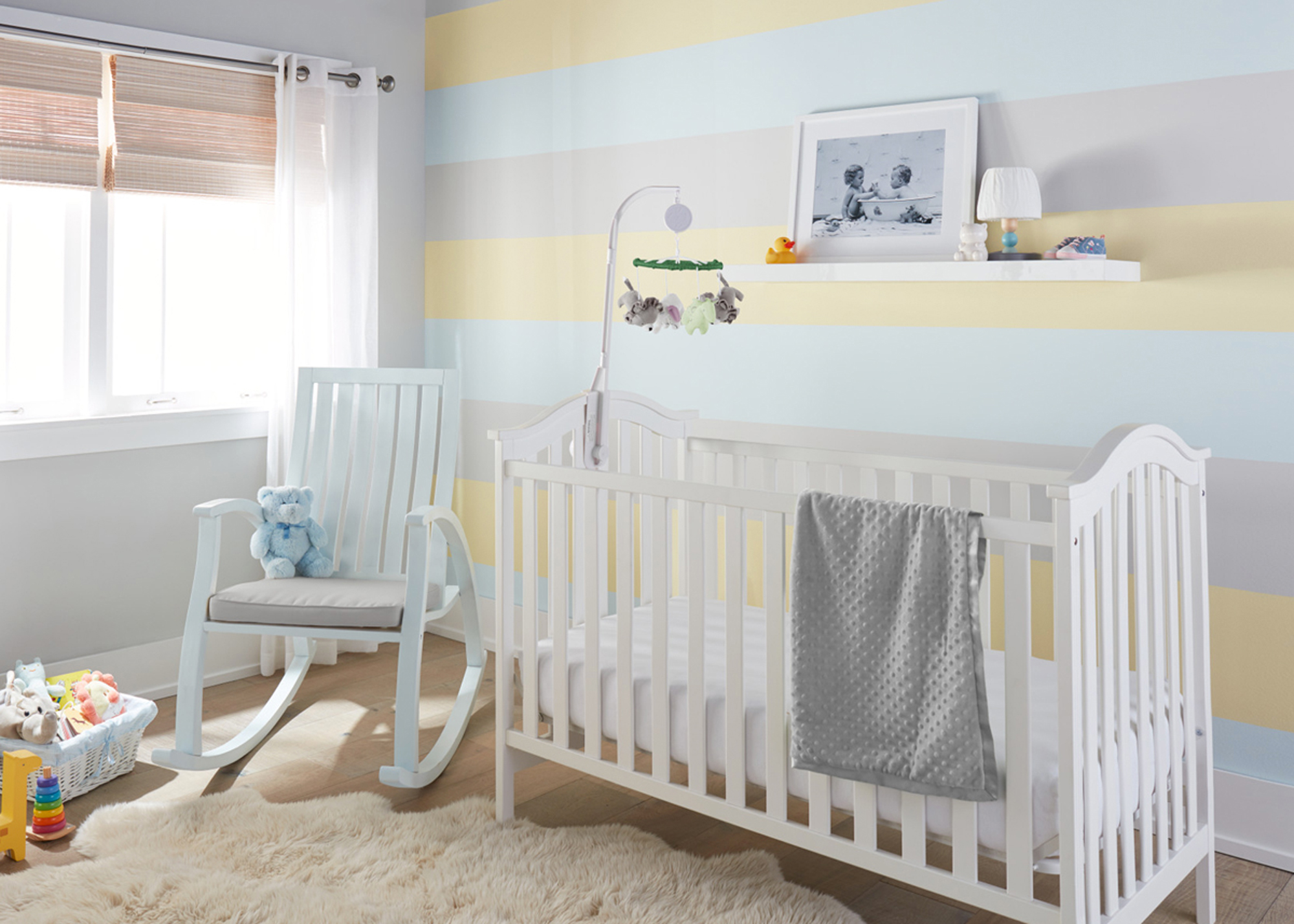
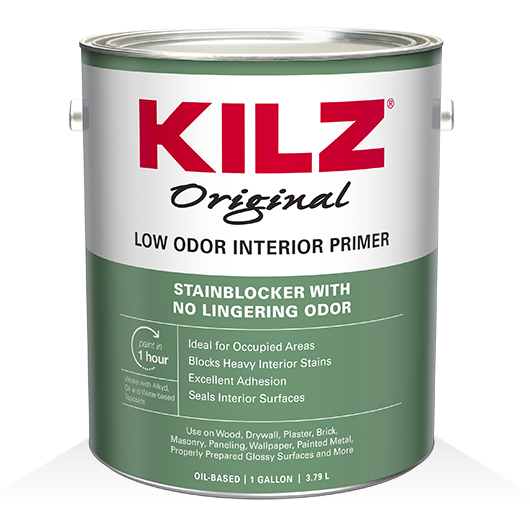
For use on interior spaces, KILZ Original Low Odor primer is an oil-based sealer, adhesion promoter and stain blocker with less odor than typical oil-based primers. Available in both liquid and aerosol form, KILZ Original Low Odor Interior Primer features fast odor dissipation technology which means no lingering odor†. Consider using KILZ Original Low Odor in spaces sensitive to solvent odors including children’s rooms, offices and small dining rooms.
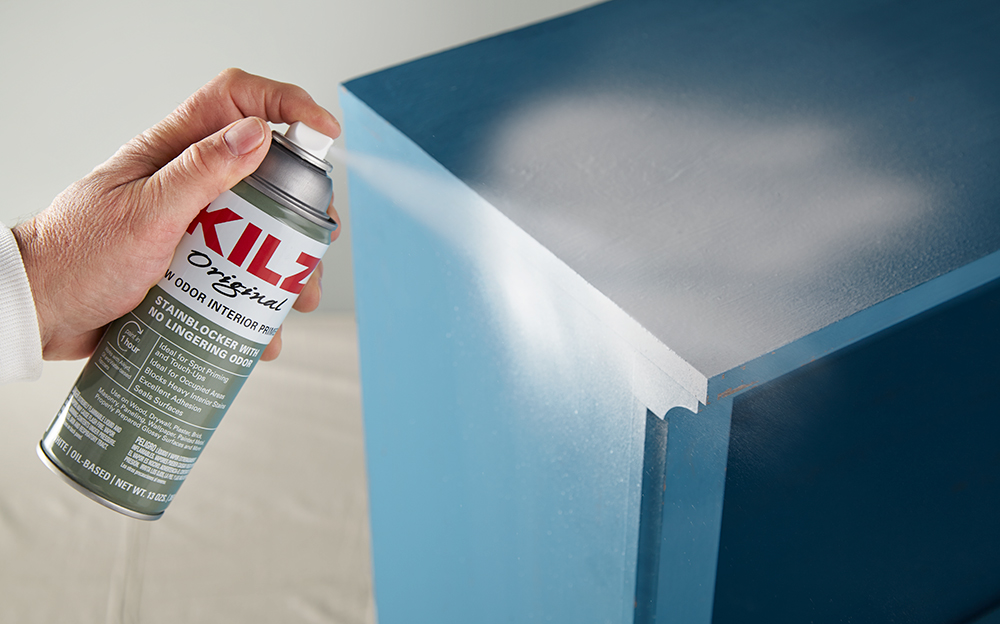
The convenient aerosol formula of KILZ Original Low Odor Interior Primer is ideal for small paint projects like furniture upcycling and can also be used for spot priming and touching up interior surfaces. The liquid formulation can be used on most interior surfaces including wood, plaster, drywall, brick, masonry and properly prepared glossy surfaces.
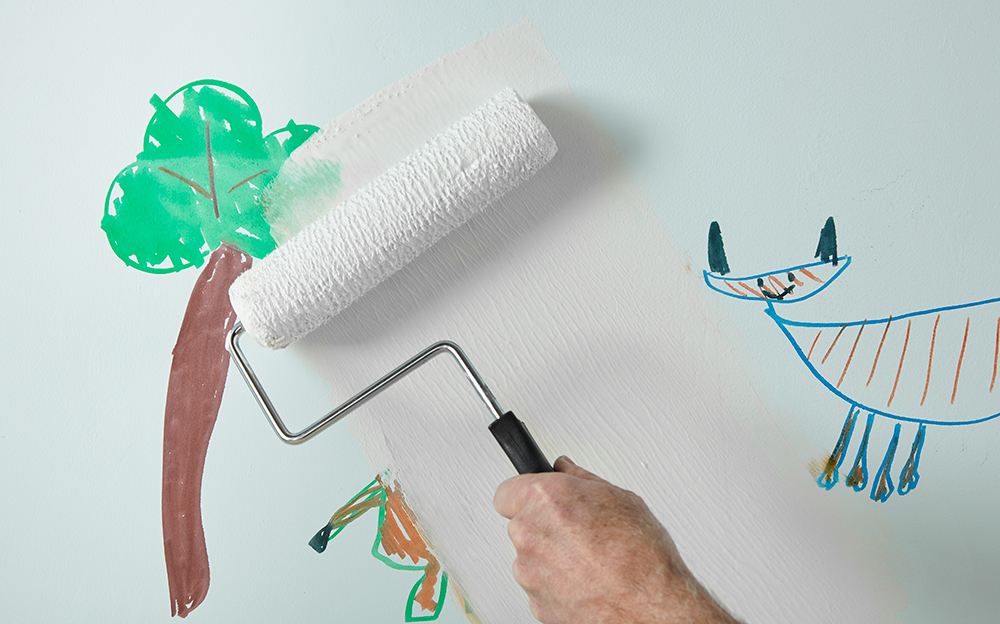
Depending on the type of paint used for your top coat and the ventilation of your space, it is recommended when painting children’s rooms to wait 2-3 days before resuming use of the space.
Always remember to refer to our website kilz.com or product back labels for additional information on which primer is right for your project and detailed instructions on how to apply our products.
RELATED ARTICLES
get inspired:
FOLLOw us:
@kilzbrand
SHOP
PRODUCTS
Primers for Small Projects
August 19, 2020As we move into the start of fall, there is still ample to tackle painting projects you might not have gotten to during the summer months before the winter and holiday season begins. Small projects that, including furniture repainting or refreshing, can be completed in as little as a day or a weekend – but can still make a big difference in the look and feel of your space.
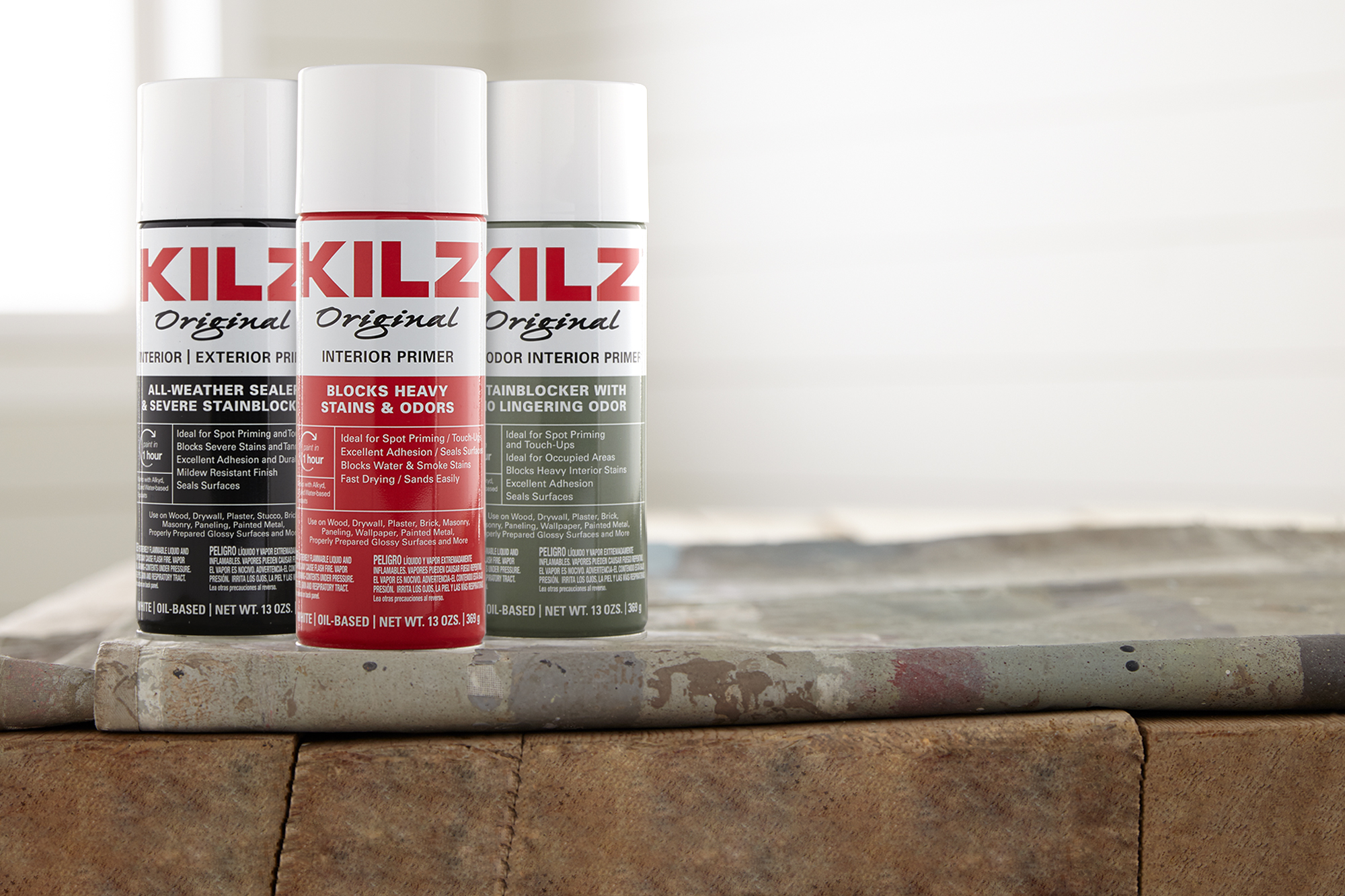
Do you need to prime when painting a small piece of furniture? Our answer is emphatically yes! But do you need entire gallon of primer to get the job done? Most likely the answer there is no. KILZ® Brand offers a family of hardworking primers suitable for all types of painting projects large and small, indoor and outdoor. Trusted by pros for over 40 years, KILZ® Original Interior Primer is available in a convenient aerosol formula, ideal for small painting projects and spot priming interior surfaces.
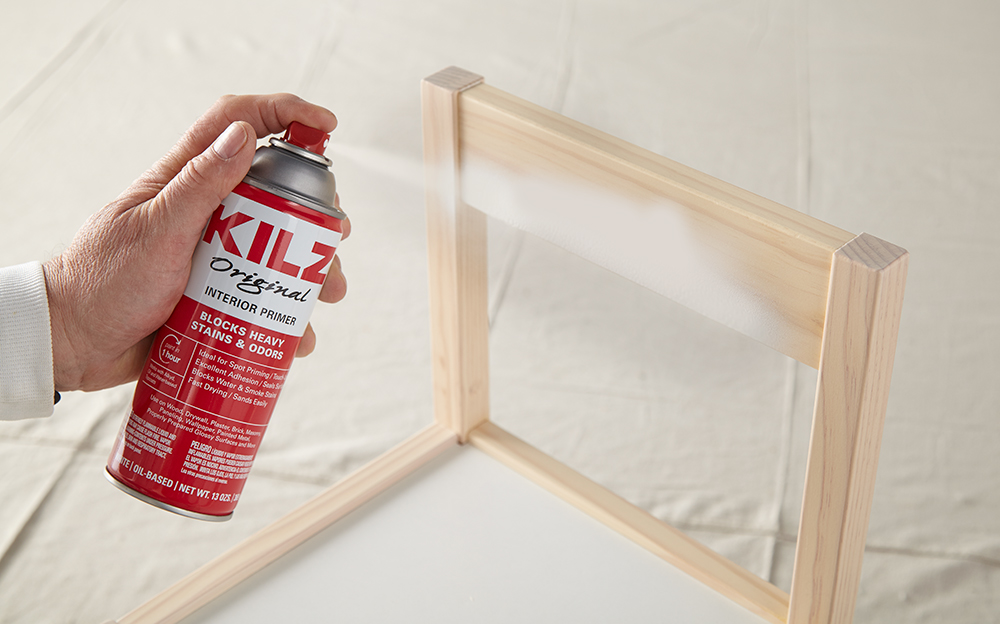
If you’ve never used an aerosol primer before, we have a few tips to get you started! Similar to priming a wall or set of cabinets, when using an aerosol primer you’ll want to be sure the surface is clean and free of dust. For glossy surfaces, we recommend scuff sanding the surface before priming to ensure maximum adhesion. When using an aerosol primer, wearing eye protection is advised, as well as covering adjacent areas to protect from any primer overspray. For best results, you’ll want to use the aerosol primer at room temperature.
Once your area and surface are prepped, shake the primer can vigorously for one minute after the mixing ball begins to rattle, and shake often during use. Hold the can upright, moving from side-to-side while spraying lightly and evenly about 12″ from area being painted. We recommend 2-3 thin coats to produce the best results. Dry time for most of our aerosol primers is about one hour, and then you’re ready to paint!
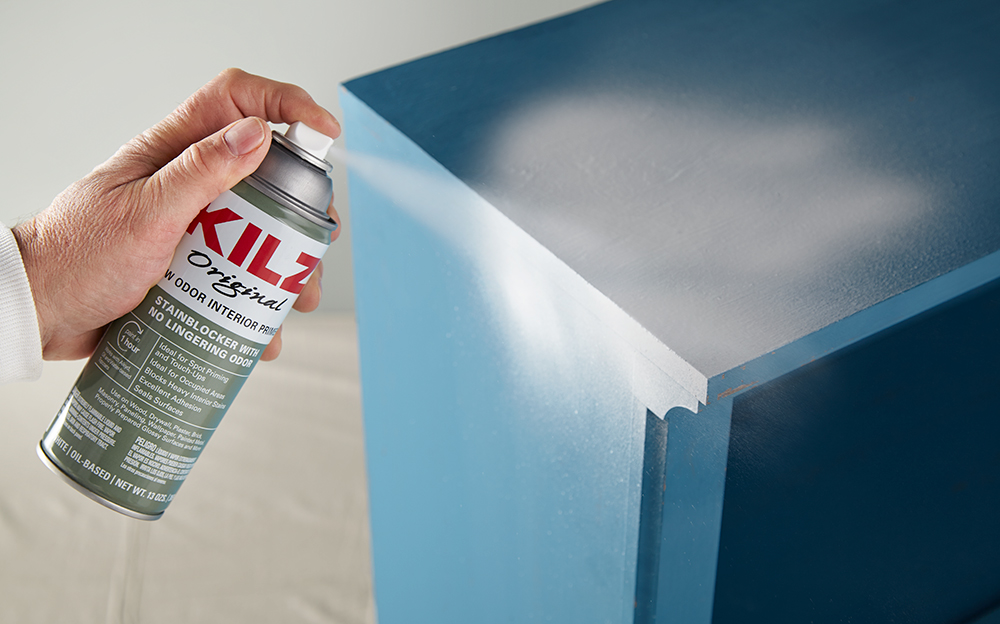
If you don’t want the odor of an aerosol primer, we suggest KILZ Original Low-Odor Interior Aerosol Primer. Formulated with the same stainblocking performance as KILZ Original, it features fast odor dissipation technology which means no lingering odor†. Ideal for use in dining areas, small apartments and other areas which are sensitive to high odor levels.
For furniture pieces that might be exposed to the elements on your porch or patio, KILZ Original Interior | Exterior Aerosol Primer is a great choice. We used this primer as the first step in repainting a thrift-store furniture find, meant to be used as an outdoor dining chair. Another reason to use aerosol primers is when covering intricate and detailed surfaces, like the back of this chair. Not only did the aerosol primer work to seal the surface, but it made priming the scalloped details a breeze!
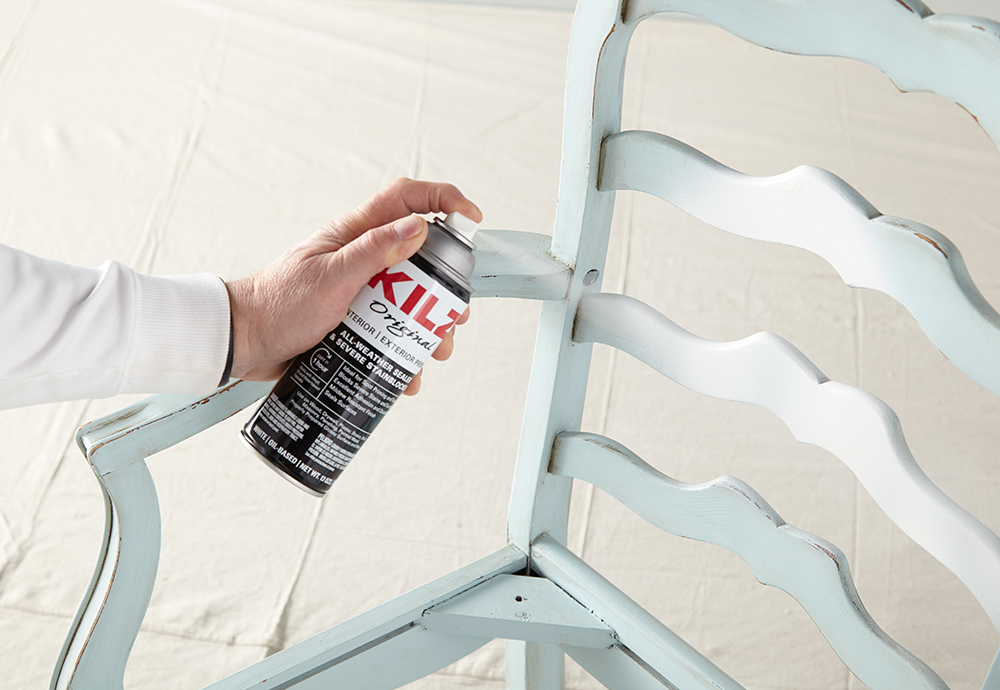
Looking for more small project priming and painting tips? Check out our recent post on using KILZ Chalk Style paint to upcycle furniture.
Always remember to refer to our website kilz.com or product back labels for additional information on which primer is right for your project and detailed instructions on how to apply our products.
RELATED ARTICLES
get inspired:
FOLLOw us:
@kilzbrand
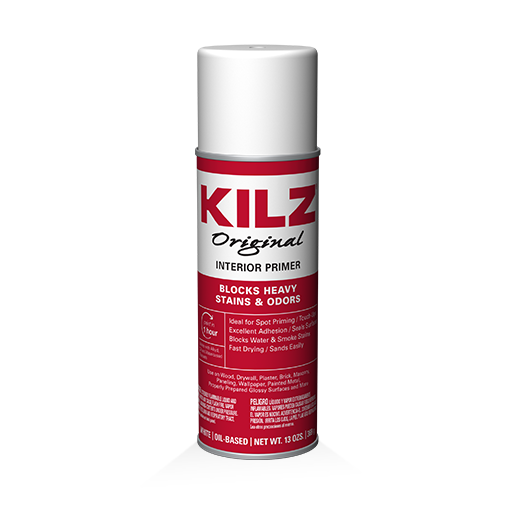
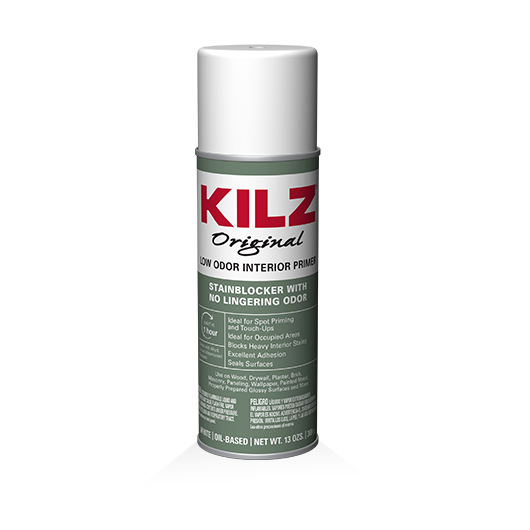
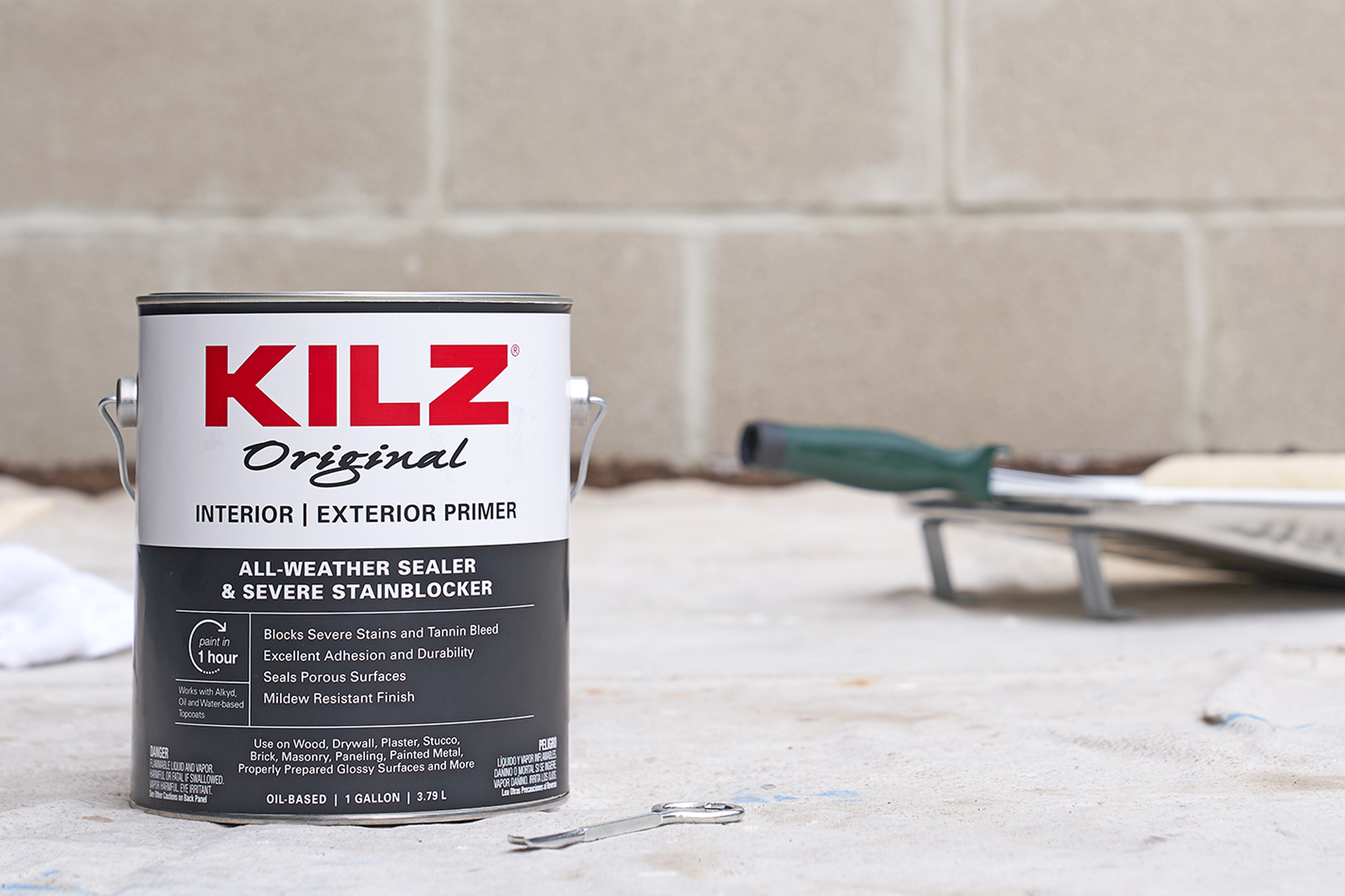
Three Primers for Exterior Projects
August 11, 2020Priming before painting is an important step for nearly every painting project, and we’ve covered quite a few different project types here on The Perfect Finish – including priming when changing wall colors, priming before painting kitchen cabinets, and even priming in moisture prone rooms in your home. Now in the heat of summer, it’s time to talk about an area of the home we haven’t often covered – the outside!
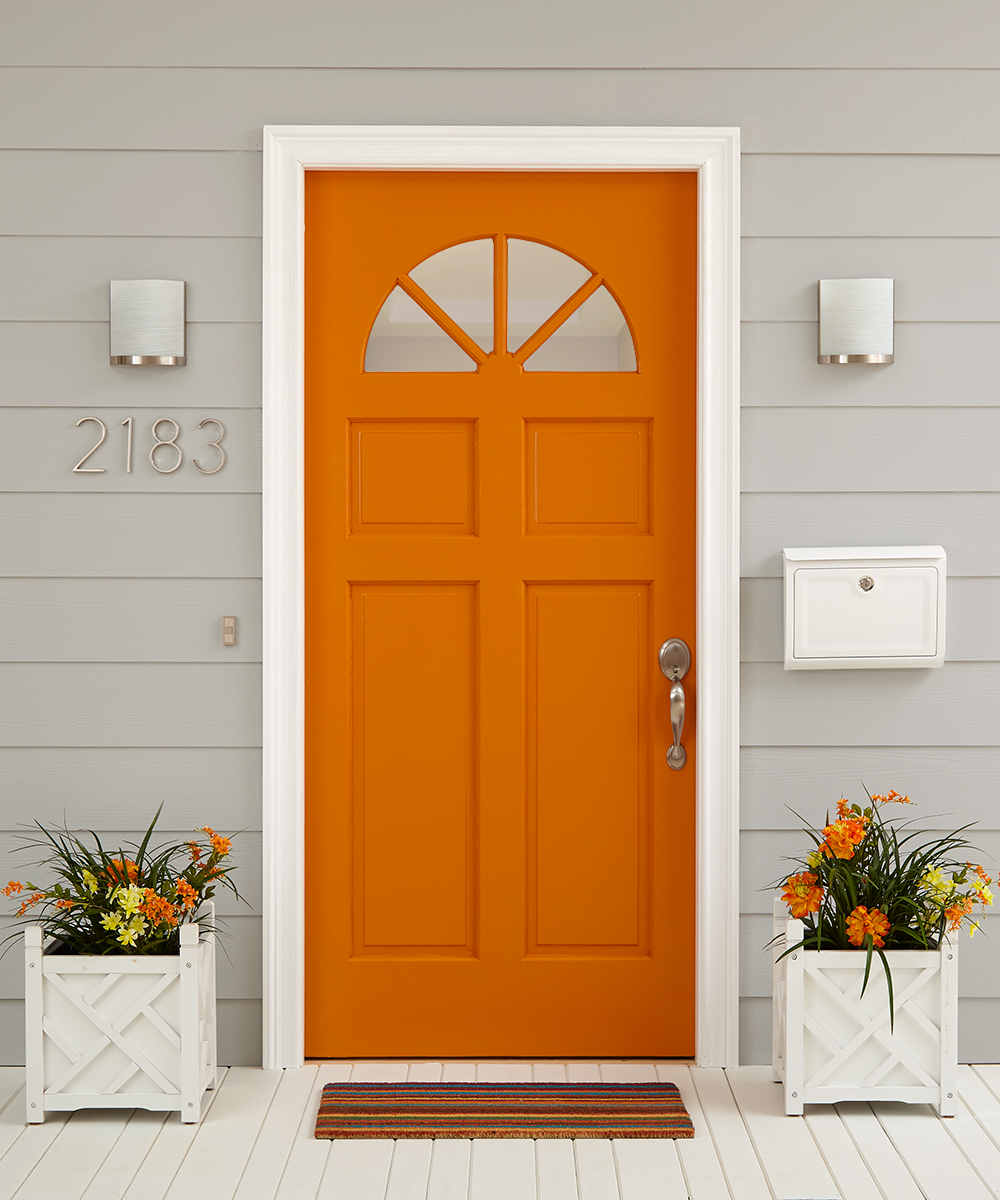
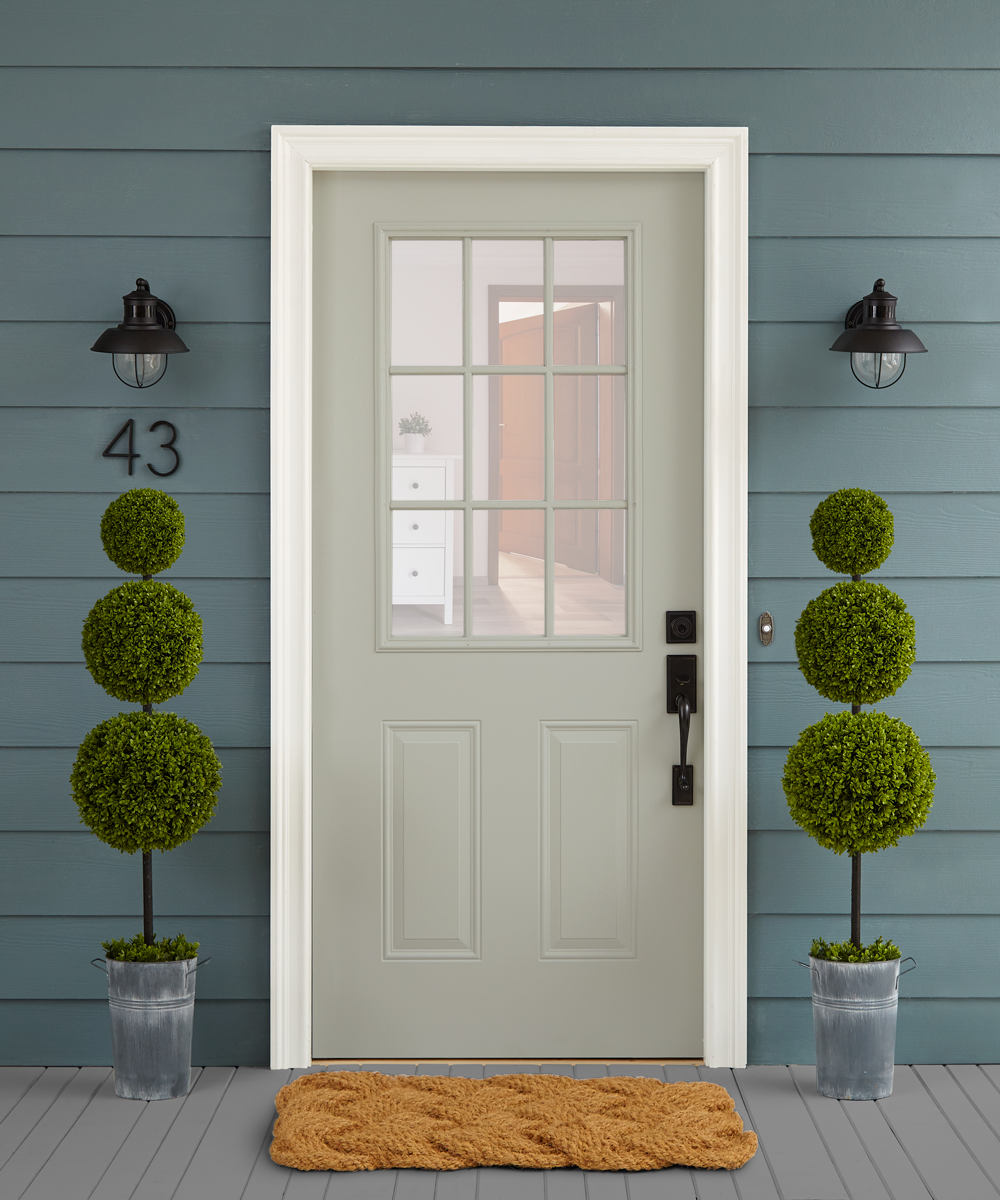
Just as important as proper prep for your indoor painting projects, priming is a critical prep step for outdoor projects. From painting your front door, to the entire exterior of your house, or even a garden fence, KILZ has a primer made for the job. KILZ® Original Primer has been trusted by pros for over 40 years and the KILZ Original lineup includes a primer formulated for outdoor projects. KILZ® Original Interior | Exterior Primer is an all-weather sealer with excellent adhesion to even the toughest to paint surfaces like masonry or bare, porous wood. When using this primer on outdoor brick, stucco or plaster, it’s important to note that the masonry surfaces should be clean, dry and cured for at least 90 days.
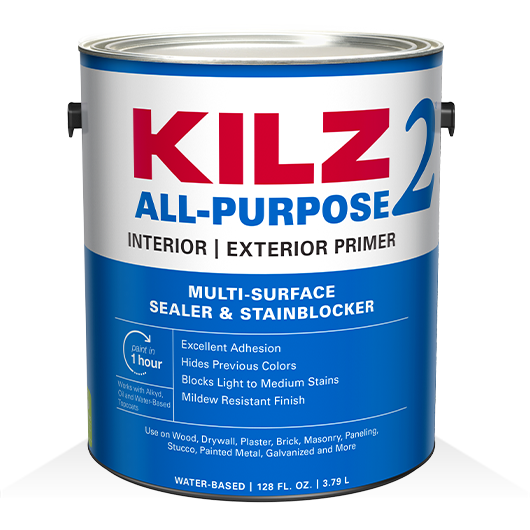
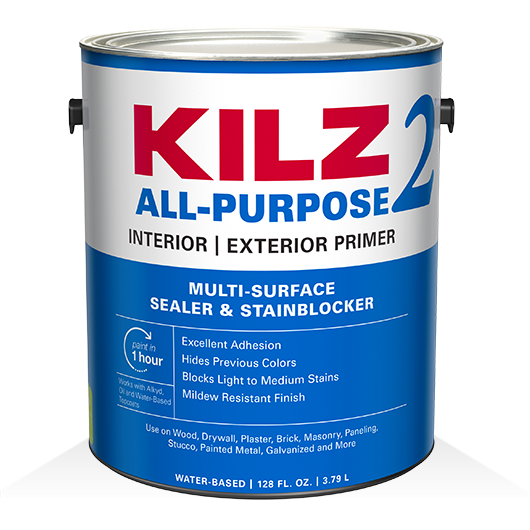
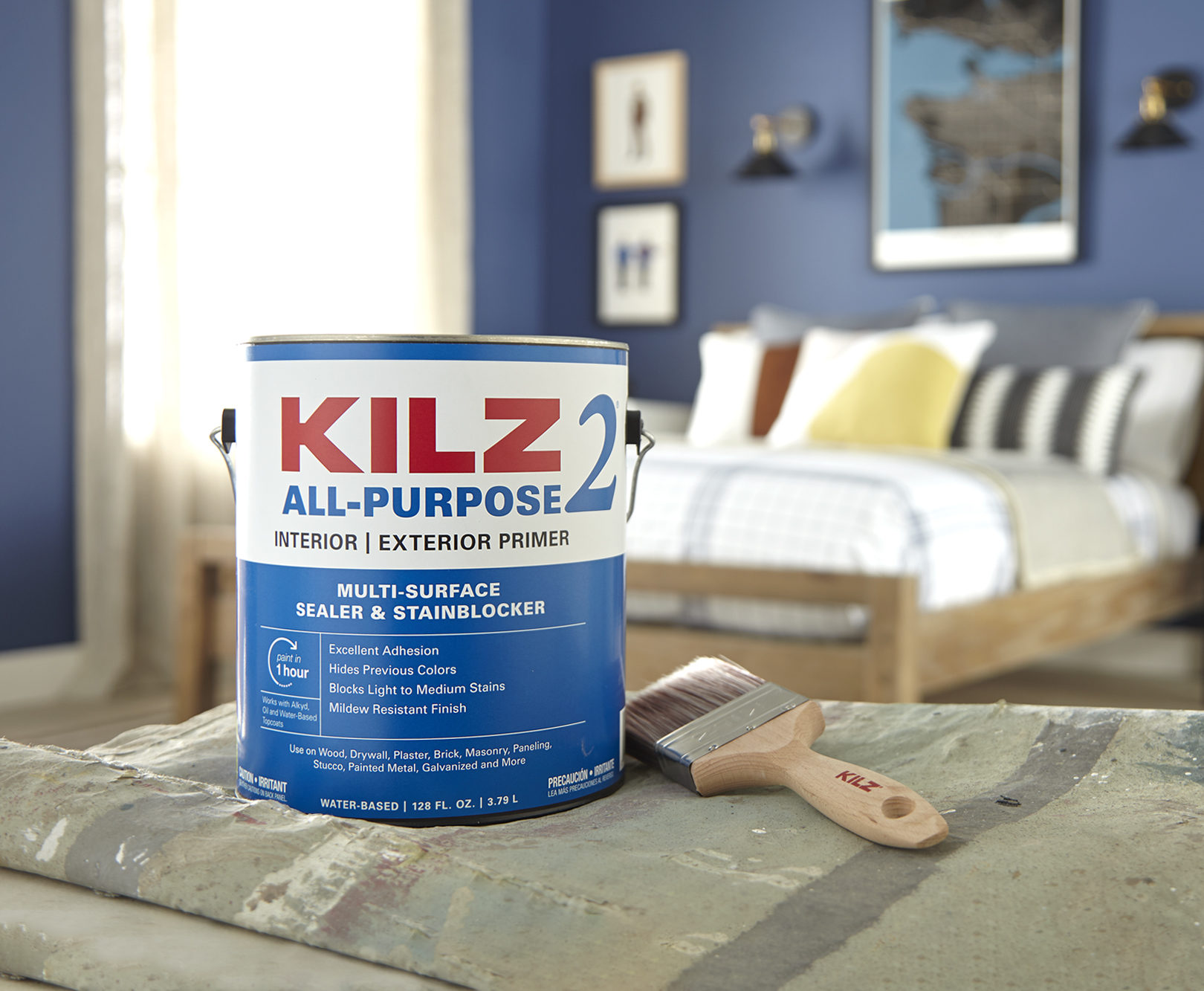
KILZ 2® All-Purpose Primer is another product formulated for both interior and exterior use. This water-based sealer and stain blocker would be an excellent choice for painting your front door or garden fence. Just remember this tip from the pros, if the surface you are painting is unpainted, exterior wood that has been exposed to sun and/or moisture longer than 2-4 weeks prior to painting – be sure to clean and sand it before priming. On new masonry surfaces, KILZ 2 All-Purpose can be used once the surfaces has cured for at least 30 days.
Our third pick for exterior projects is KILZ 3® Premium Primer. This fast drying, water-based primer provides excellent adhesion and a mildew resistant coating, making it ideal for exterior surfaces prone to moisture. It can be used for both interior and exterior projects and has a thicker, high-hiding formula great for blocking stains. If you live in a humid environment, KILZ 3 Premium Primer is a great choice for your outdoor painting projects.
What exterior projects will you tackle this summer?
Always remember to refer to our website kilz.com or product back labels for additional information on which primer is right for your project and detailed instructions on how to apply our products.
RELATED ARTICLES
get inspired:
FOLLOw us:
@kilzbrand
SHOP
PRODUCTS
Tips for Painting Walls and Cabinets
June 1, 2020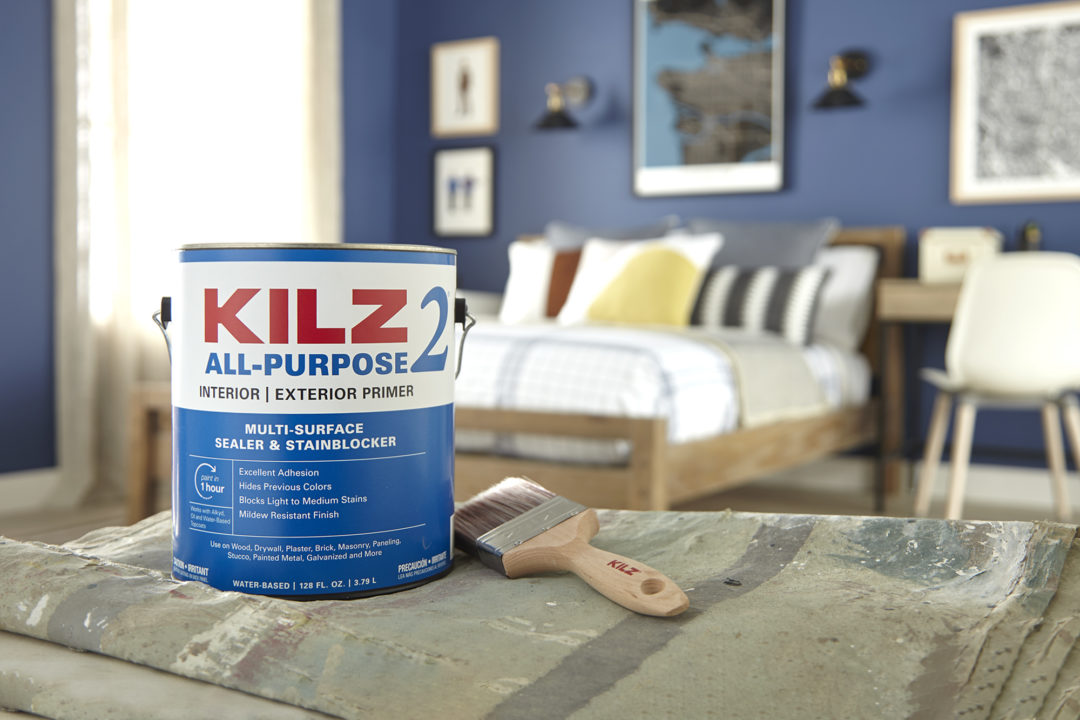
Painting your walls or cabinets is an easy and low-cost way to update any room in your house, and most painting projects can be completed in just one weekend. Equally as important as choosing the right paint color is ensuring you prime first with the right primer. Without priming before painting, you risk poor paint adhesion and previous colors or stains seeping through and ruining your new paint color.
Using the right primer ensures that your topcoat color will appear on the walls as you expected it to. If you’re painting over a darker colored wall with a new lighter shade, KILZ 3® Premium Primer works to block previous dark paint colors from seeping through and changing the look of your new paint. When painting over a light color with a new darker hue, it’s still equally important to prime first. KILZ 2® All-Purpose primer is a great choice for light to dark color changes. And if your walls have tough or exceptionally dark stains or damage from smoke or water, KILZ® Original Primer and KILZ Restoration are both formulated to block severe stains.
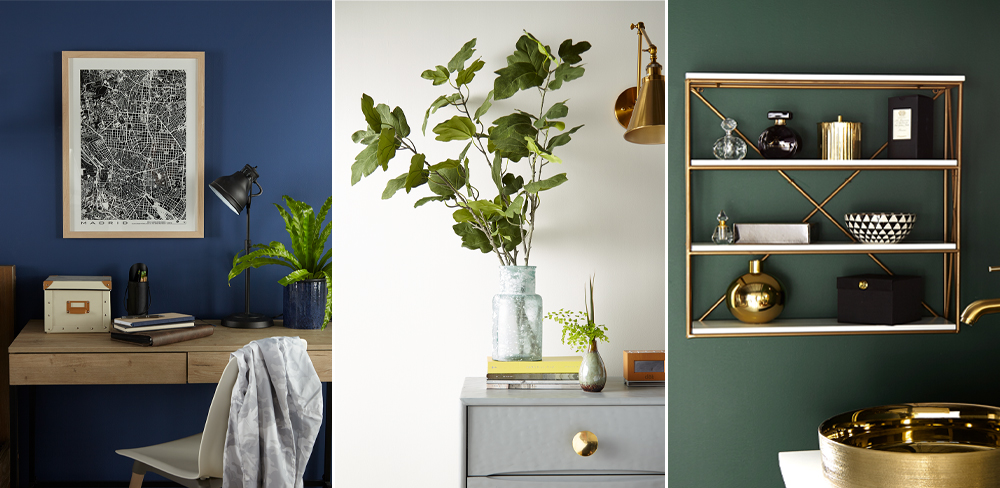
Priming before painting ensures your paint color pops!
What if you’re painting cabinets, do you need to prime? If you want excellent paint adhesion and for your colors to appear in their truest hue – the answer is yes! Primer also makes your paint job durable, and that is especially important in high-traffic areas like kitchens. You often find cabinets in kitchens, bathrooms and laundry rooms, and these areas of the home are subject to fluctuating temperatures and humidity levels that can make paint peel. For these spaces, a primer like KILZ Mold & Mildew dries with a mildew resistant primer finish that helps protect and extend the life of your paint.
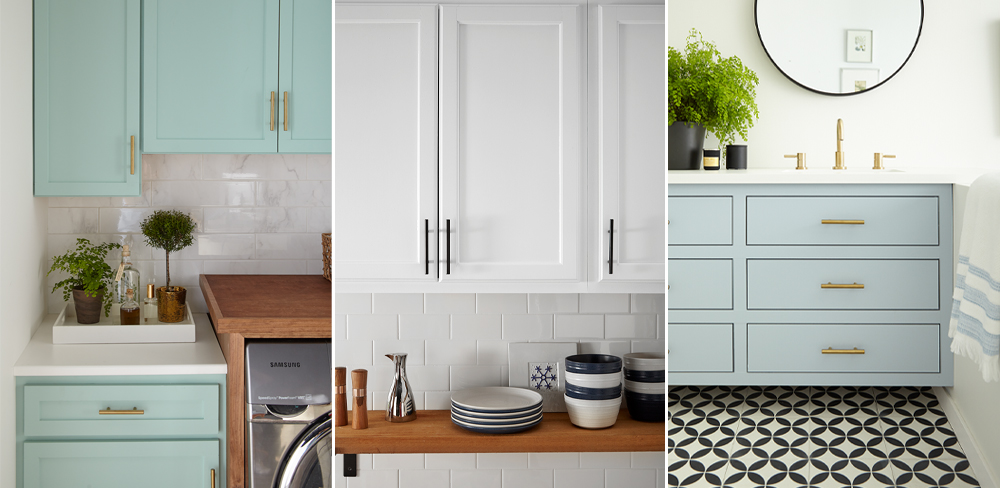
When painting cabinets, priming first ensures excellent adhesion and truer color from your topcoat.
While priming before painting can seem like an extra step, it’s a vital part of the painting process!
Always remember to refer to our website kilz.com or product back labels for additional information on which primer is right for your project and detailed instructions on how to apply our products.
RELATED ARTICLES
get inspired:
FOLLOw us:
@kilzbrand
SHOP
PRODUCTS
Top Primers for Kitchen Projects
May 1, 2020The key ingredient to a successful kitchen painting project is the right primer. KILZ® makes a family of hardworking primers for use on a variety of surfaces and substrates, and for best results it’s essential to choose a primer that’s specifically formulated for your type of project. Today we’re talking all about kitchens and the top primers for kitchen cabinets and walls.
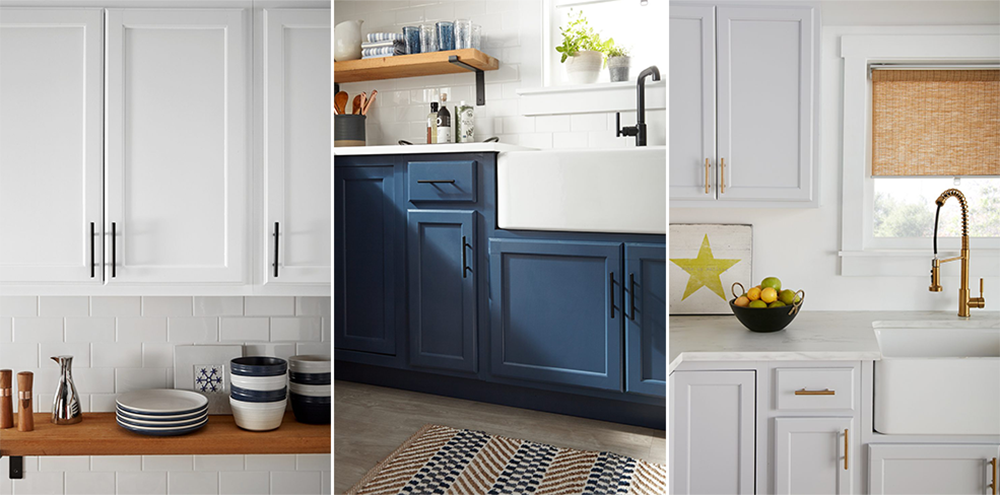
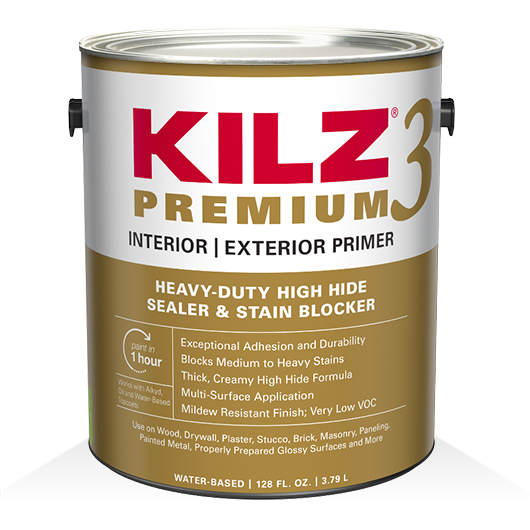
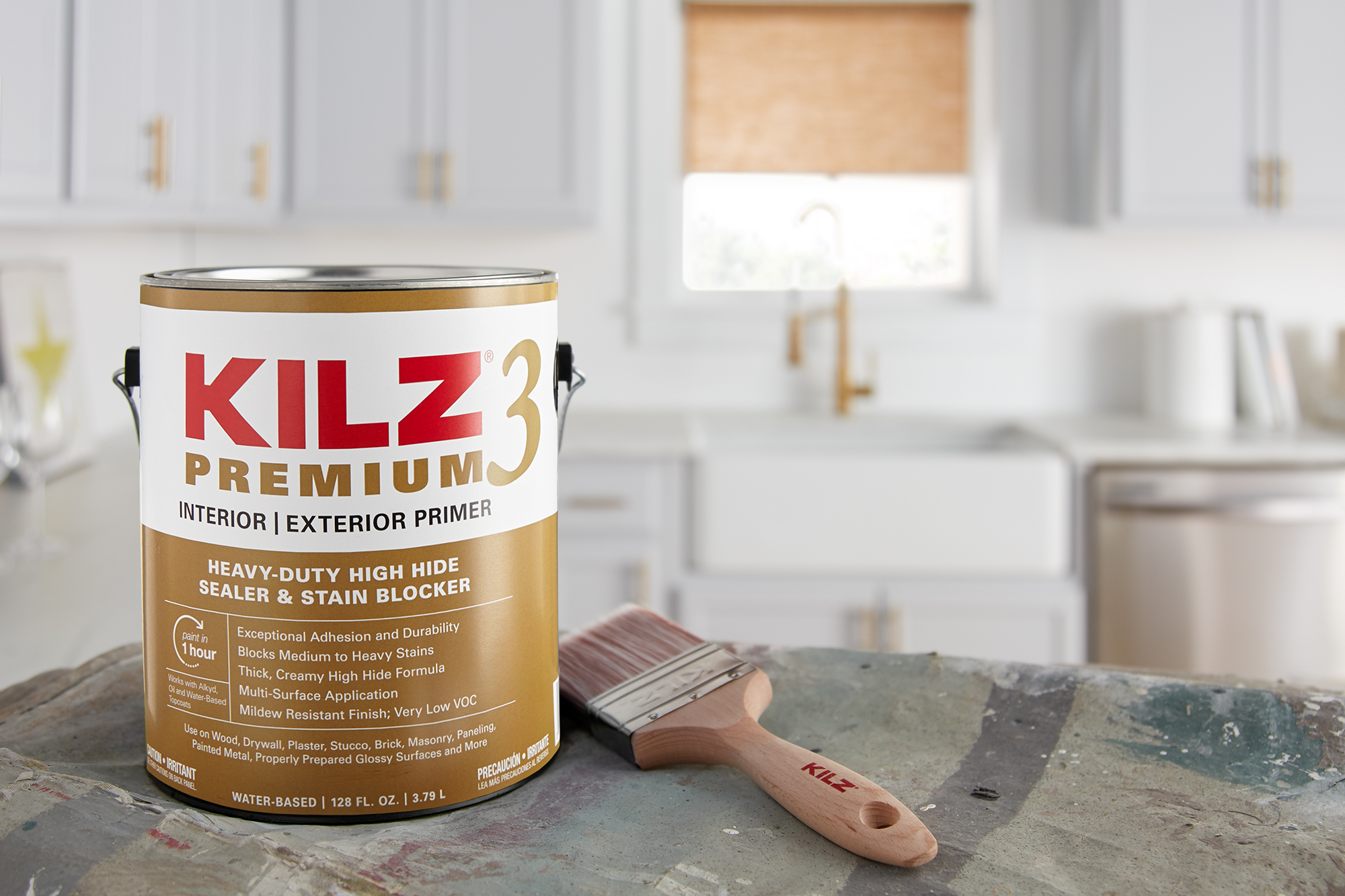
One fundamental benefit of most primers is that they make your paint job more durable. Kitchens are typically high-traffic areas and are often exposed to fluctuating temperatures, which can have an impact on the life of your paint job. Using KILZ® 3 Premium Primer before you paint, a product known for its exceptional adhesion and durability, can help ensure your paint job lasts.
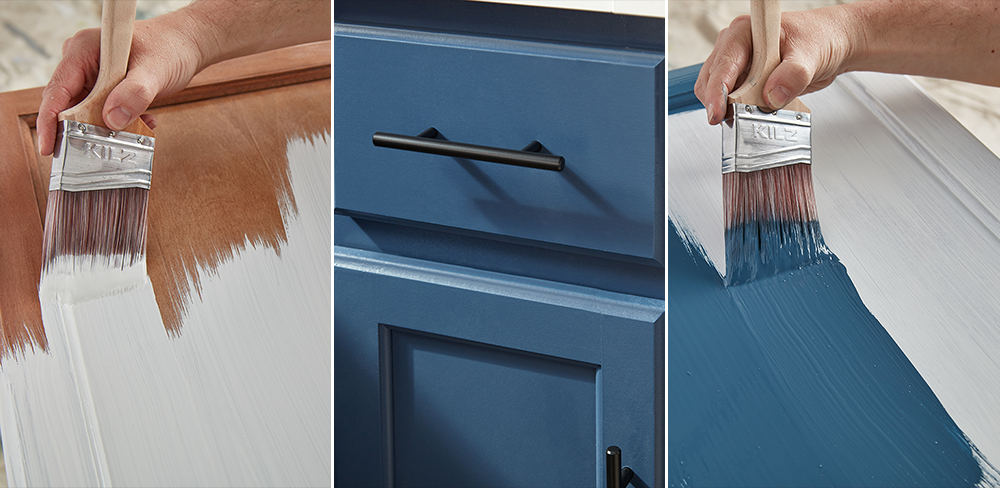
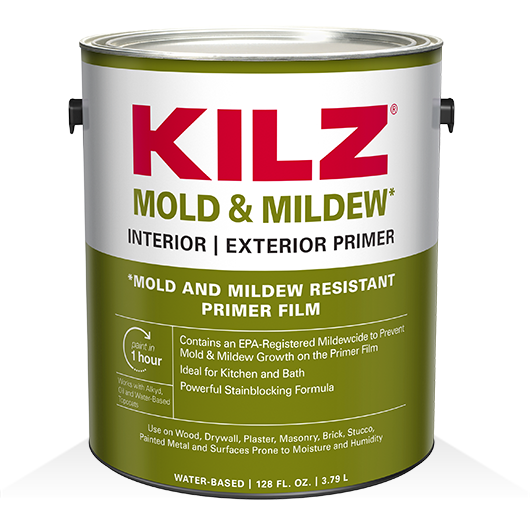
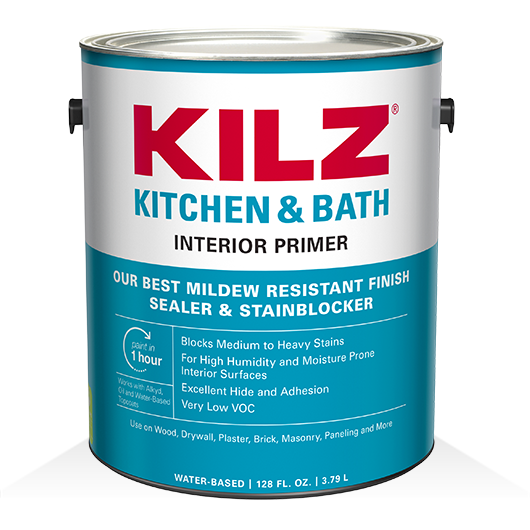
When painting your kitchen cabinets and walls, it’s important to keep in mind that kitchens can often be exposed to high humidity and moisture. These factors can negatively impact your painted surfaces if they’re not properly primed first. Using KILZ® Kitchen & Bath Primer on both cabinets and walls creates a mildew resistant primer film, and also offers excellent adhesion to most interior surfaces.
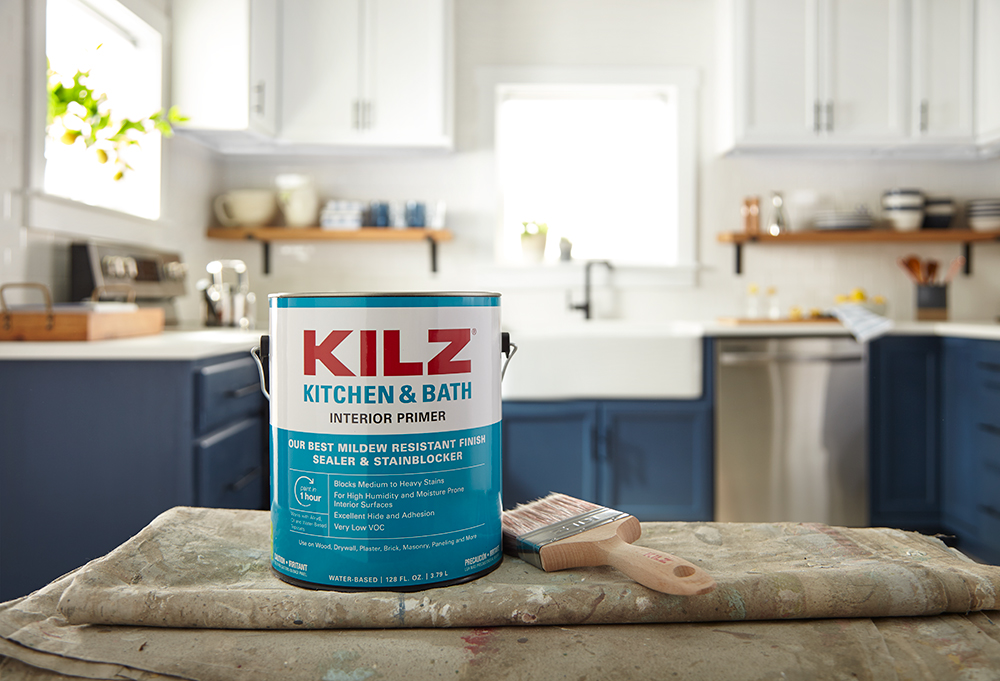
Now that you’ve found the right primer for your kitchen renovation, it’s time to start cooking up color ideas! For a look at our favorite calming and energizing paint colors, check out this recent post.
Always remember to refer to our website kilz.com or product back labels for additional information on which primer is right for your project and detailed instructions on how to apply our products.
RELATED ARTICLES
get inspired:
FOLLOw us:
@kilzbrand
How Primer Affects Paint Color
April 15, 2020Springtime and DIY projects go hand in hand, and this spring season it feels like that sentiment rings truer than ever before. With all of us staying home to practice safe social distancing we have a lot more time on our hands, making it the perfect time to tackling a DIY painting project. But before you paint, don’t forget to prime!
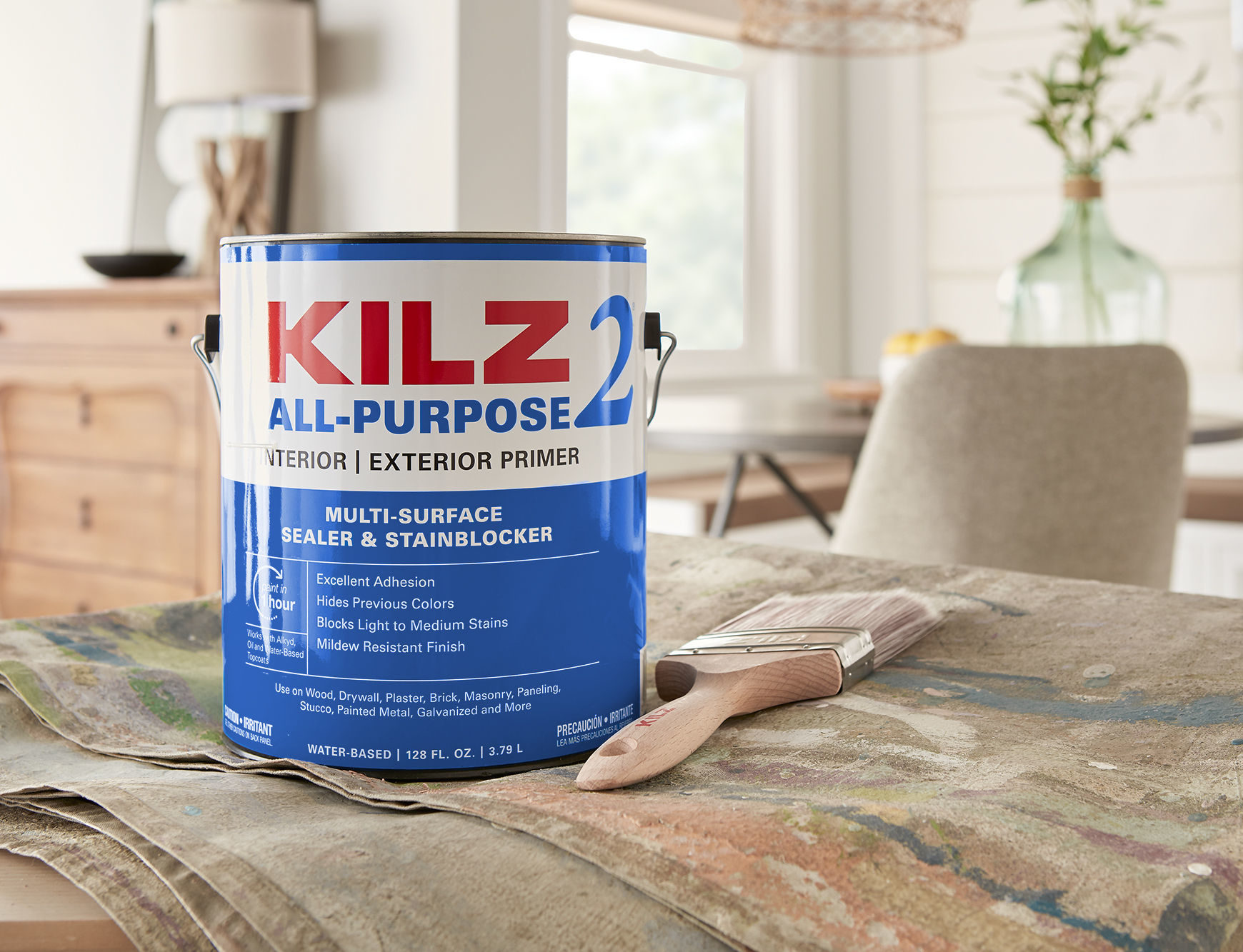
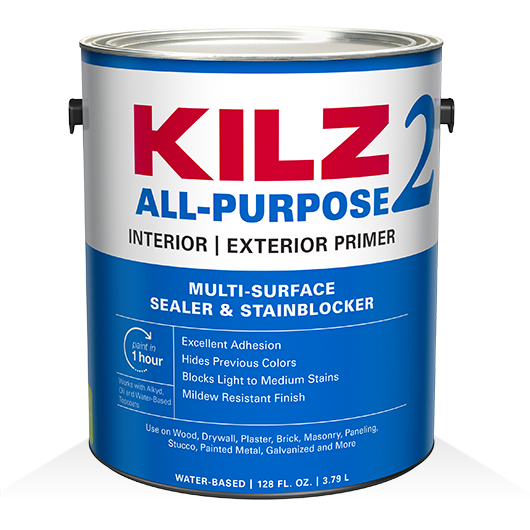
While the paint’s job is all about color, the primer’s job is to prepare the surface for painting and make that color the best it can be. Even with a simple color change where you’re covering an existing lighter color with another color, it wouldn’t be advisable to paint without priming. If you paint without priming first, the end result could be a color that is a slightly different shade that the color you selected. For a simple color change from walls to furniture re-painting projects, KILZ 2® All-Purpose Primer is right for the job.
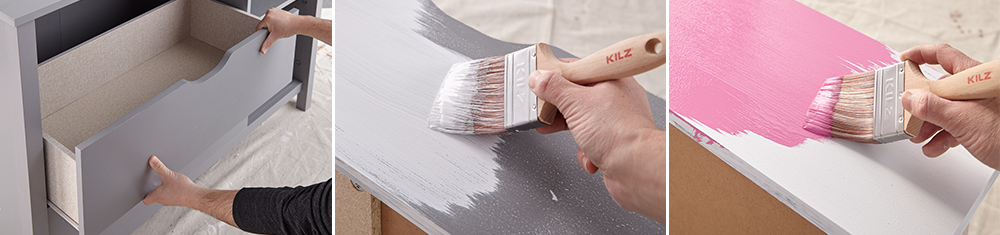
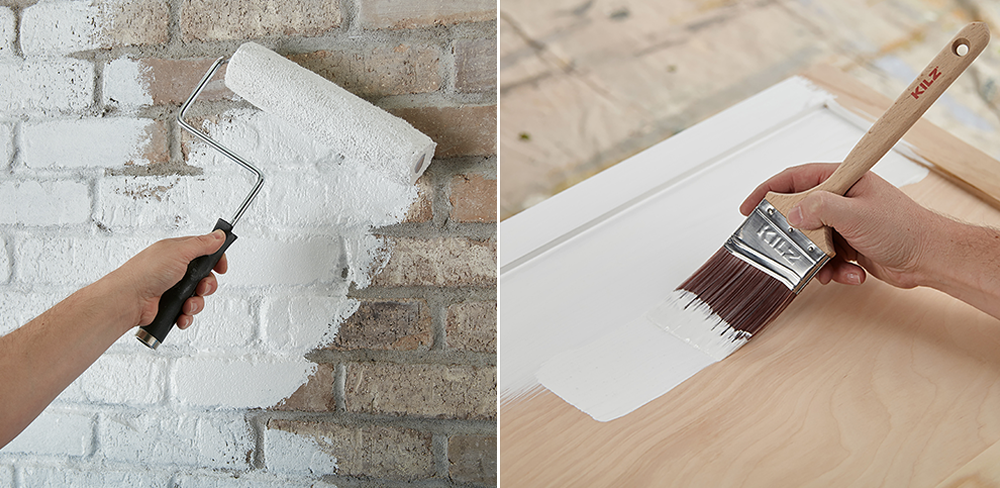
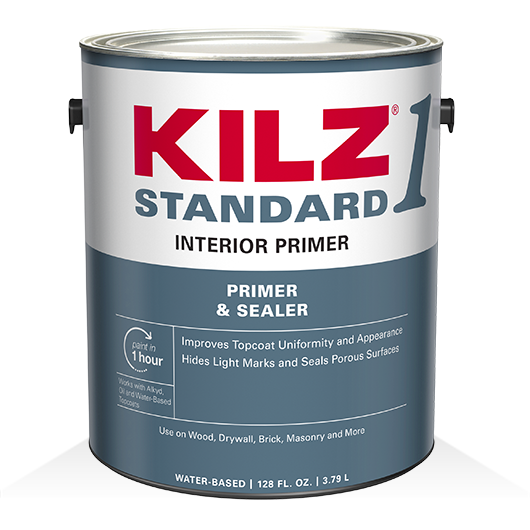
There are also certain surface types that are extremely porous, including brick and wood. If you paint on these surfaces without priming, there is a good chance the paint will seep into the surface – and that means your color won’t be as vibrant or true as you were expecting. When you’re looking to seal porous surfaces, KILZ® 1 Standard Primer and KILZ 2 All-Purpose are both great primer choices.
And it goes without saying that when painting over a darker color with a new, fresh-as-spring lighter shade, you definitely want to prime first. Otherwise shades like deep red will show through and change the tone of the new paint color you selected. If you’re going from a darker to a lighter color in your DIY painting project, KILZ® 3 Premium Primer has a thick, high-hide formula that is up to the task.
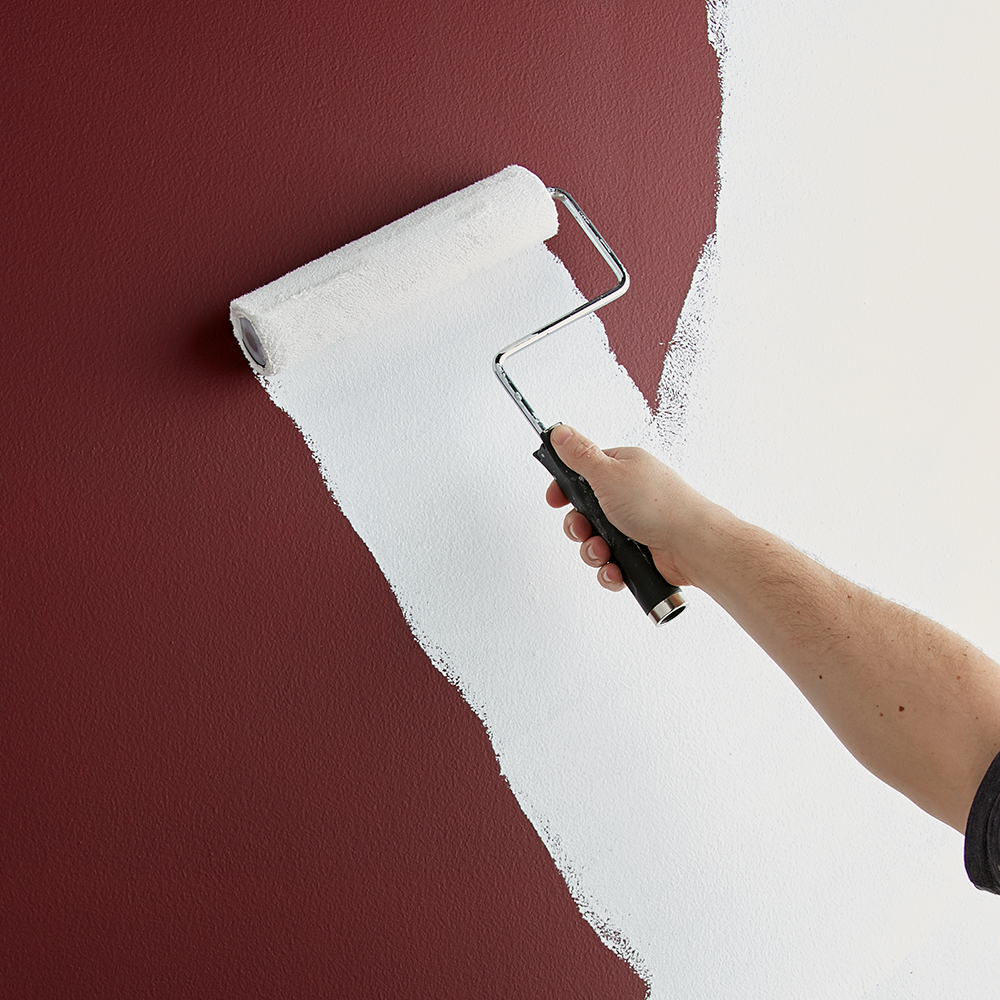
Prime first for dark to light color changes!
In all of these cases, priming before painting lessens the number of topcoats required – saving you time and ensuring your finished DIY project is the color you desired!
Always remember to refer to our website kilz.com or product back labels for additional information on which primer is right for your project and detailed instructions on how to apply our products.
RELATED ARTICLES
get inspired:
FOLLOw us:
@kilzbrand
Truer Color Starts Here
March 30, 2020Imagine that you’ve spent hours scrolling through social media sites and flipping through magazines, on the hunt for the perfect paint color. Eventually, you zero in on a color family and visit a home improvement store to select a few paint chips or samples to take home. And finally, you’ve done it! You have your perfect paint color chosen and you’re ready to transform your space. But what if, when it’s finally on your walls, it doesn’t appear to be the color you selected? If you don’t use the right primer before painting, this could happen to you.
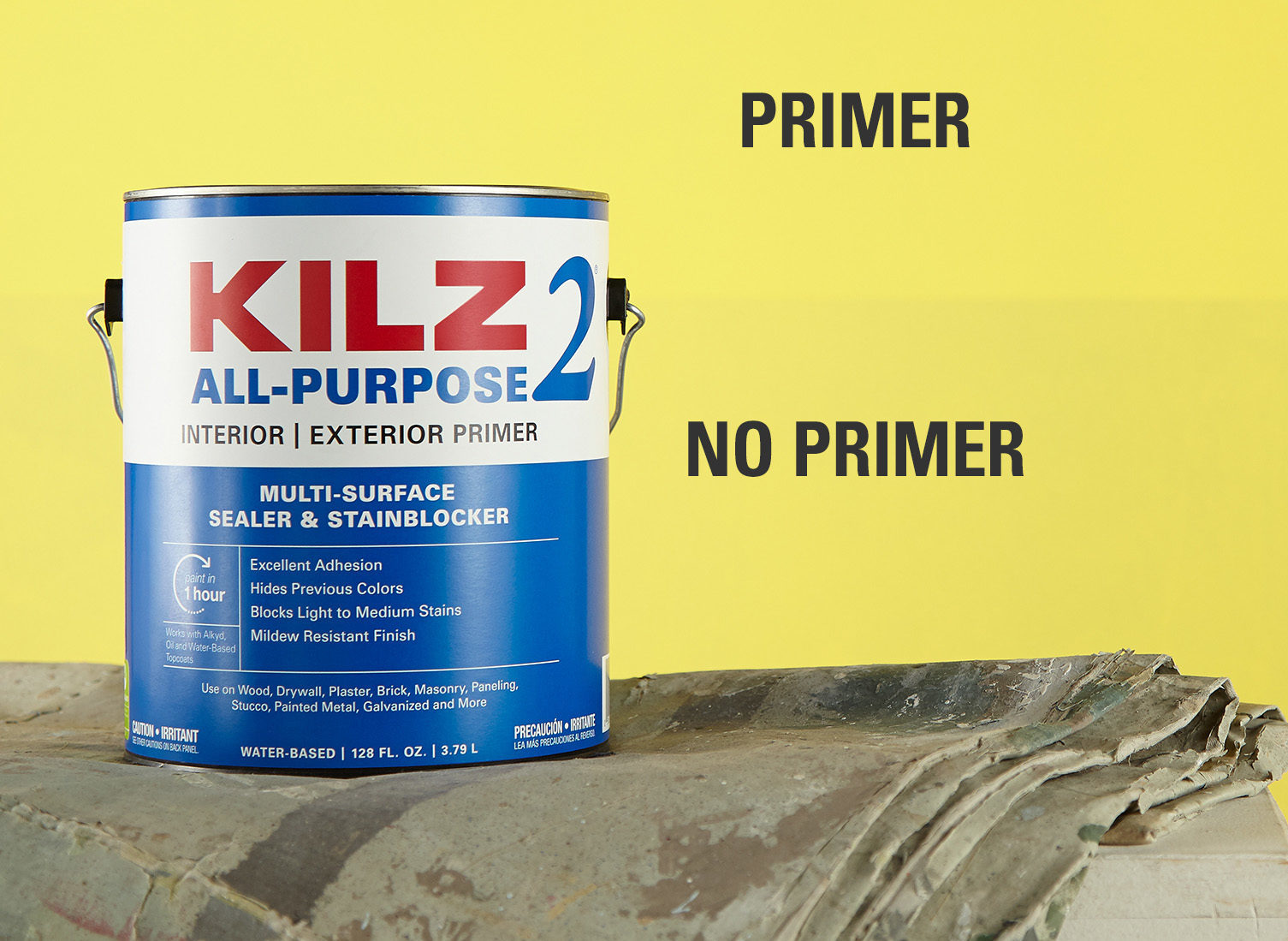
When painting a light color over an existing dark color, a primer with a high-hiding formula is recommended. KILZ® 3 Premium primer is a water-based primer that has a thicker formula with enhanced hiding. Priming a dark wall with KILZ 3 Premium before you paint over it with a lighter color will assist in a truer and richer color from your topcoat.
Specific surface types you might be painting can also affect how the final paint color turns out if the right primer isn’t applied first. If not properly sealed, porous surface like brick can soak up a lot of paint and cost you valuable time and money. Not to mention that if not properly primed, the typical red color of most brick can change the appearance of your paint color if the brick is not primed before it’s painted. For brick surfaces, we often recommend KILZ 2 All-Purpose or KILZ 3 Premium, depending on the color and current state of the brick surface.
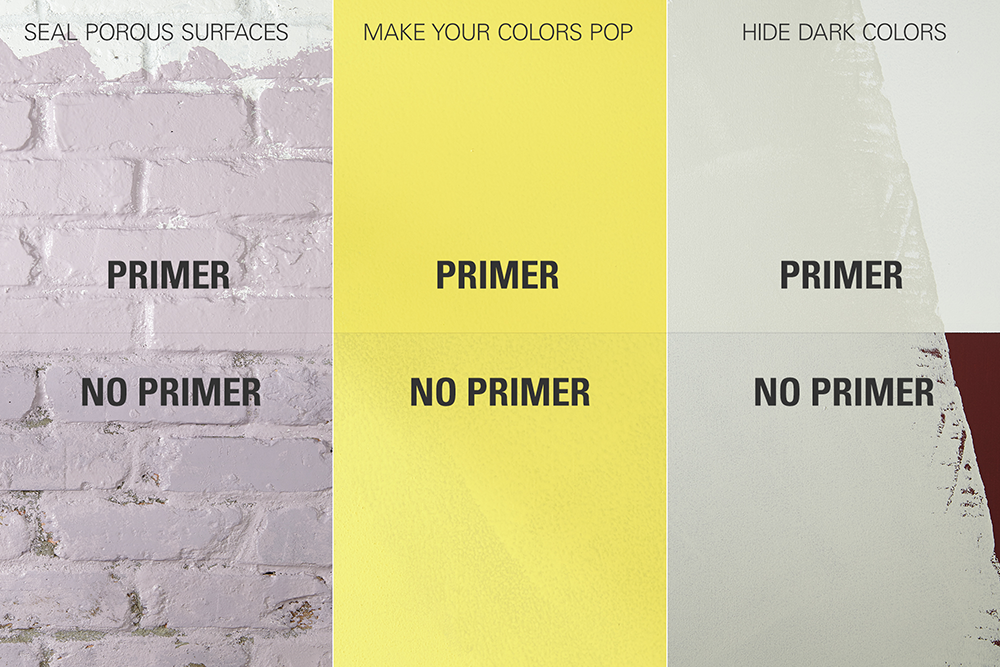
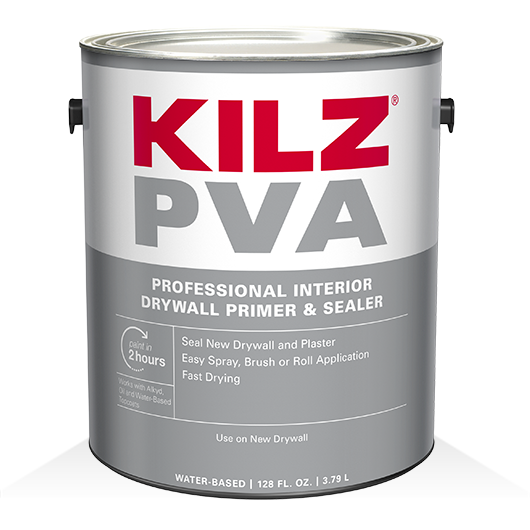
New drywall is another porous surface on which the right primer can make a big difference. When painting over new drywall, we recommend priming first with KILZ® PVA Drywall Primer – a fast-drying, interior water-based primer formulated to prime and seal new, uncoated drywall. KILZ 1 Standard primer is another great primer to use on drywall.
For almost any surface you’re working with, priming before painting is key to ensure that the paint color you selected will show up in its truest state
Always remember to refer to our website kilz.com or product back labels for additional information on which primer is right for your project and detailed instructions on how to apply our products.
RELATED ARTICLES
get inspired:
FOLLOw us:
@kilzbrand
join the conversation:
SHARE this post: