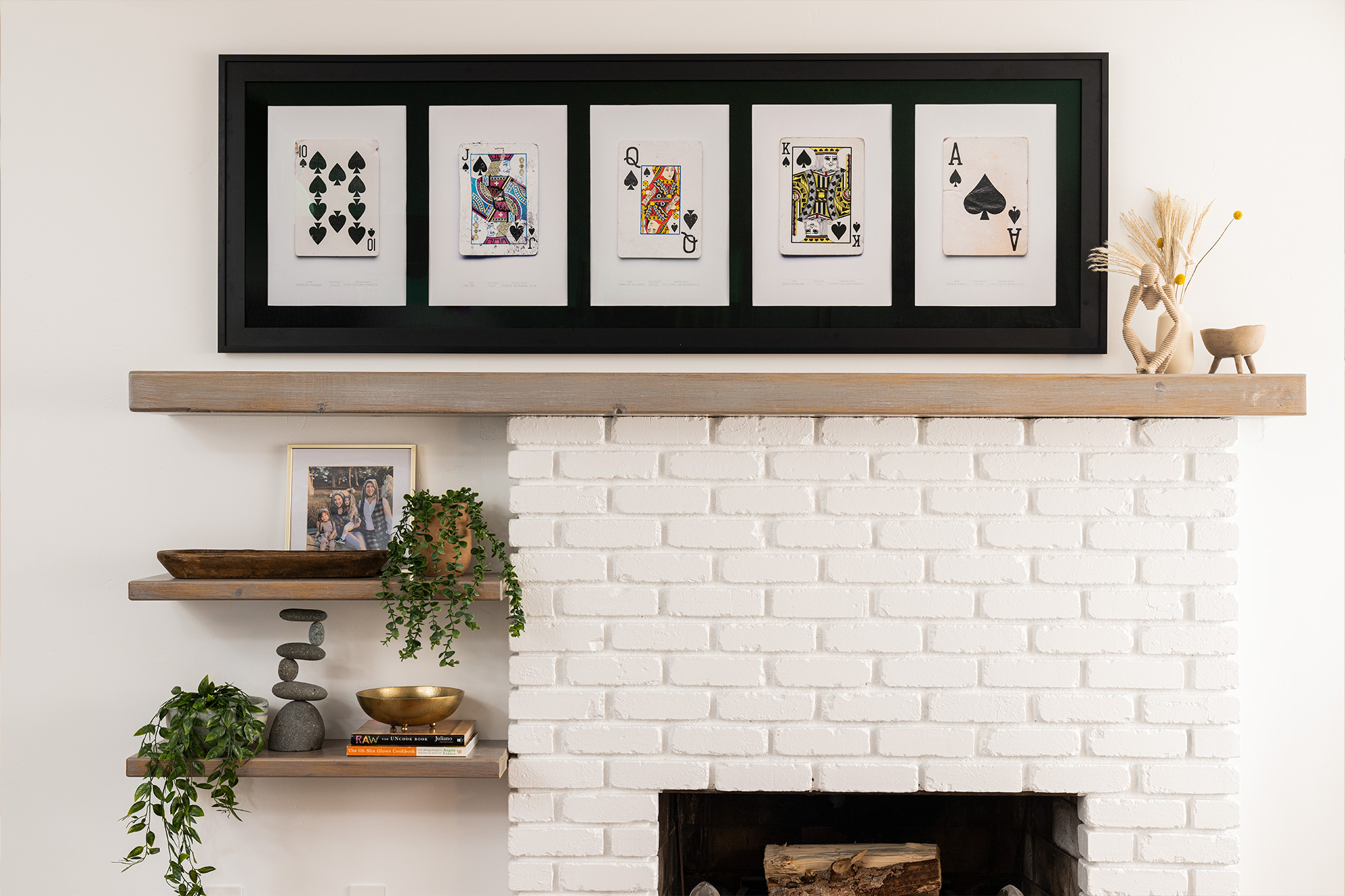
An Outdated Living Room Gets a Facelift
April 17, 2023On this episode of Destination Restoration, we upgraded an open concept family living/dining room, while demonstrating the power of primer in a striking fireplace restoration. Rather than putting this 4th generation home through a full gut rehab, our pros, Jason Lai (interior designer) and Jared Foster (contractor/pro painter) worked to reimagine the space and rejuvenate it for another generation. This series demonstrates how you can breathe new life into an older home while keeping its structural integrity intact.
Jason and Jared worked together to take this space from ordinary to inviting, contemporary, and cheerful with a few tweaks. Keeping in mind aesthetics and functionality, the goal was to avoid tearing things out and starting from scratch, and instead, add value to the existing room. They updated the décor, primed, and painted the fireplace, added new lighting, built a convenient storage unit in the dining area, and overall, made the space look chic and feel cozy.
We’ve broken down each area below so you can get a more detailed look into the upgrades we made. If you’re not sure where to start, we’ve included a step-by-step guide of how to paint brick fireplaces like the one here.
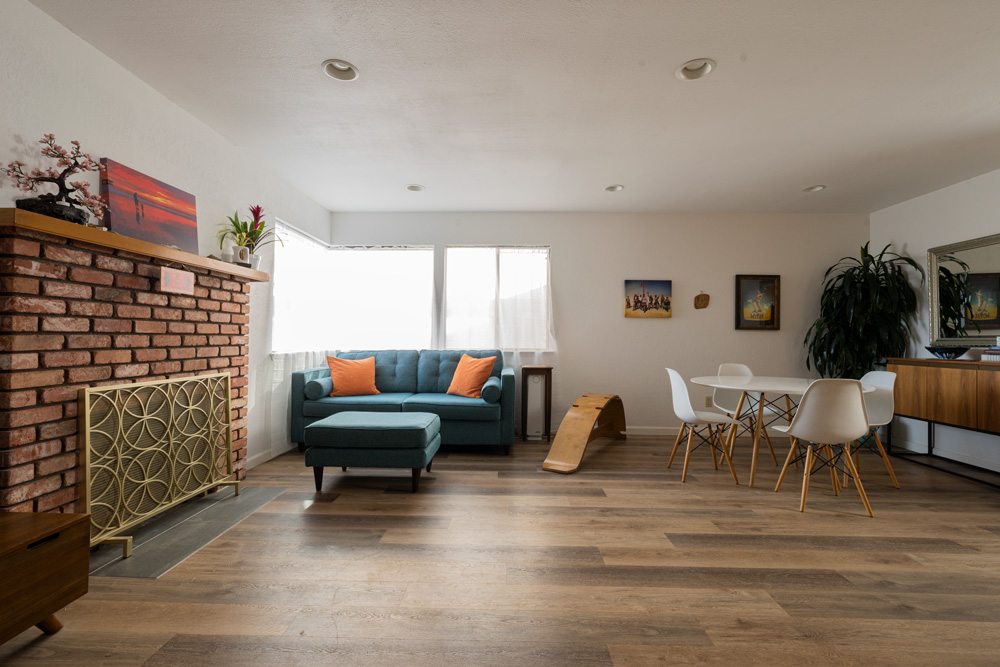
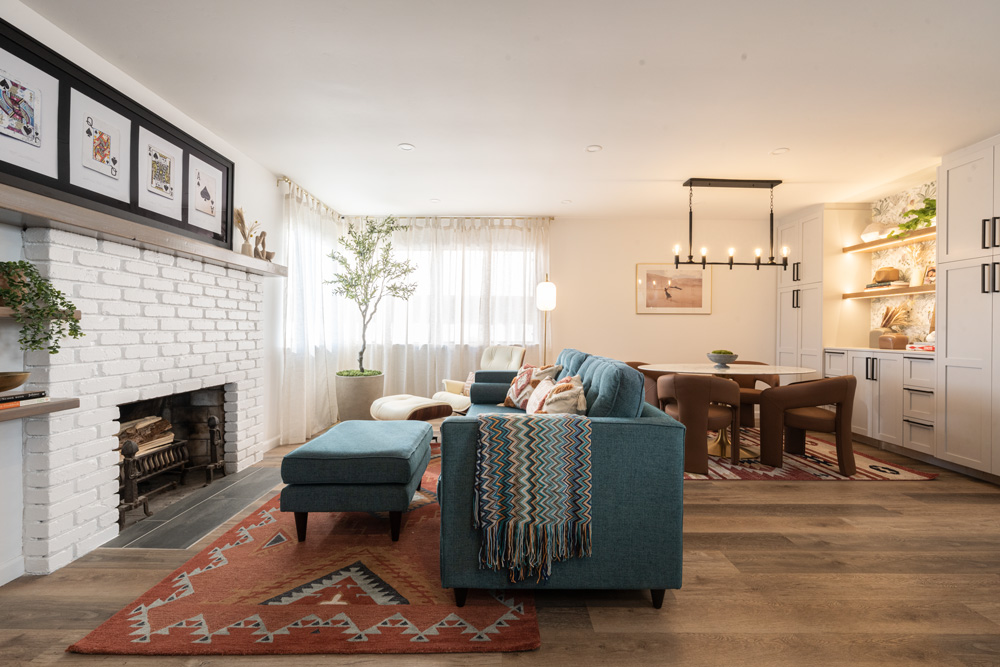
Living Area
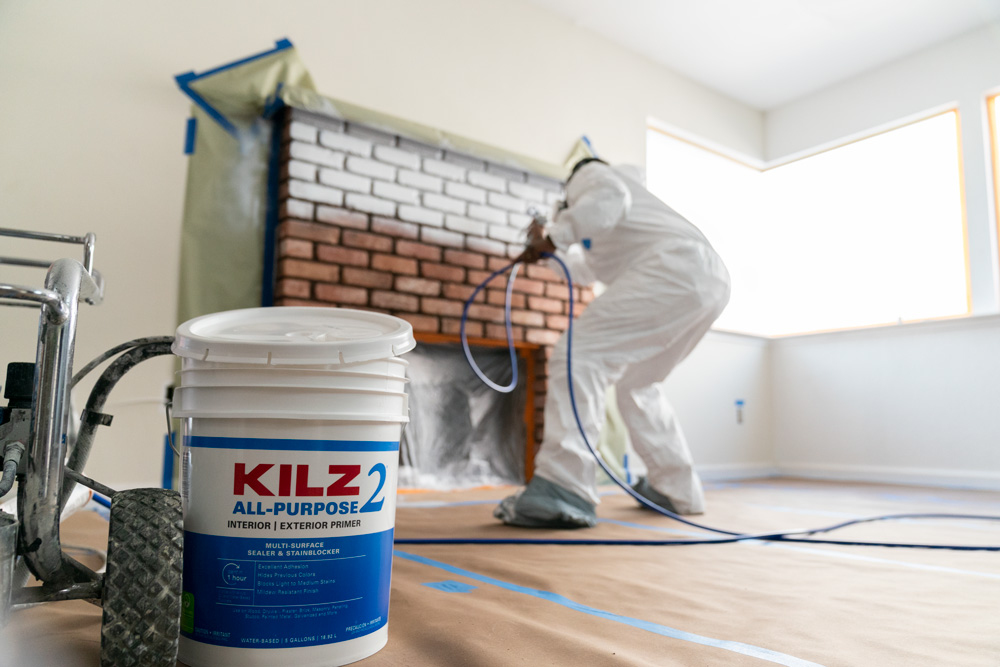
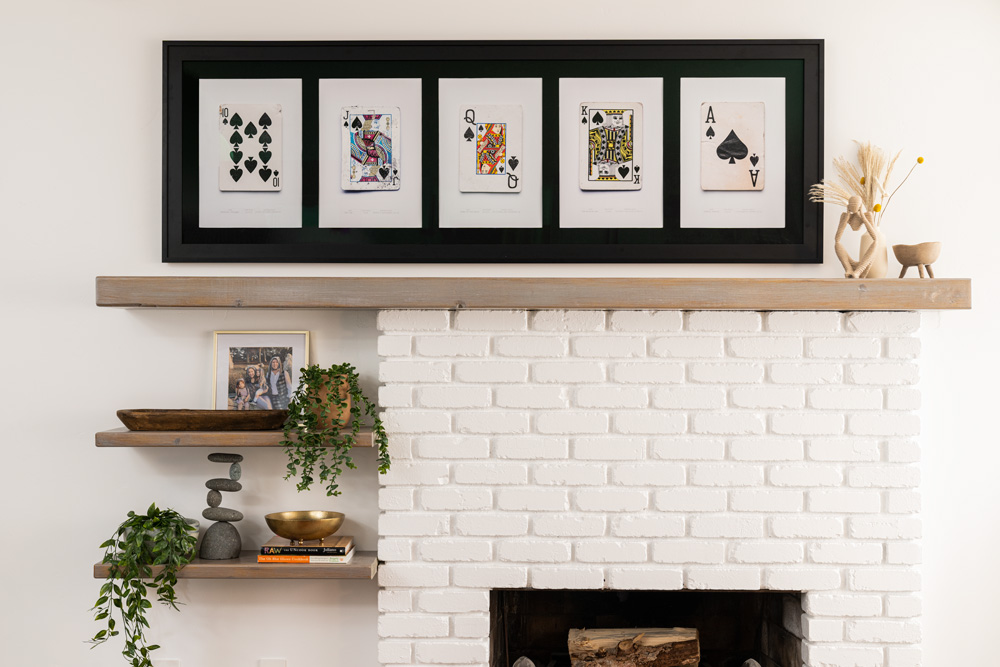
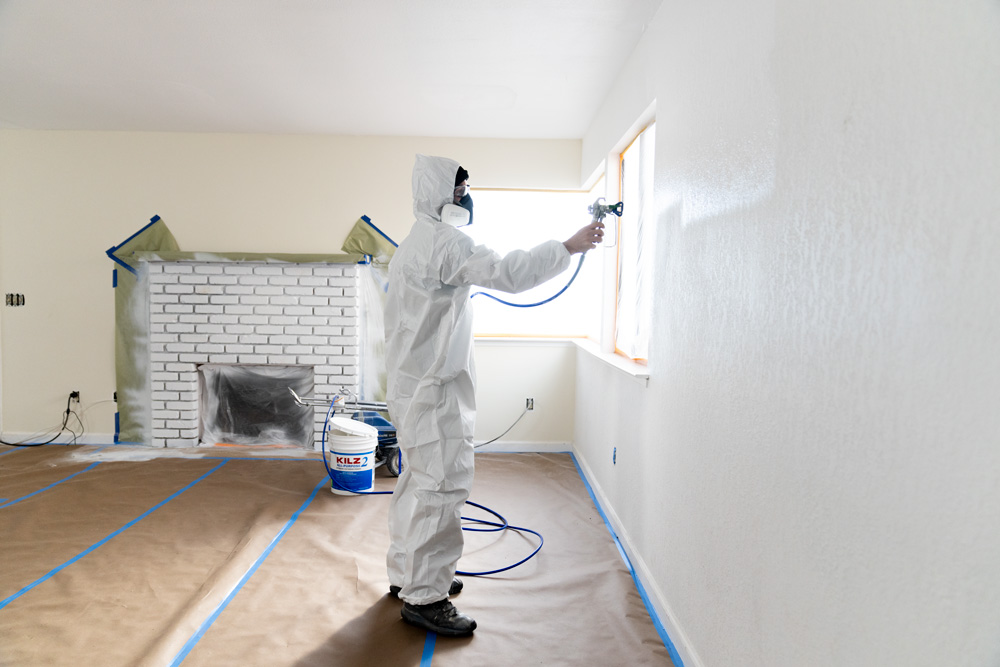
First, we primed the fireplace and front door using KILZ 2® All-Purpose Primer. For living room paint colors, the front door was painted Chic Grey and the fireplace Whipped Cream, both colors by Behr Paint. We also replaced the front door hardware for a more modern look. Using the beam we removed from the kitchen ceiling, we stained and repurposed it to extend the mantle out to the left of the fireplace. Finally, we added floating shelves just underneath. These shelves were the result of leftover pieces from the kitchen beam, which were also stained to match.
Dining Area
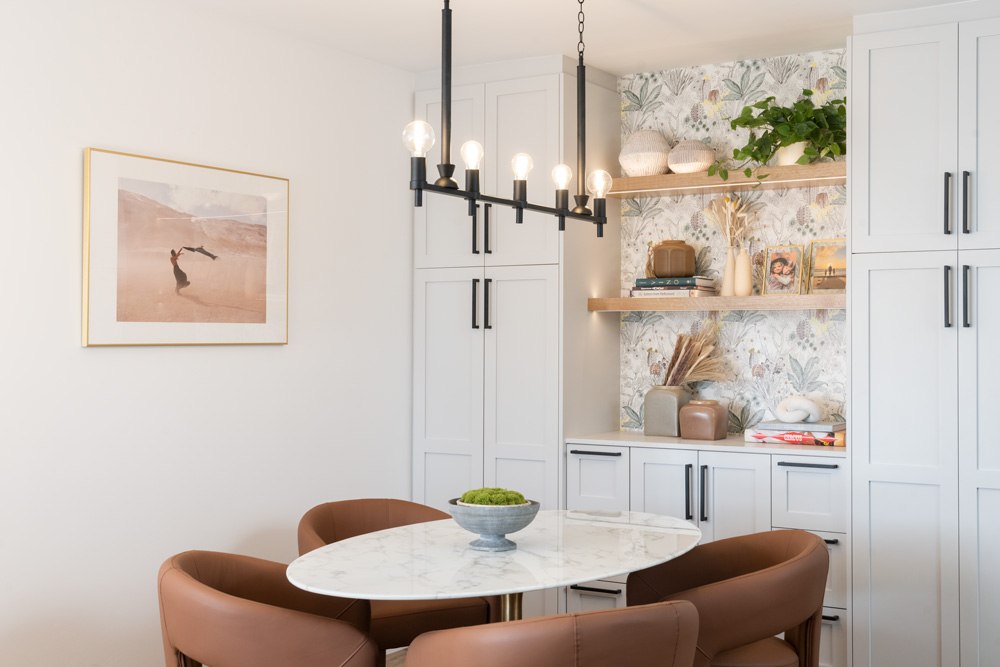
To spruce up the old dining area, we replaced the buffet cabinet with a larger, built-in storage unit, and brightened it up with under cabinet lighting and a linear chandelier (by Kichler Lighting) over the dining table.
Other Changes
Our interior designer, Jason, added touches of new furniture and décor throughout this space to bring it into the modern day. He chose to keep the existing couch and update the throw pillows and blanket, as well as rearrange the furniture to create a distinct living and dining area within the space.
Why Do You Need to Prime?
Priming is essential for proper surface preparation for any paint project. It’s the difference between a job done and a job done right. Priming helps solve a wide range of problems, including highly porous surfaces, stains, odors, uneven surfaces, texture differences, and adhesion problems.
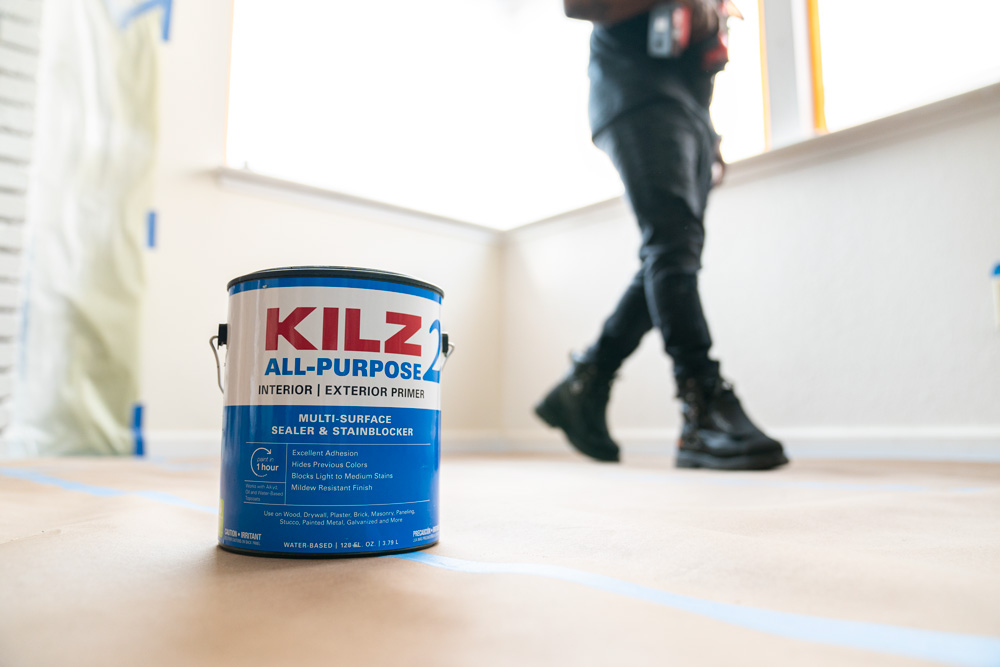
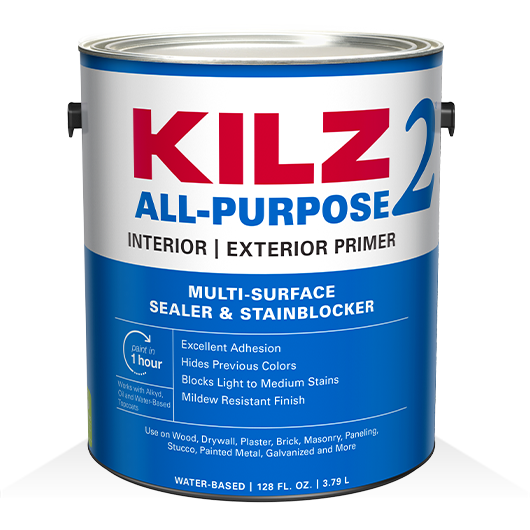
For the purposes of this project we used, KILZ 2® All-Purpose Primer because it dries fast and can be used on many surfaces, including brick. It’s also a great stain blocker with excellent adhesion, mildew resistance, sealing properties and a very mild odor. Its enhanced hiding formula makes it ideal for changing colors, like in the case of our fireplace, and helps lessen the number of coats of paint required, saving you time and money.
Step-By-Step Guide for a Brick Fireplace Makeover:
A primed and painted fireplace requires a few basic steps from start to finish. Here’s an easy guide to follow for your next project:
1. Clean the bricks. If it’s extra dirty, start with a vacuum and use the crevice tool attachment to clean between the bricks. Next, wipe down the fireplace with a damp cloth to ensure all surfaces are clean and free of any lingering dust. Allow to dry.
2. Tape around the fireplace to protect the walls and floor. Also tape around the mantel and where the brick meets the firebox (the inside where the wood goes!) to keep that area protected from paint and primer.
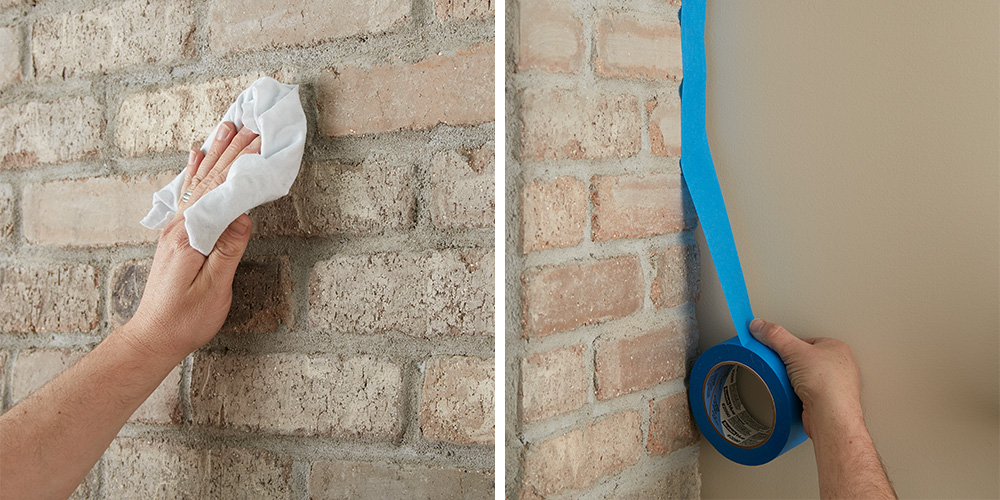
3. Protect your floors from paint and primer by covering it with a drop cloth.
4. Now it’s time to prime! Using KILZ 2® All-Purpose Primer, start with an angled brush to cut in around the mantle and edges of the fireplace.
5. Next, use a roller to cover the brick faces with primer.
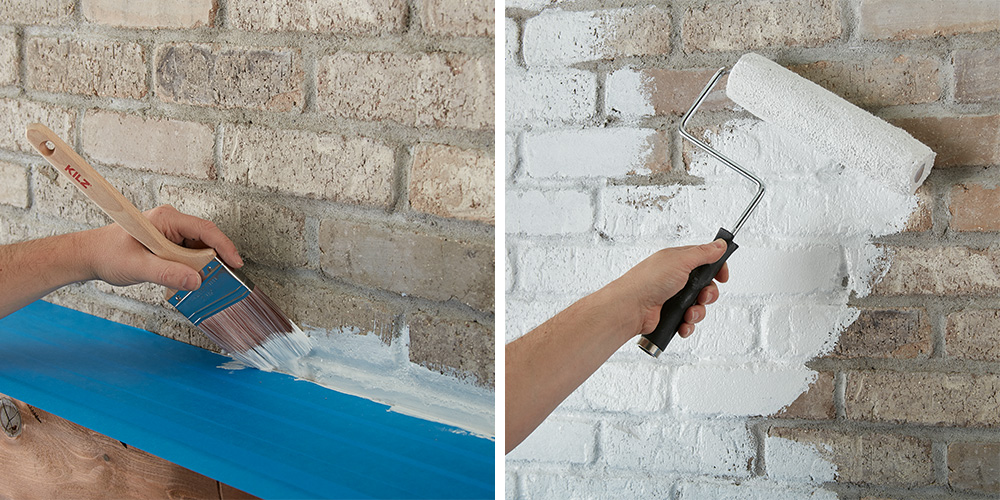
6. Go back with a small, angled brush to fill in any remaining grout areas and crevices in the bricks.
7. Allow to dry for 1 hour.
8. Once the primer is dry, apply paint of your choice using the same application process at the primer.
9. Remove the painter’s tape before your paint is fully dry.
You Will Need:
• Vacuum and rags to wipe dirty and dusty surfaces
• Painter’s tape
• Drop cloths, canvas, or other reusable material
• Paint roller, angled brush, and paint tray
• Paint of choice
We hope this episode of Destination Restoration inspires you to tackle your own living room remodel this year. Be sure to keep KILZ® products in mind for your next project, and come back for more ideas, tips, and project inspiration.
If you loved this restoration, be sure to check out the other episodes of Destination Restoration. Jason and Jared took on the Kitchen, Primary Bedroom and Primary Bathroom.
Always remember to refer to our website kilz.com or product back labels for additional information on which primer is right for your project and detailed instructions on how to apply our products. Check out our Coverage Calculator to understand your estimated paint needs for your upcoming project.
RELATED ARTICLES
get inspired:
FOLLOw us:
@kilzbrand
SHOP

PRODUCTS
Bringing a Primary Bathroom Back to Life
April 17, 2023In this episode of our Destination Restoration series, we show you how to update a primary bathroom past its prime. This bathroom, like the rest of the rooms in this house, was outdated, dark, and in need of some attention. But, with a few cosmetic fixes, our pros, Jason Lai (interior designer) and Jared Foster (contractor/professional painter) transformed this room into something truly special.
This series demonstrates how you can breathe new life into an older home (in this case, a 4th generation family home), while keeping its structural integrity intact.
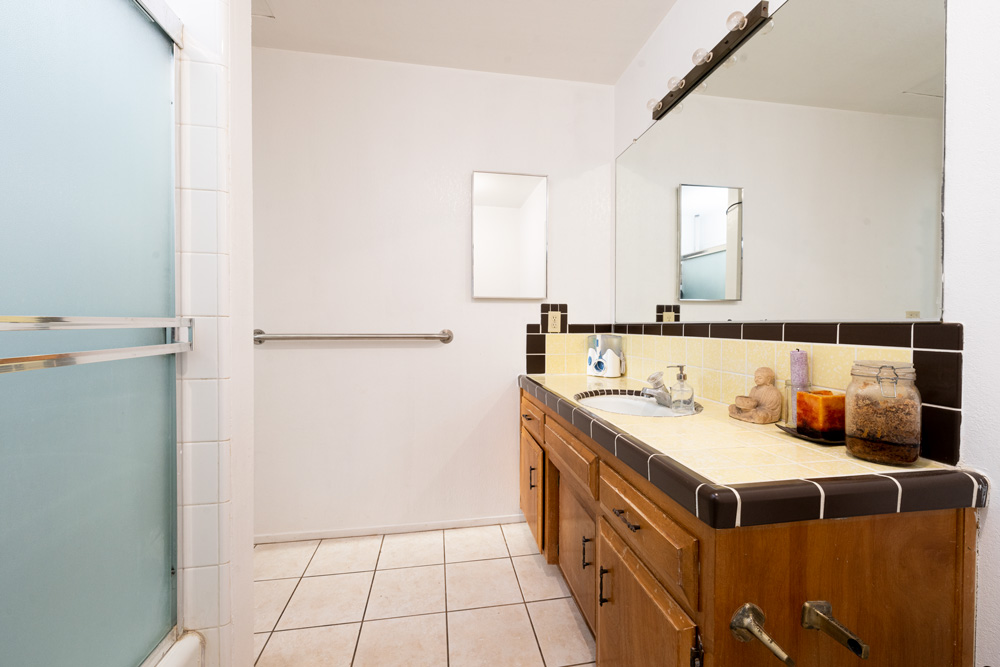
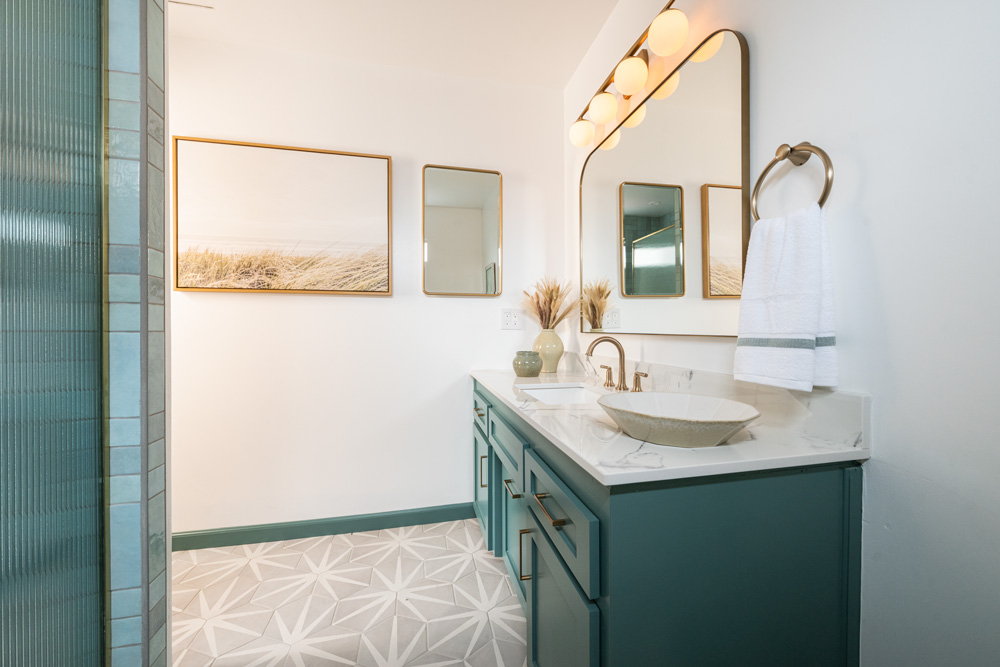
Just off the primary bedroom, the small, 4-piece primary bathroom was in desperate need of a facelift. Like a kitchen, there are many elements to consider in a bathroom, including hardware, tile, glass, and lighting. Not to mention a color scheme and décor. Using KILZ® Mold & Mildew Primer, we were able to restore the existing vanity and give it a fresh topcoat. We also replaced the tile and countertop, updated the walk-in shower, and painted the walls for a fresh new look that complemented the rest of the home.
While the bathroom is a smaller room compared to the others in your home, that doesn’t make it any less of a project. All it takes is a great concept and a team who knows how to execute, and you can bring any bathroom up to date in no time. For some bathroom inspiration, see the breakdown of our project in more detail below. We’ve also included a step-by-step guide on how to paint bathroom cabinets.
Vanity, Cabinets & Walls
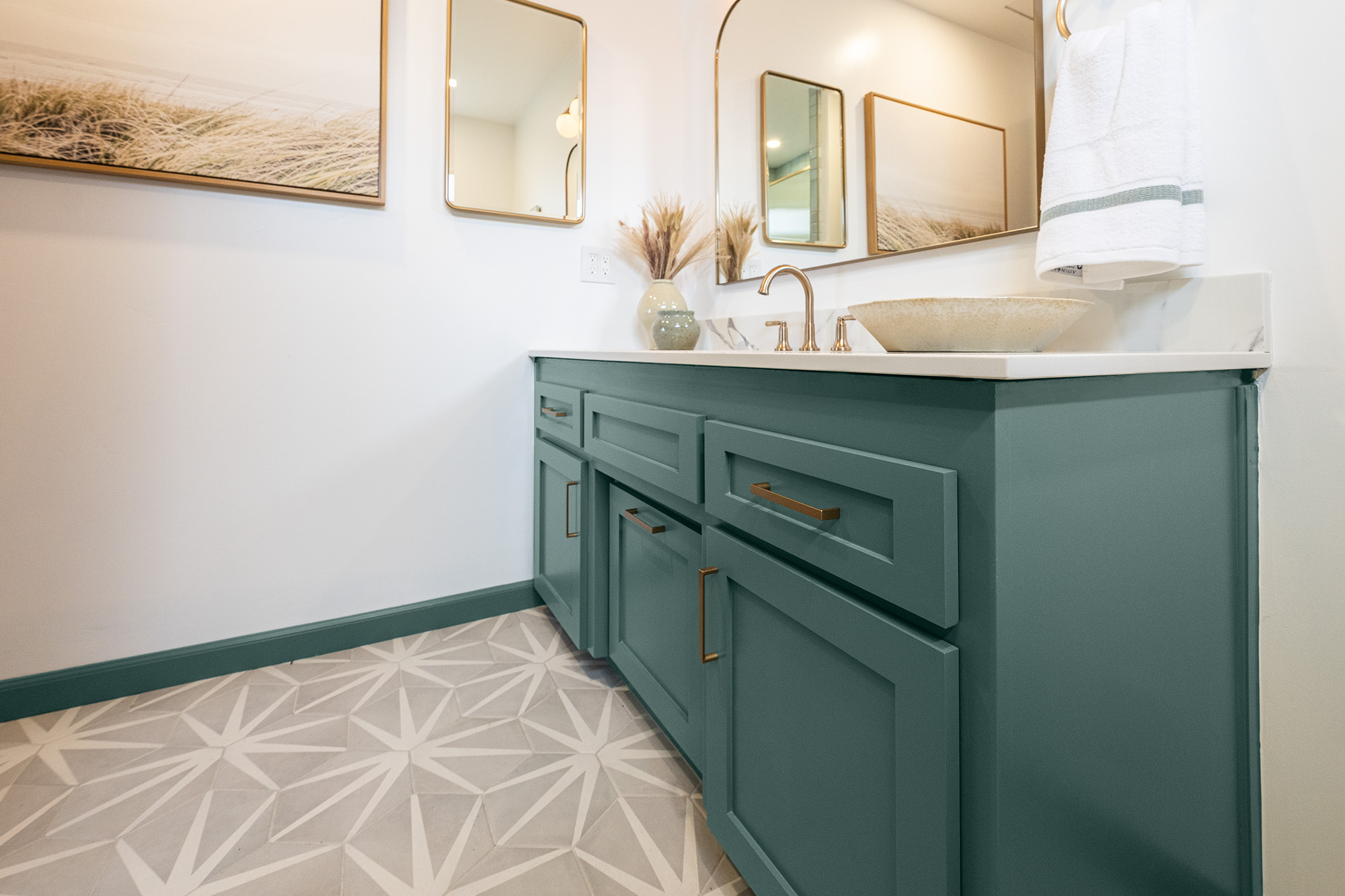
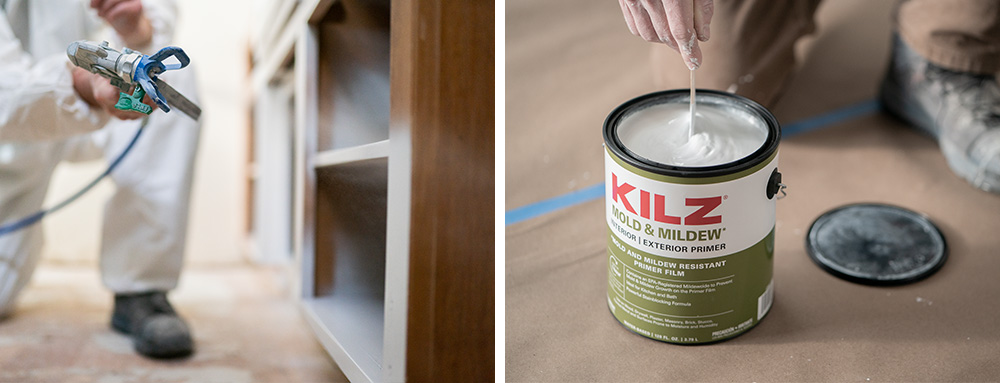
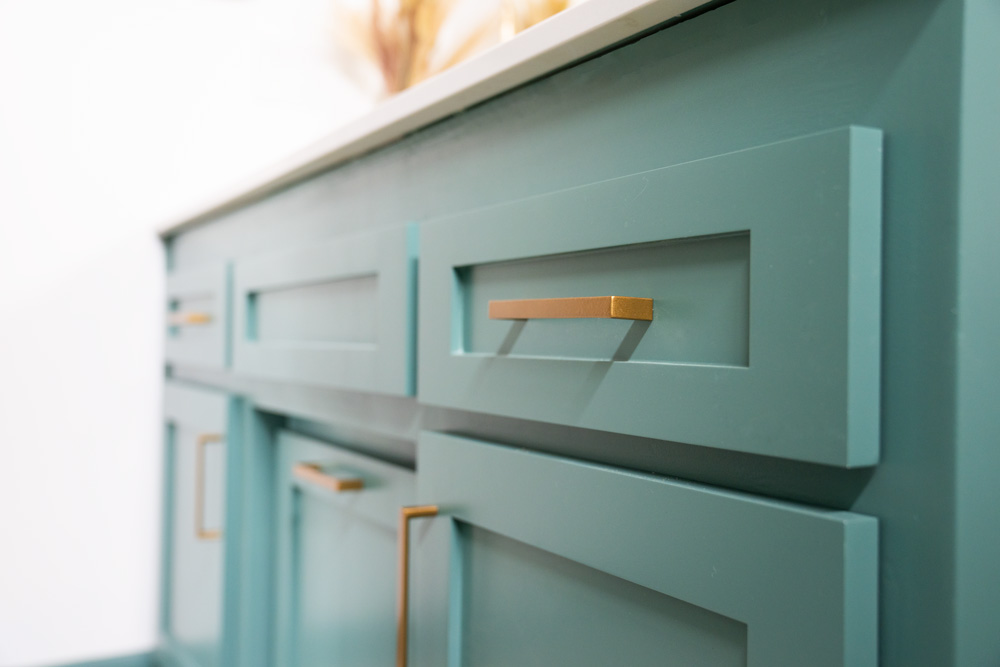
To start, we primed the vanity using KILZ® Mold & Mildew Primer and painted it with Aspen Valley, a color by Behr Paint, for a teal effect that tied in well with other areas of the home. We also updated the cabinets to shaker style to mimic the update we made to the kitchen cabinets. For the other bathroom paint colors, we painted the walls, ceiling, and door with Whipped Cream, a color by Behr.
Shower & Hardware
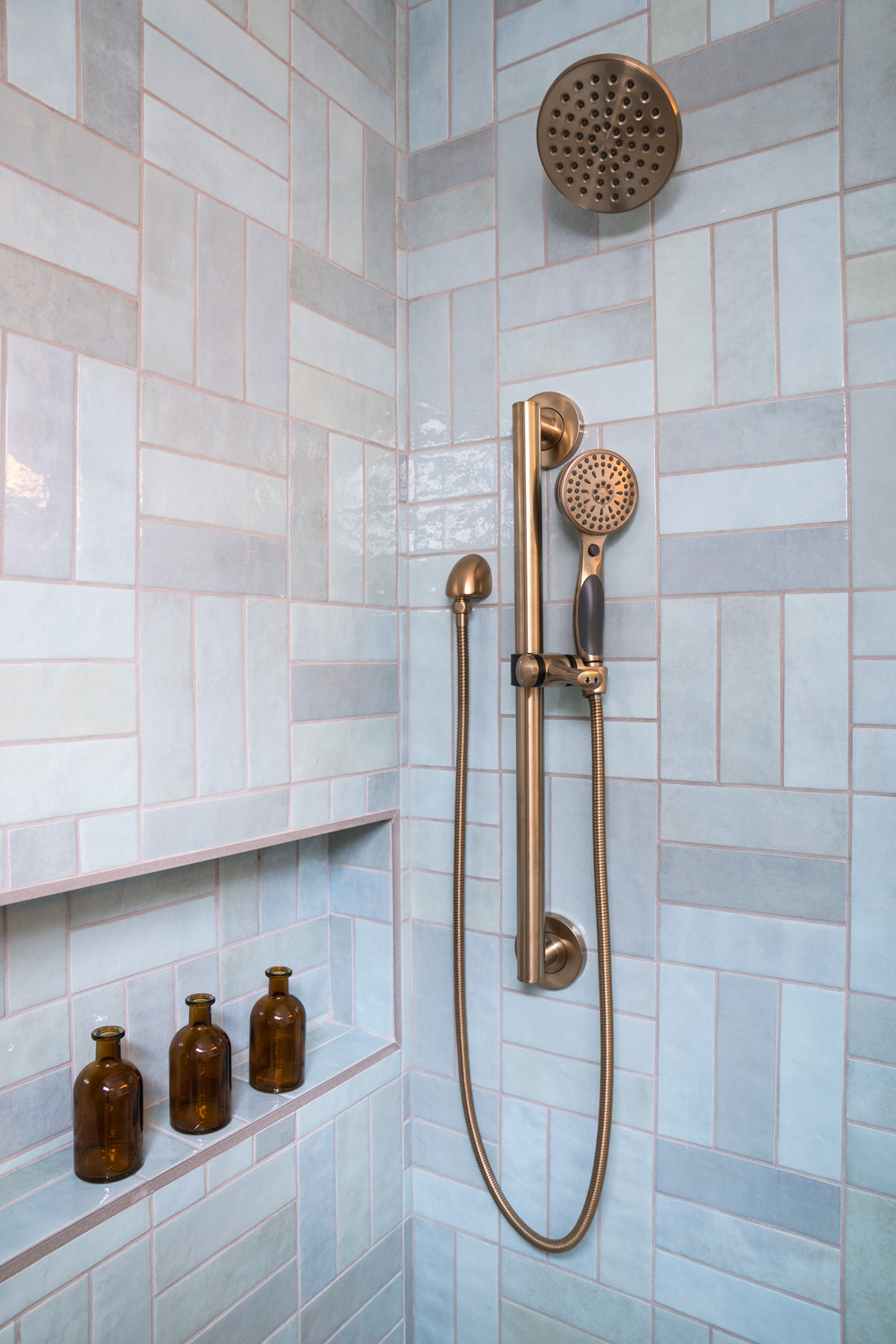
We replaced the bathtub with a sleek walk-in shower, which we also retiled using a multicolored eggshell tile to contrast with the teal of the vanity. Lastly, we installed all new fixtures by Delta Faucet.
Other Changes
The floor was old and dingy, so we replaced it with an updated, geometric pattern tile—a fun detail that tied in well with the rest of the décor—and we added new overhead lighting and sconces by Kichler Lighting.
Why Do You Need to Prime?
Priming is essential for proper surface preparation for any paint project. It’s the difference between a job done and a job done right. Priming helps solve a wide range of problems, including highly porous surfaces, stains, odors, uneven surfaces, texture differences, and adhesion problems.
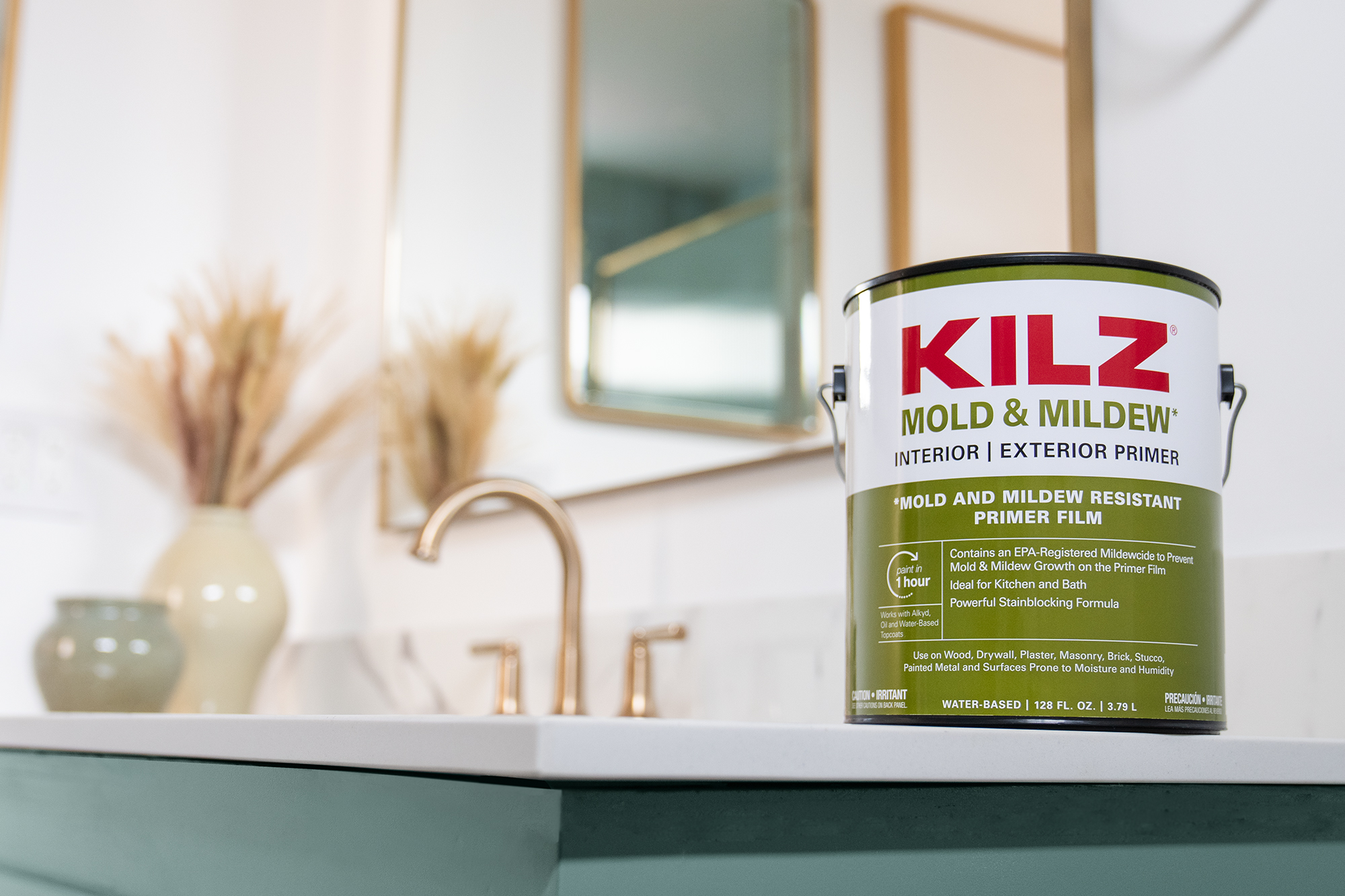
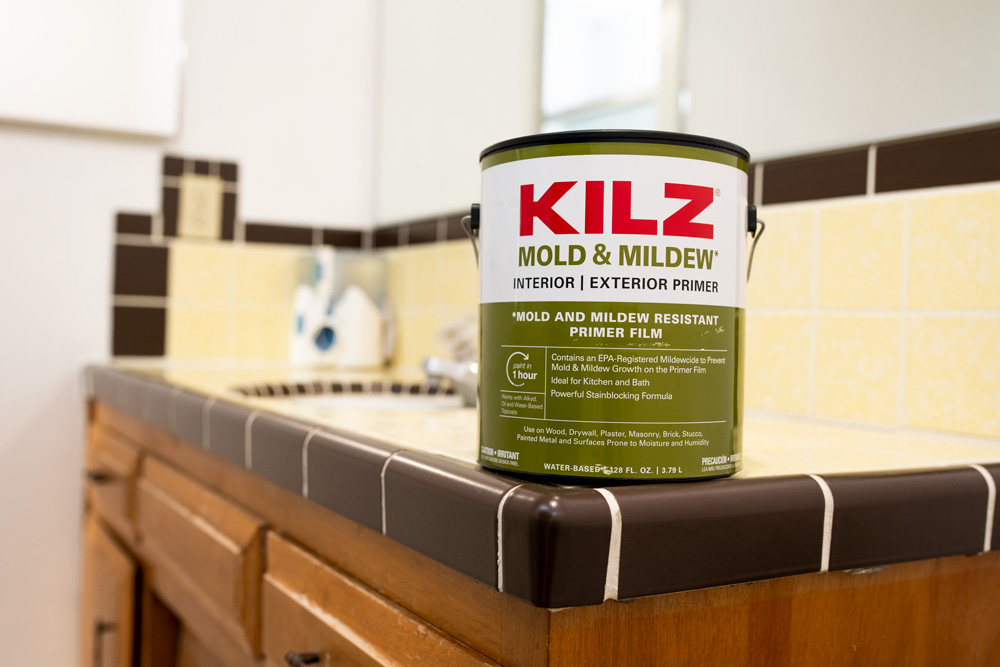
KILZ® Mold & Mildew Primer is a water-based primer-sealer-stain blocker, specially designed for residential surfaces in high humidity, moisture, and temperature environments, and a perfect choice for our bathroom makeover. It offers excellent adhesion, while providing a sound anchor for paints. The EPA registered active ingredient creates a mold and mildew-resistant film that protects the primer film from mold and mildew growth, so you can enjoy your newly-restored bathroom for years to come.
Step-By-Step Guide To Painting Bathroom Cabinets:
Refinishing a bathroom vanity requires a few basic steps to get the smoothest finish and results that will last in a humid environment. Here’s an easy guide to follow for your next project:
1. Use a screwdriver to remove the cabinet doors and drawers from the vanity and to remove all door handles and hardware.
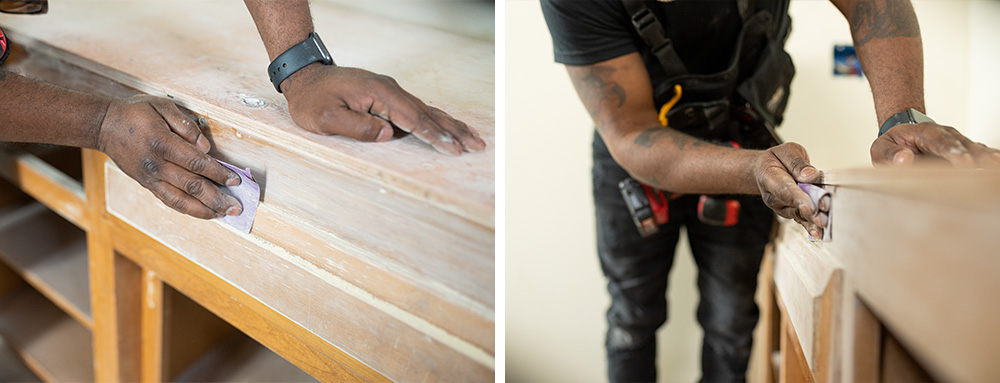
2. Sand the surfaces of the doors, drawer faces, and vanity to create a smooth surface for priming. Do a first pass with 100-150 grit sandpaper then finish with a second pass of 180-220 grit sandpaper. Remember, the higher the “grit” number, the smoother the finish.
3. When sanding, move the sandpaper in the same direction as the wood grain. If you go against the grain, you will end up with a lot of scratches that will show through your topcoat.
4. After sanding, wipe down the surface with a damp cloth to remove any dust or residue. Allow to dry.
5. Protect your floors and workspace from paint and primer by covering it with a drop cloth.
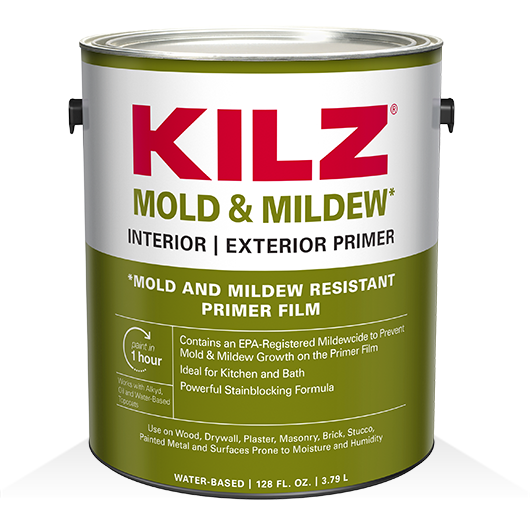
6. For mildew-prone areas like a bathroom, select a primer formulated for high humidity, moisture, and temperature environments like KILZ® Mold & Mildew Primer.
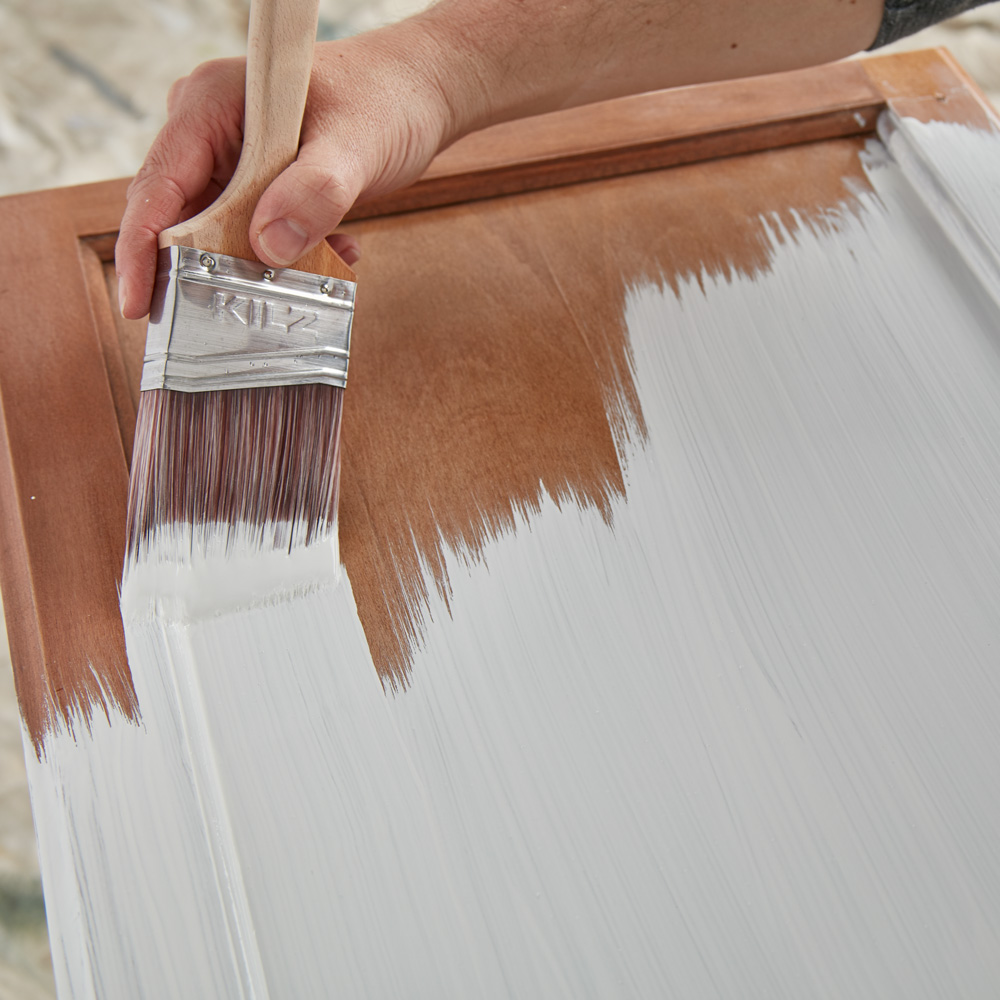
7. Now it’s time to prime! Using your primer, use a brush to make smooth strokes that go in the same direction as the wood grain.
8. Allow to dry for 2 hours.
9. Once the primer is dry, apply paint of your choice using the same application process at the primer.
• Pro-tip: For a really great result, apply primer and paint with a sprayer.
10. Once your paint is dry, reattach hardware to doors, and then reattach the doors to the vanity.
You Will Need:
• Screwdriver
• Dust mask
• 100-150 grit and 180-220 grit sandpaper
• Rags to wipe dirty and dusty surfaces
• Drop cloths, canvas, or other reusable material
• Paint roller, brush, and paint tray
• Paint of choice
We hope this episode of Destination Restoration inspires you to tackle your own bathroom remodel this year. Be sure to keep KILZ® products in mind for your next project, and come back for more ideas, tips, and project inspiration.
If you loved this restoration, be sure to check out the other episodes of Destination Restoration. Jason and Jared took on the Kitchen, Primary Bedroom and Living/Dining Room.
Always remember to refer to our website kilz.com or product back labels for additional information on which primer is right for your project and detailed instructions on how to apply our products. Check out our Coverage Calculator to understand your estimated paint needs for your upcoming project.
RELATED ARTICLES
get inspired:
FOLLOw us:
@kilzbrand
SHOP
PRODUCTS
From Stained to Stunning: Restoring a Primary Bedroom
April 17, 2023On this episode of Destination Restoration, we show you how to restore a room that’s suffered a bit of damage. Older generational homes can accumulate imperfections over time, especially stains from things like water damage. In the case of today’s refresh, not only do we take a standard primary bedroom and update it for a new era, but we also tackle how to restore unsightly, odorous stains using primer and a fresh coat of paint.
This series demonstrates how you can breathe new life into an older home (in this case, a 4th generation family home), while keeping its structural integrity intact.
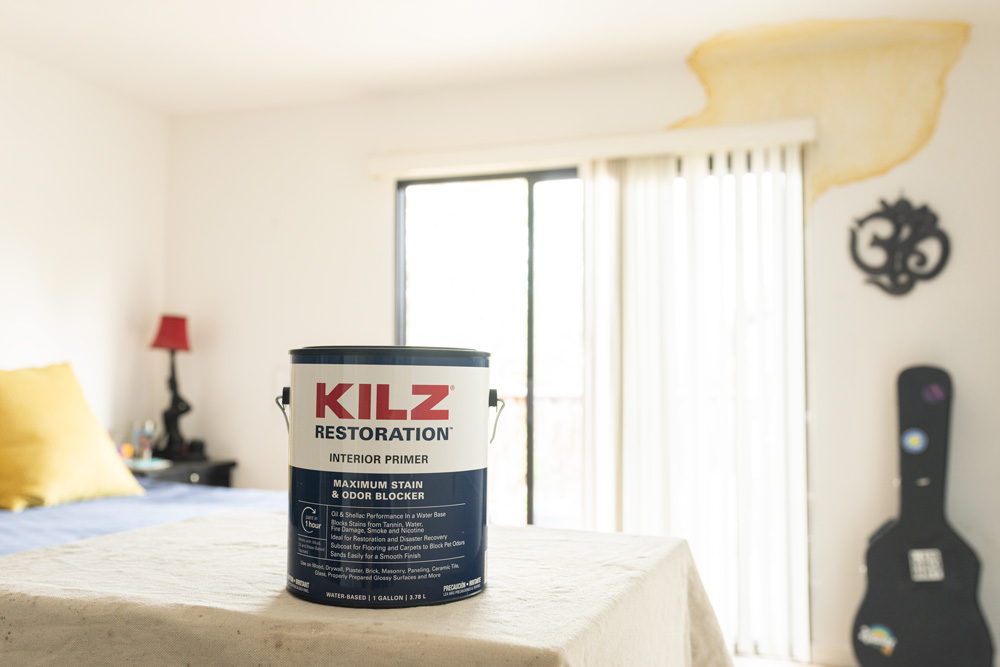
Once again, our fabulous design duo—Jason Lai (interior designer) and Jared Foster (contractor/pro painter) —found a way to update this modest room while addressing the large yellow stain that had leaked its way around the sliding glass door. Our goal was to both cover it up and ensure it wouldn’t show through, which we achieved with a thorough coat of primer and a new coat of paint. Due to the lack of storage in the room, we also wanted to install a custom unit, with ample cabinets to make the space more functional and a modern haven for the parents of this lovely family home.
Covering up stains takes a little extra effort but is totally doable with the right tools. Make sure you choose a sturdy primer that’s right for the job, like KILZ RESTORATION® Interior Primer when tackling a similar project of your own, and follow along to see how our pros approached this room makeover. We’ve also included a step-by-step guide on how to paint over water stains using primer.
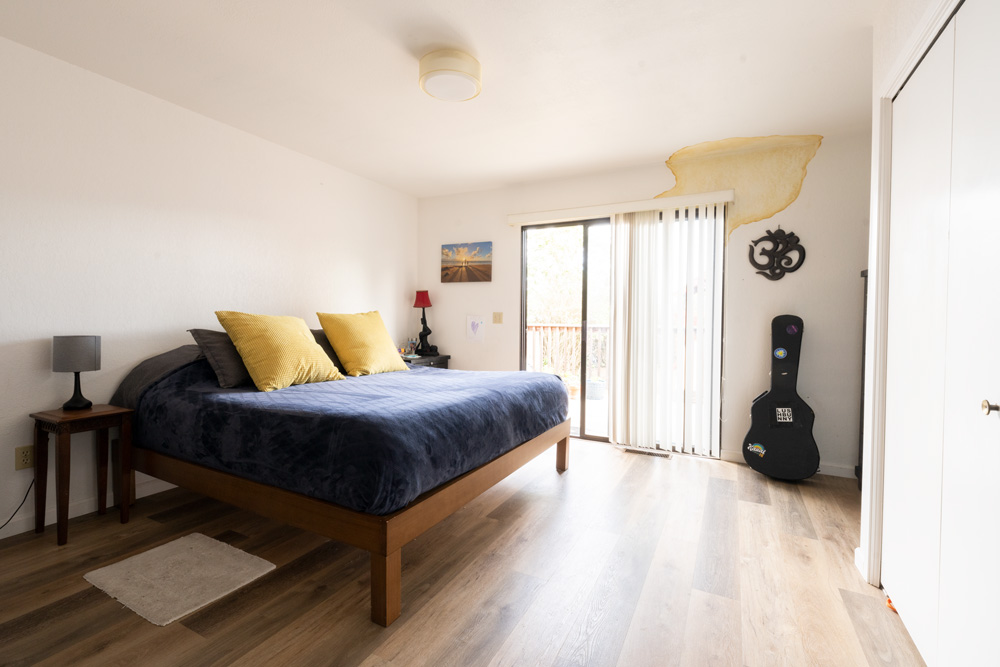
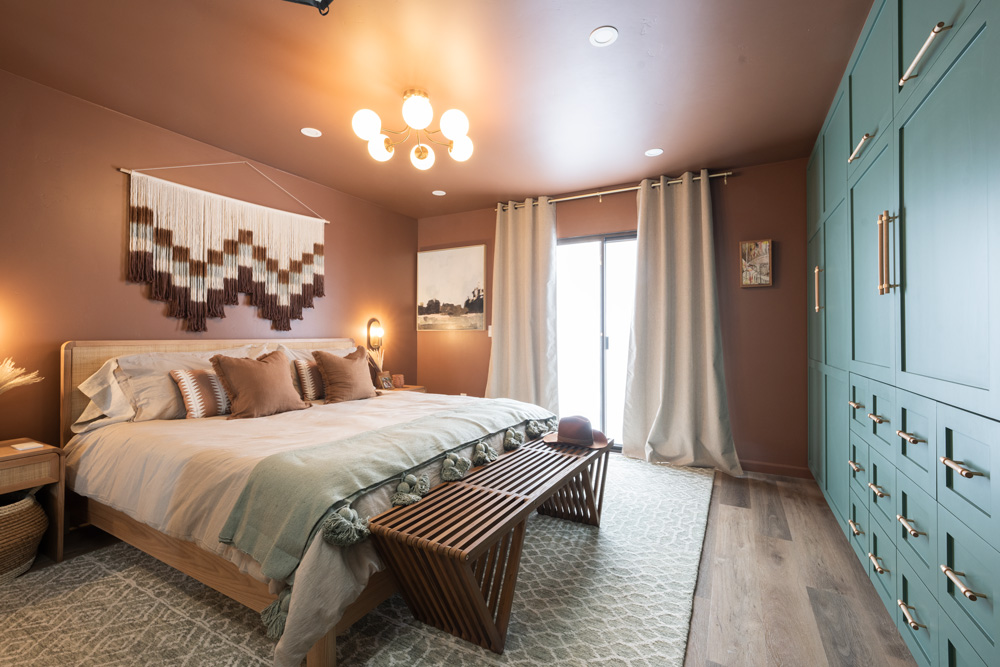
Stain Coverage
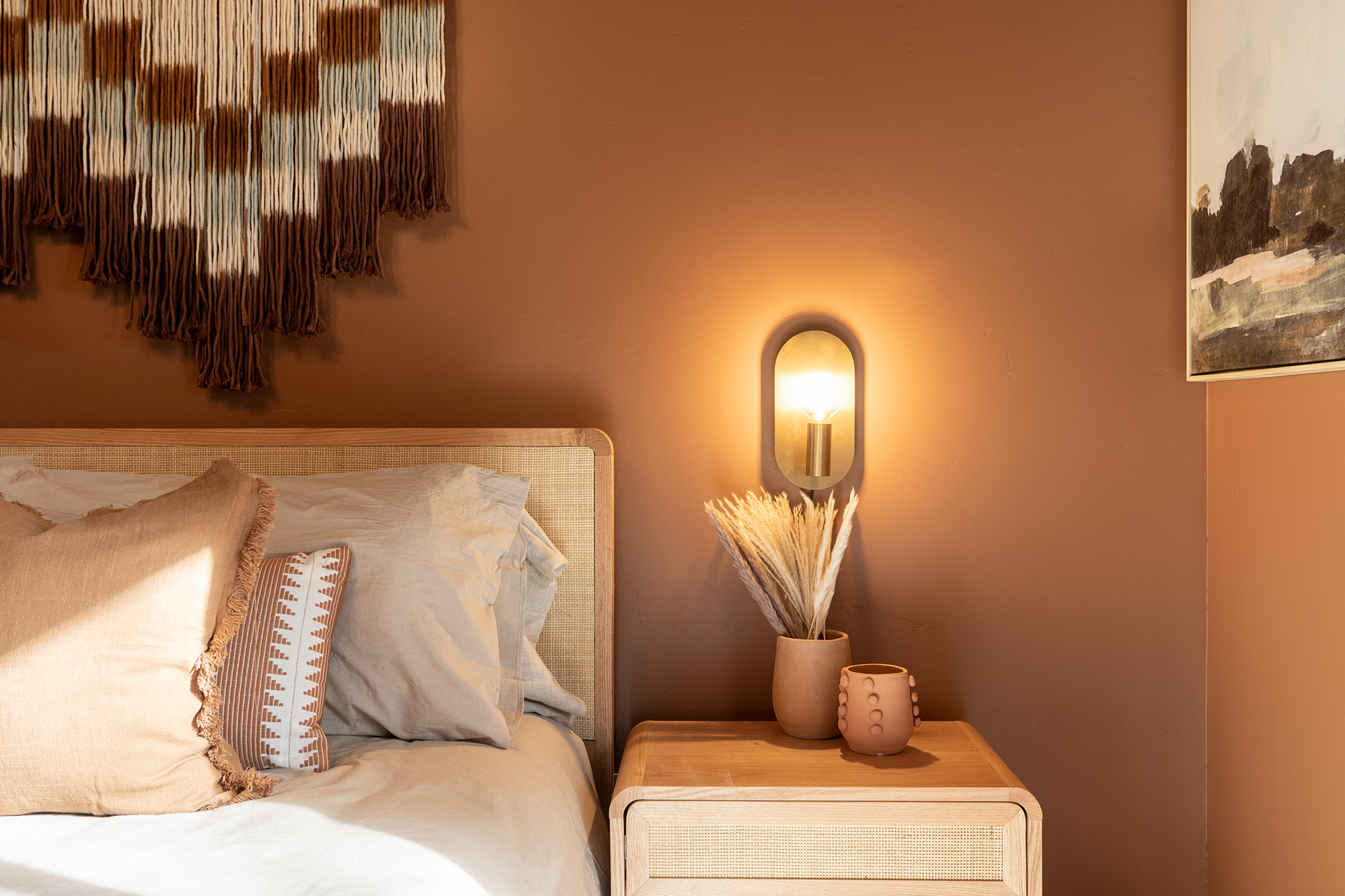
The main goal of this room refresh was to remove any trace of the water stain and get rid of its foul odor at the same time. To do this, we primed over the water stain using KILZ RESTORATION® Interior Primer then painted the walls, ceiling, and molding with Rio Rust, a color by Behr Paint.
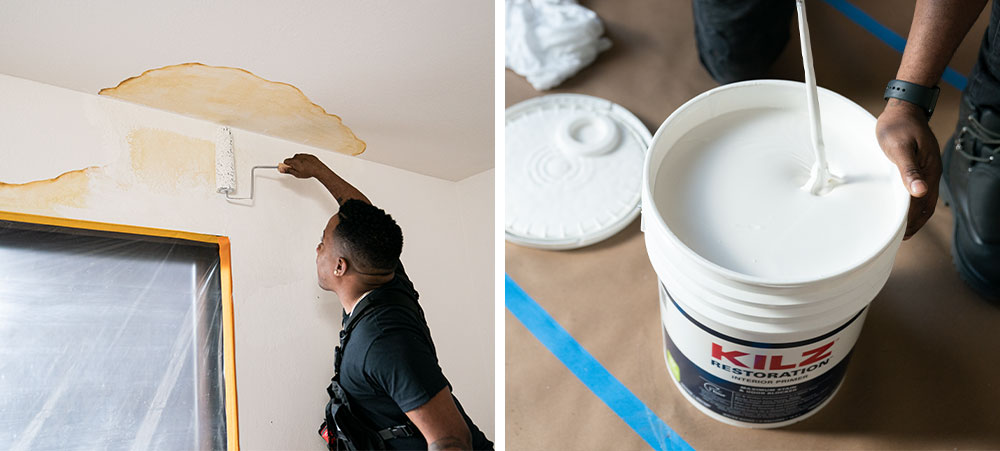
Extra Storage
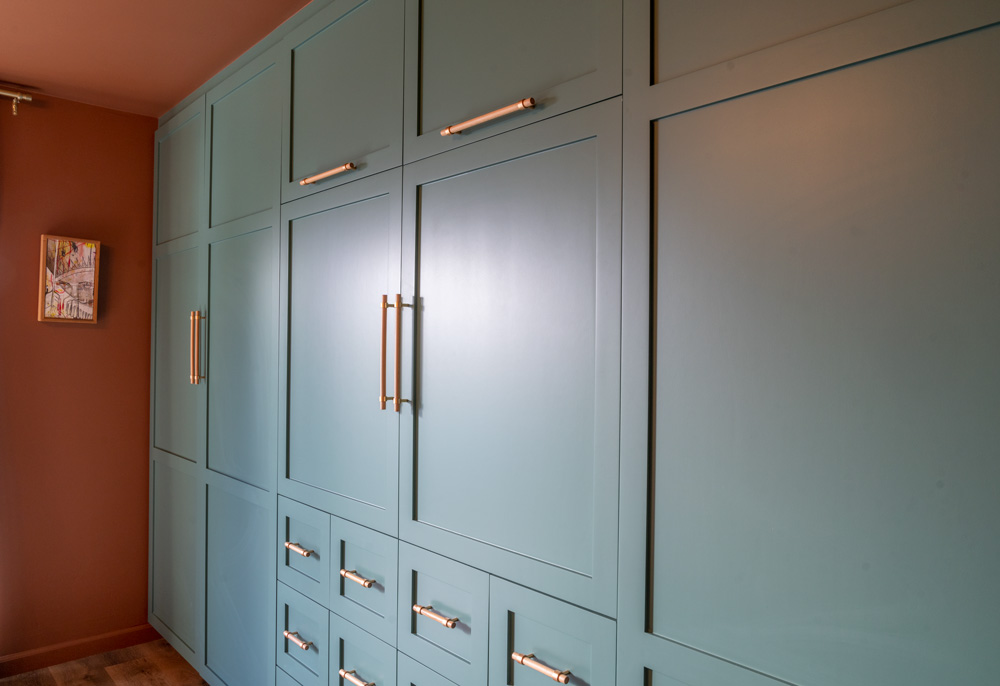
To replace the lackluster closet, we added a custom, built-in closet system with a hidden TV display, perfect for unwinding after a long day. We primed the unit, and then painted it with Forest Edge, a color by Behr Paint, for its ability to stand out and complement the color of the rest of the room. Together, these colors elevated the room and gave it a warm, modern, and cozy feel.
Other Changes
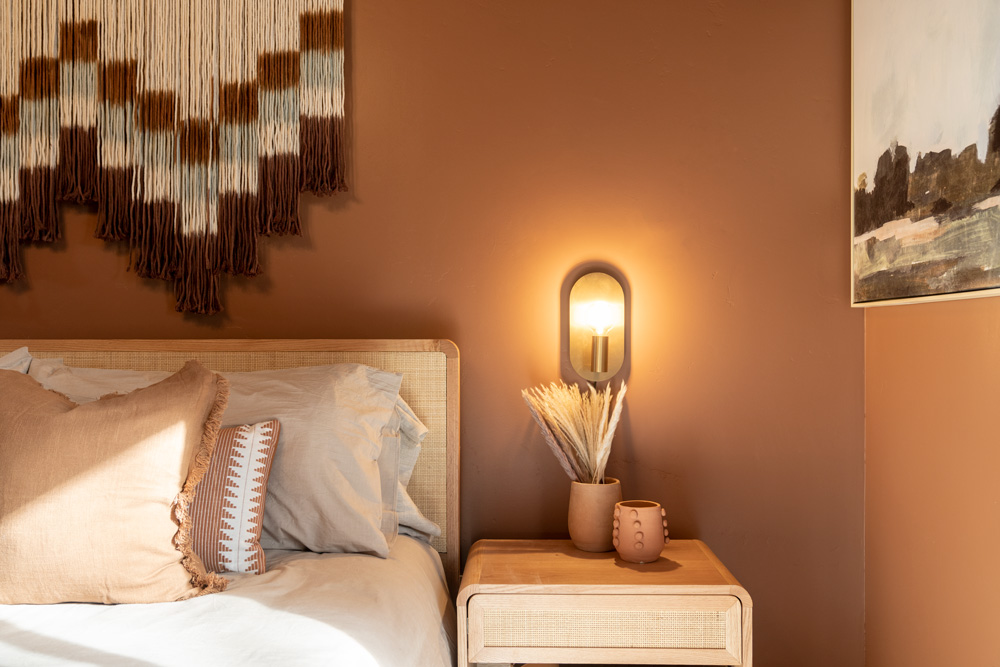
We wanted to update the existing lighting to complement the new design and bring more warmth to the space, so we added a modern chandelier by Kichler Lighting, as well as additional recessed lighting fixtures on the ceiling. We also replaced the door hardware, updated the electrical throughout, and added carefully chosen décor to bring this refined boho-chic look together.
Why Do You Need to Prime?
Priming is essential for proper surface preparation for any paint project. It’s the difference between a job done and a job done right. Priming helps solve a wide range of problems, including highly porous surfaces, stains, odors, uneven surfaces, texture differences, and adhesion problems.
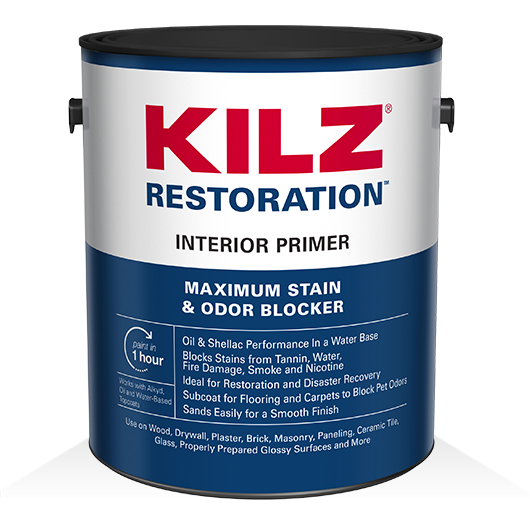
Because this room required stain coverage we used, KILZ RESTORATION® Interior Primer for its superior, water-based sealing and stain blocking formula. It can tackle tough stains from heavy water damage, rust, smoke, nicotine, grease, tannin, ink, pencil, felt marker, pet stains and more. It’s also a champion odor blocker and can be used on many interior surfaces including drywall, woodwork, plaster, masonry, brick, painted metal, ceramic tile, glass, and most other glossy surfaces.
Step-By-Step Guide to Stain Blocking and Priming Walls:
Painting over water stains requires a few basic steps from start to finish. Here’s an easy guide to follow for your next project:
1. Patch any holes from damage and sand smooth to prep the surface (if needed)
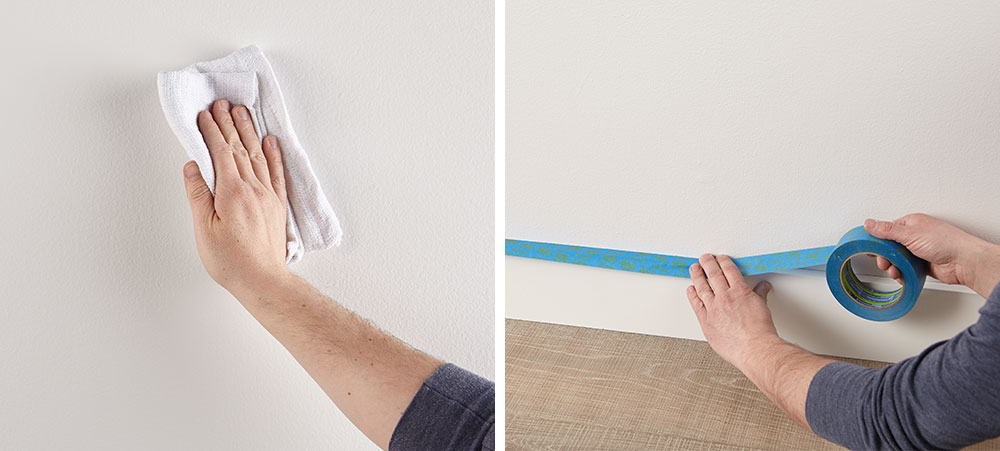
2.Thoroughly clean your surfaces with a damp cloth to ensure they are clean and free of dust. Allow to dry.
3. Tape around the baseboards, trim and moldings.
4. Protect your floors and furniture from paint and primer by covering it with a drop cloth or plastic sheets.
5. For major stains like water, grease, or smoke, select a heavy-duty stain blocker like KILZ RESTORATION® Interior Primer.
6. Now it’s time to prime! Using a brush first to “cut in” around the edges and small crevices, then use a roller to fill in the larger areas.
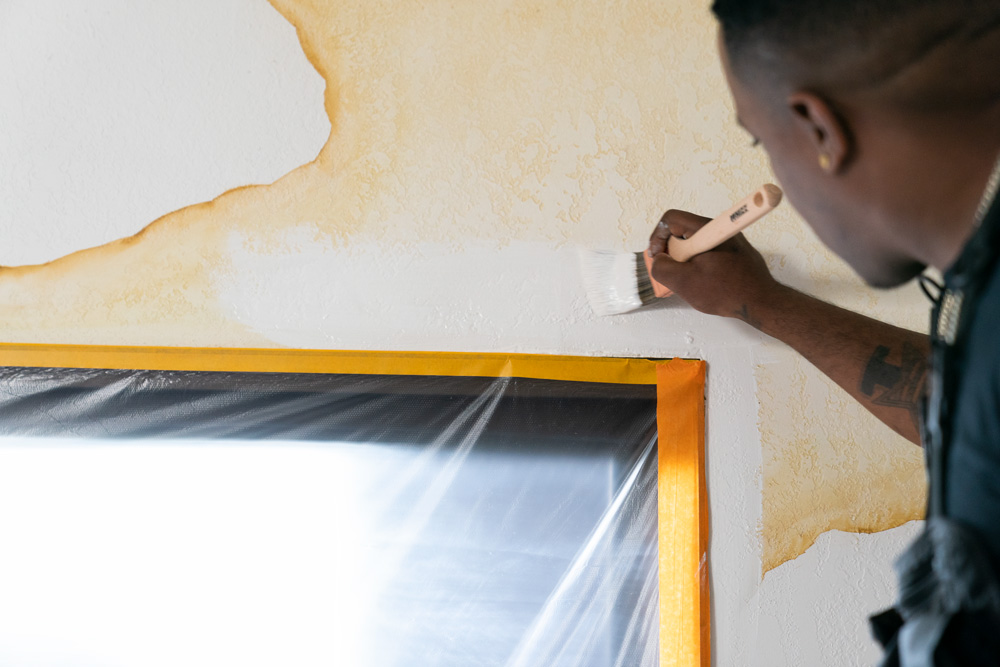
7. Allow to dry for 1 hour.
8. Once the primer is dry, apply paint of your choice using the same application process at the primer.
9. Remove the painter’s tape before your paint is fully dry.
You Will Need:
• Dust mask
• Pole sander with sandpaper, 60-80 grit
• Extension pole for prep and painting, 3’-7′
• Step ladder for hard-to-reach areas
• Rags to wipe dirty and dusty surfaces
• Painter’s tape
• Drop cloths, canvas, or other reusable material
• Plastic sheets, for protecting furniture
• Spackle and applicator
• Paint roller, brush, and paint tray
• Paint of choice
• KILZ RESTORATION® Interior Primer
We hope this episode of Destination Restoration inspires you to tackle your own bedroom remodel this year. Be sure to keep KILZ® products in mind for your next project, and come back for more ideas, tips, and project inspiration.
If you loved this restoration, be sure to check out the other episodes of Destination Restoration. Jason and Jared took on the Kitchen, Living/Dining Room, and Primary Bathroom.
Always remember to refer to our website kilz.com or product back labels for additional information on which primer is right for your project and detailed instructions on how to apply our products. Check out our Coverage Calculator to understand your estimated paint needs for your upcoming project.
RELATED ARTICLES
get inspired:
FOLLOw us:
@kilzbrand
SHOP
PRODUCTS
Choose the Right KILZ® Primer for Your Substrate
February 23, 2023
Whether you’re painting inside or outside your home, choosing a primer suitable for the surface is the difference between success and, well, a not-so-great job. That’s why there are several different KILZ® Primers to choose from.
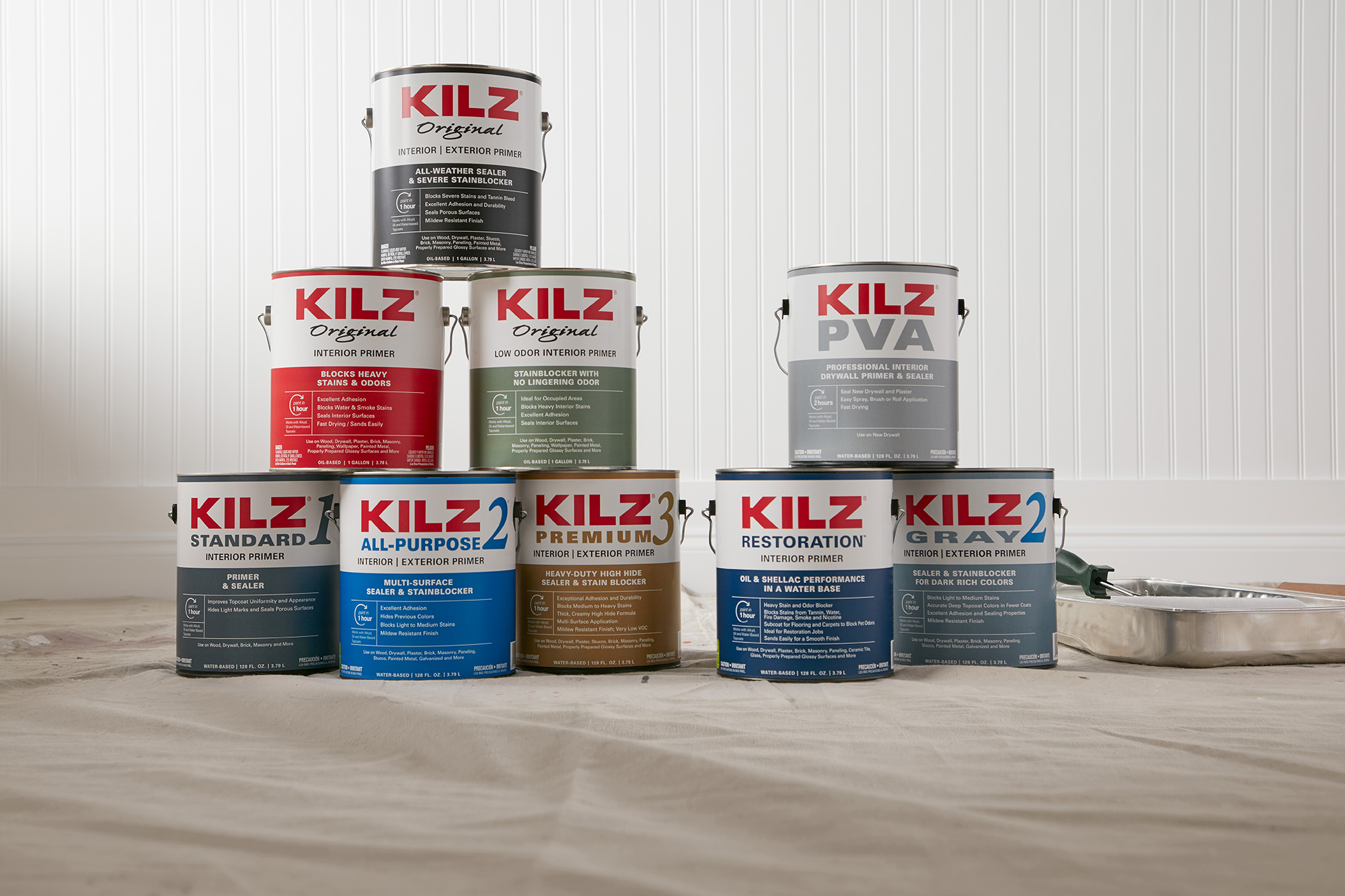
Starting with the right primer could prevent your paint from failing. So, we’ve asked our primer expert, Product Manager John Golamco to answer a few questions about primers and surfaces (substrates) for us.
What to know before starting a paint project
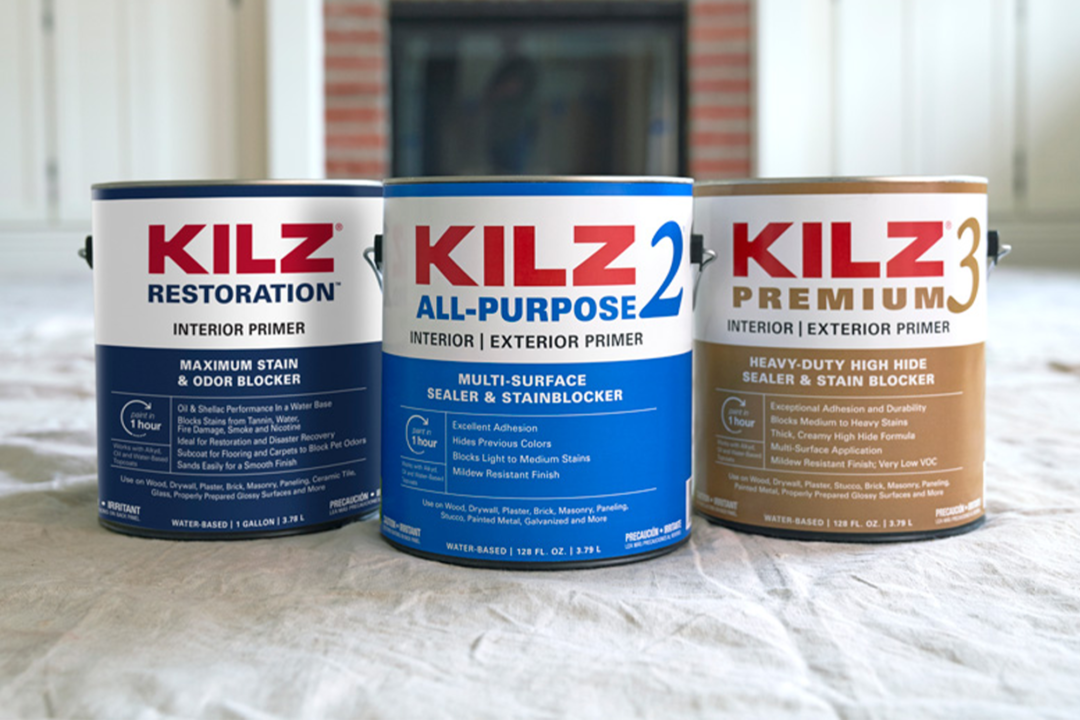
Before beginning any painting project, Golamco says it’s crucial to identify the type of surface you want to prime and paint. Because different substrates accept coatings differently, KILZ formulated with each surface type in mind.
Once you’ve identified the surface type, take note of its condition. Are there any particular circumstances that need addressing before applying a coating? Attend to things like peeling paint, mold or excessive dirt first.
Finally, determine the environmental conditions of the location. Is it damp? Are you painting outside where the surface is exposed to the weather? Or will the paint be subjected to extreme temperature fluctuations? Each of these conditions dictates the primer and paint you choose to use.
Correctly identifying the substrate
Drywall / Gypsum Board
Most interior walls and ceilings are covered in drywall. According to Golamco, the new drywall is very porous and absorbs much paint. So, to avoid applying excessive coats of paint to get the desired color and finish, he recommends using a drywall primer or PVA. The primer will seal the surface before painting so that less paint is required. Since paint typically costs more than a primer, you get a superior finish with less cost. Priming drywall also smooths out the finish and evens out seams, giving better results with fewer coats of paint.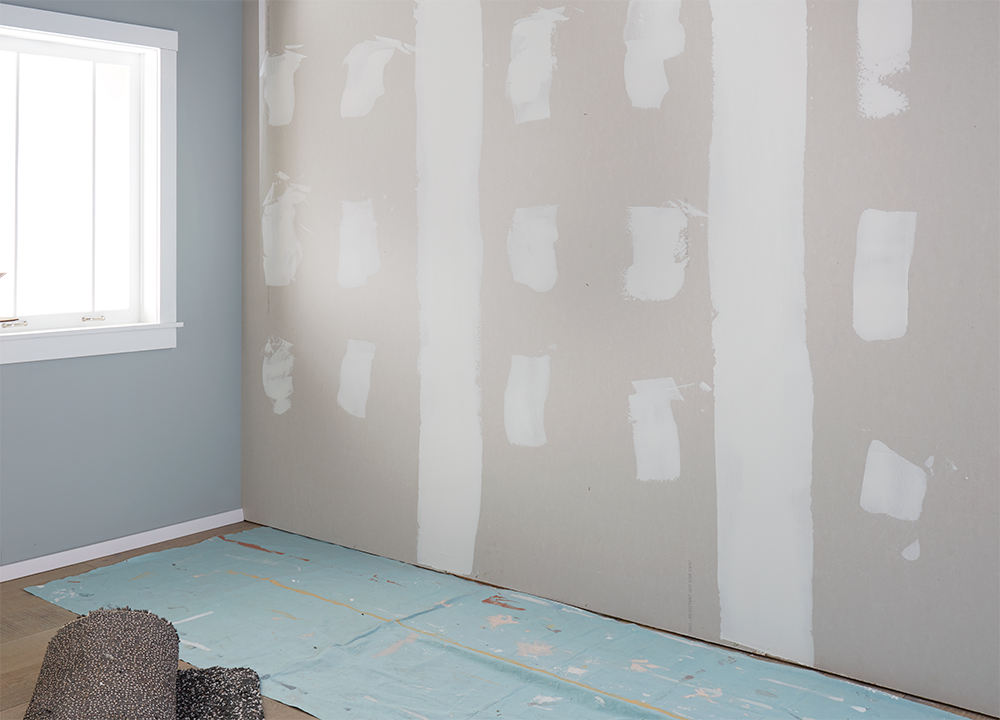
Unfinished wood
Bare wood is porous and grainy. A primer penetrates the wood fibers, seals the porous surface, and creates a smooth, even surface. Golamco says that applying paint to bare wood without a primer coat produces a dull, blotchy finish. Also, some wood species, like red wood , secrete tannins that could leach through the topcoat paint, impacting its appearance. To avoid this, apply a stain-blocking primer to the bare wood before finishing with the topcoat.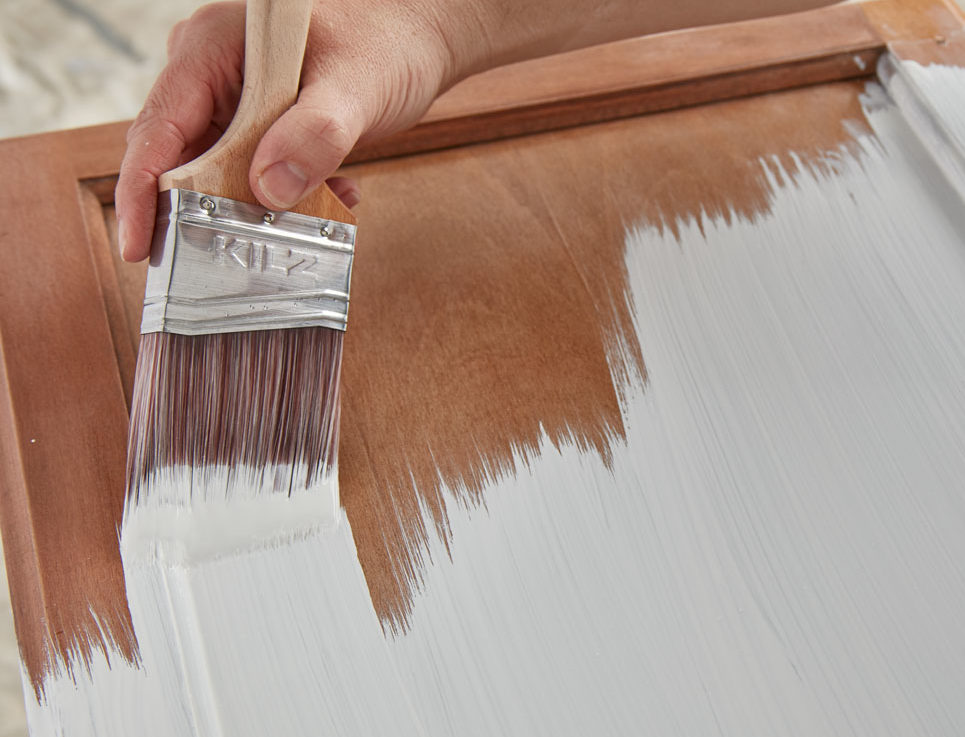
Masonry/ Cement
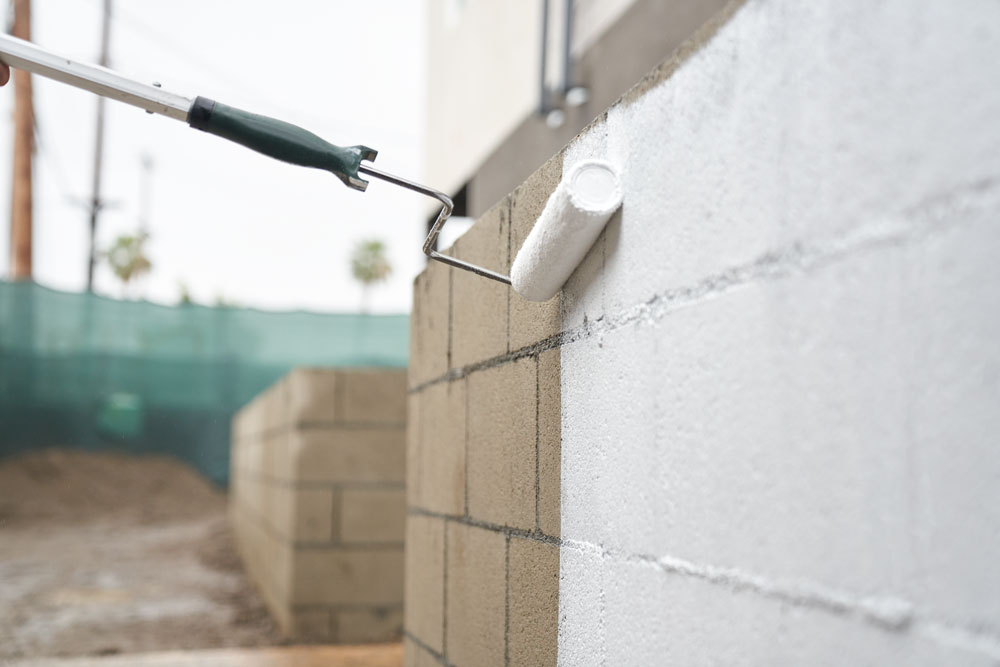
A coat, or two, of primer seals porous surfaces like masonry and concrete, creating a smooth finish for the paint to go on. Without primer, masonry tends to absorb too much paint. And as with drywall, you’ll need to apply more coats to account for the uneven porosity and color. Also, according to Golamco, fresh concrete has a high pH value because its cement binders contain many alkalis. Their presence causes adhesion problems when applying paint and can cause the topcoat color to fade (alkali burnout). But an alkali-resistant primer will better help the paint bond to the masonry and protect the finish over time.
 Metal
Metal
Many people don’t realize that some metals can rust under a paint coating, especially if the metal surface is exposed to moisture. For this reason, it’s essential to prime metal surfaces before painting, particularly when it’s uncoated or bare. Golamco says that metal primers have unique ingredients to make the metal more resistant to rain, humidity, and salt, which cause corrosion.
Plastics
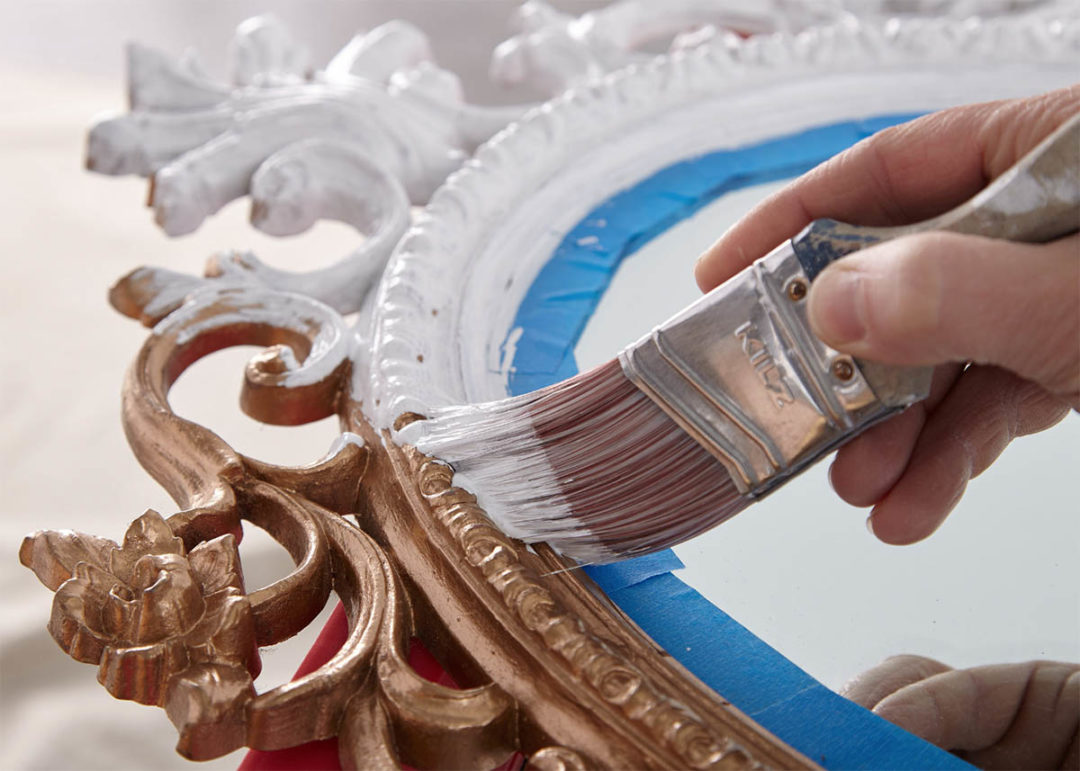
Since plastics are non-porous, paint doesn’t like to stick to them. As a result, paint on plastic often cracks, blisters, or peels. Golamco recommends first sanding the plastic surface, especially around any edges, curves, and areas with intricate detail to prevent this. Once sanded and cleaned, he says to prime the plastic with a high-adhesion primer. This process will help the topcoat paint adhere the way it should.
The importance of choosing the right primer
Applying primer before painting ensures a beautiful outcome that lasts, but not all primers are created equal. KILZ Primers are engineered and formulated to solve the unique types of challenges presented by different substrates.
“Some multi-purpose primers solve a combination of issues with one product,” said Golamco. “But they’re not formulated to address more severe or complex issues.” If you know the surface type, its condition, issues to be addressed and the environmental factors, then this can help you to choose the right primer for the job. So, if you want to cover a dark color with a light one, paint metal to prevent corrosion, or any other challenging substrate, use a specialty primer for a successful outcome.
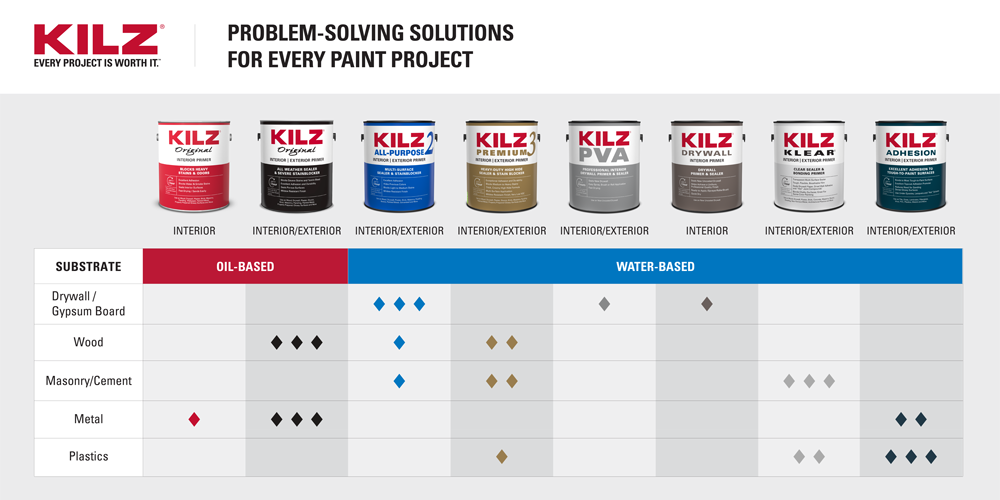
Check out the chart below for the best primer for your project!
RELATED ARTICLES
get inspired:
FOLLOw us:
@kilzbrand
SHOP
PRODUCTS
THE CASTLE COLLECTION: THE BEDROOMS
February 22, 2023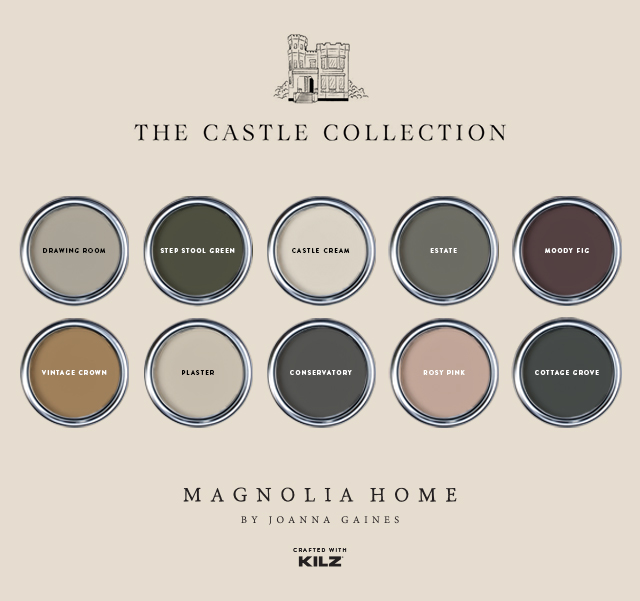 In case you missed it, Magnolia Home by Joanna Gaines® has released ten brand new colors, The Castle Collection, specially designed for Chip and Joanna Gaines’ Castle renovation in Waco,Texas. Featuring a beautiful range of warm neutrals to moody accents, these deep and rich colors will turn any space into a timeless classic.
This year on The Perfect Finish, we will be highlighting specific rooms to showcase the Castle Collection in detail. And be sure to check out the newest season of the Gaines’ hit TV show Fixer Upper: The Castle to catch these colors in action.
Today, we are highlighting two of the featured rooms inside the Castle project: the Girls’ Room and the Boys’ Room, each painted in one of the Castle Collection Colors.
THE GIRLS’ ROOM
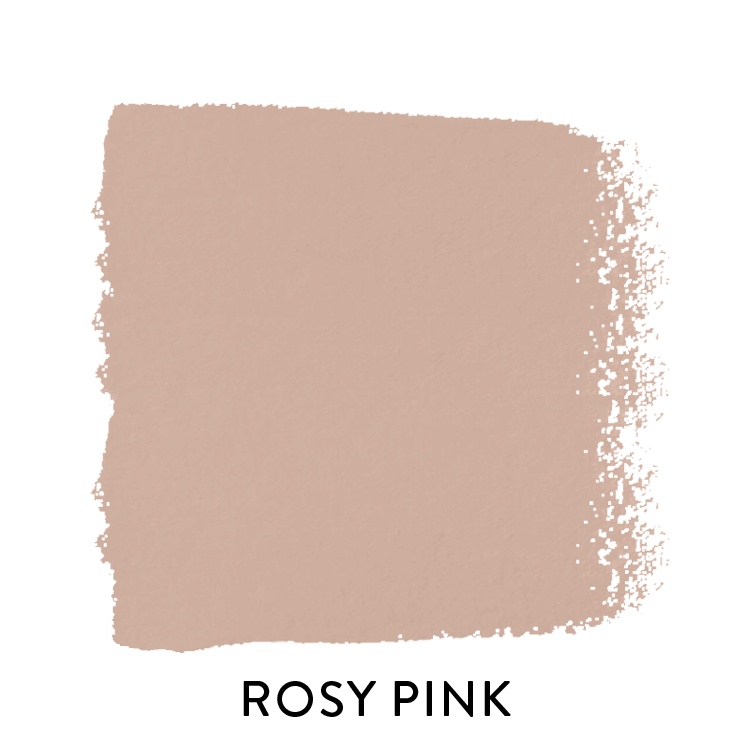
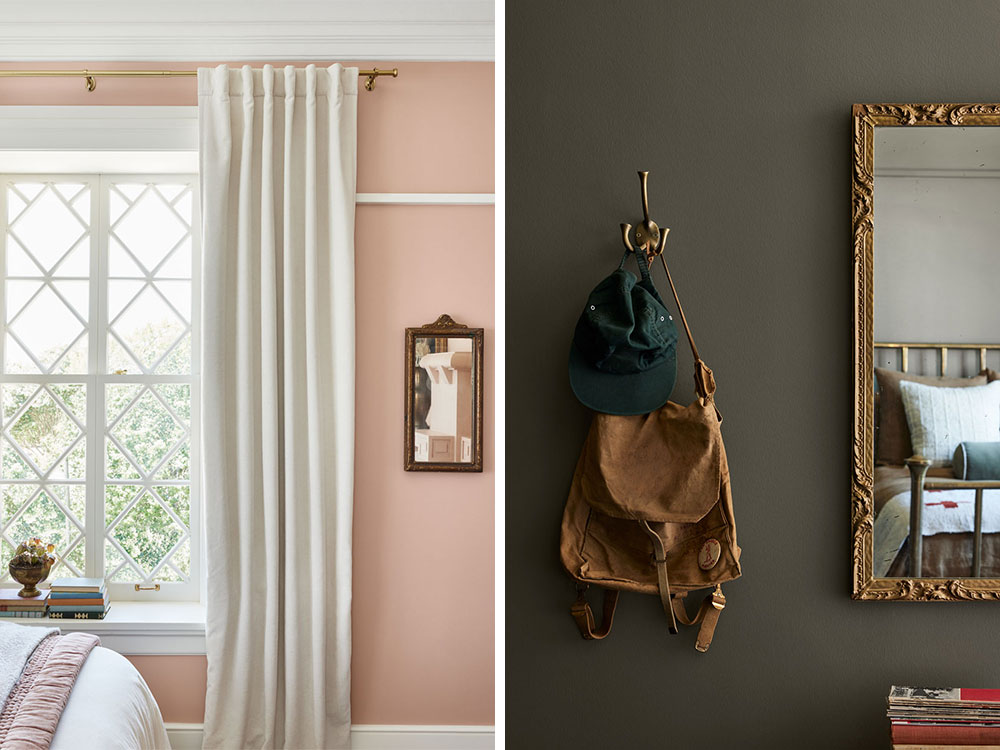
This bedroom is painted Rosy Pink, a dusty, subtle pink with a nostalgic tone, which was specifically created with this room in mind. Paired with clean white trim and white light fixtures, this room becomes a soothing and inviting space.
With natural light streaming into this room from the large windows, Rosy Pink gives the space a warm glow. Named after Joanna Gaines’s grandmother, this paint color is bound to make any child (and adult) excited to call this room their own.
“This color is inspired by my grandmother, Agnes Rose. It’s a subtle pink with a vintage style.” – Joanna Gaines
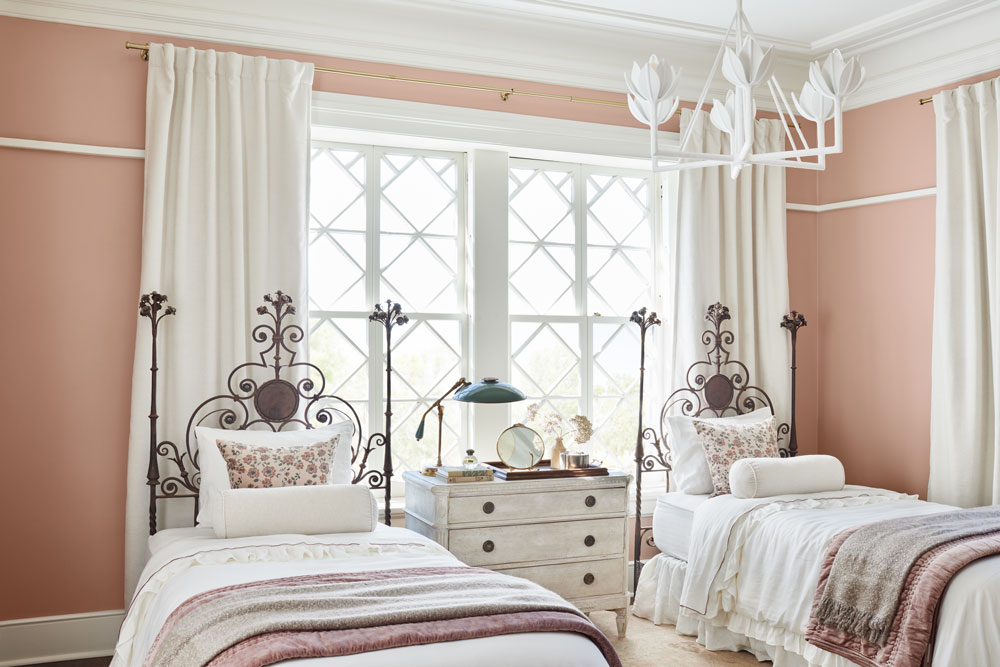
Metal accents and vintage style décor add to this nostalgic vibe and make the timeless tone of the color really stand out.
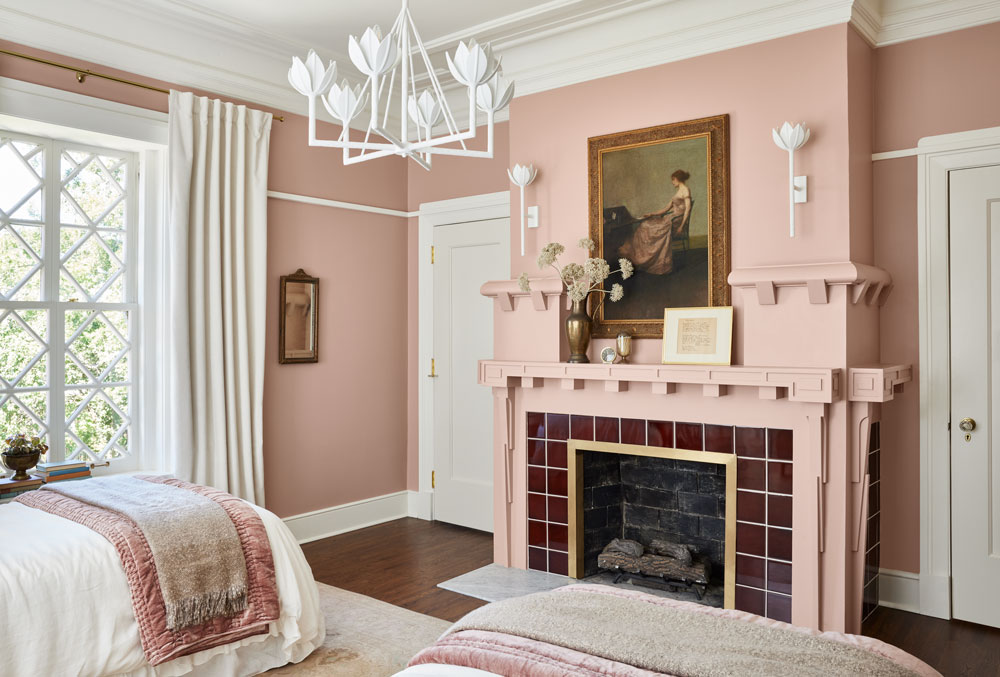
This bedroom also features a fireplace, just one of seven throughout the Castle project. Coated in Rosy Pink with a moody mauve tile surround, this becomes a centerpiece of the space.
THE BOYS’ ROOM
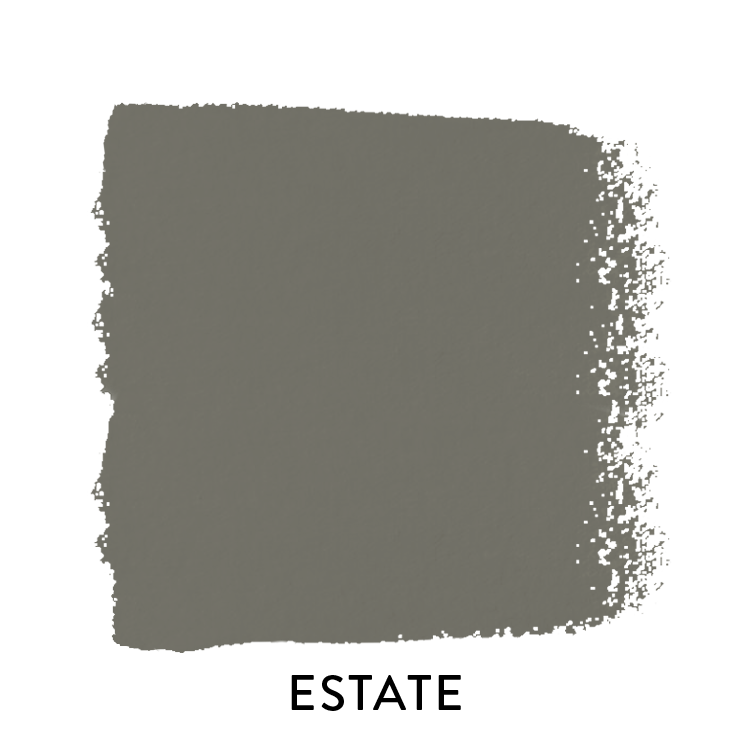
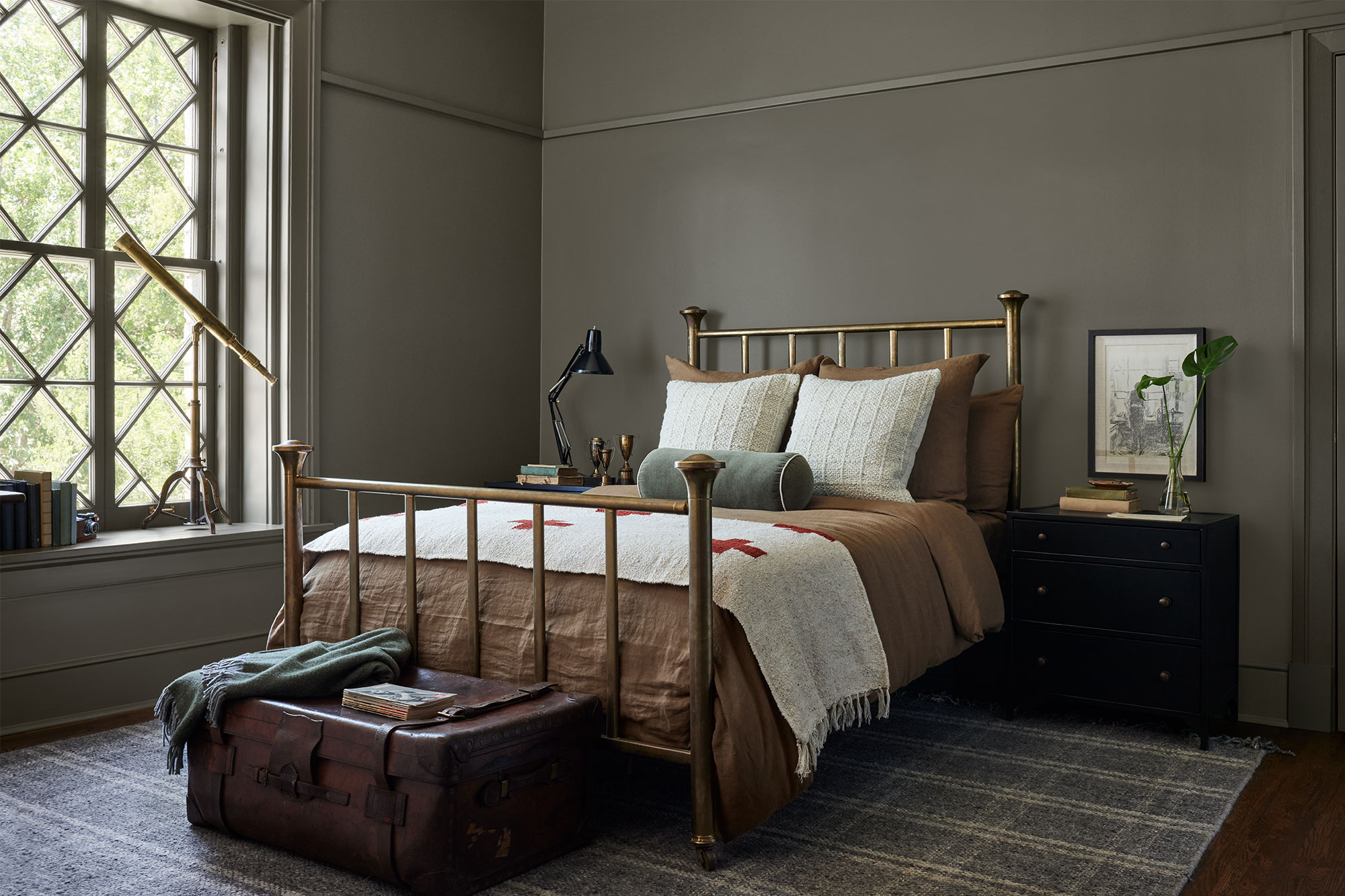
The Boys’ Room features Castle Collection color, Estate, a deep sage with a soft gray undertone. With Estate cascading up onto the ceiling and trim, over the fireplace, and onto the doors, there is a grandeur and sophistication that envelopes this room.
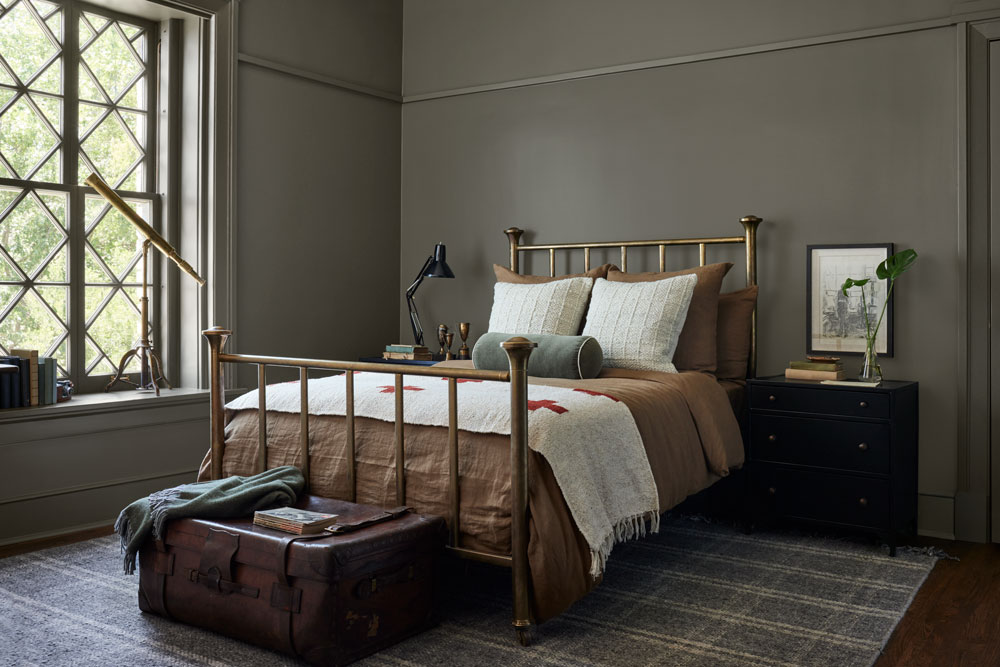
This color was specially curated and designed for this room in the Castle, like many of the colors in the Castle Collection. With Estate covering every crevasse in this space, it’s easy to see the depth of this regal color.
Complemented by a black leather chair, brass bedframe, an antique desk, and décor accents with a classic style, this room’s design will make anybody swoon.
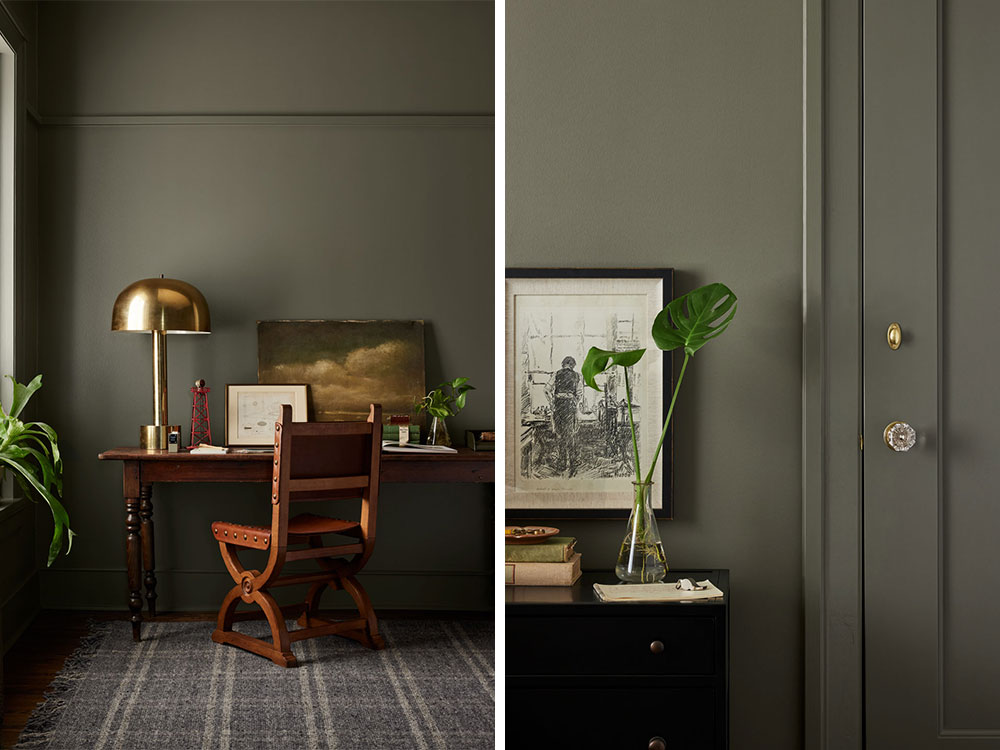
A special edition of Fixer Upper: The Castle is available on the Gaines’ Magnolia Network, Discovery+ and HBOMax. The season follows Chip and Joanna through six episodes of the renovation journey, including the development of The Castle Collection color palette.
Don’t forget to check back here at the Perfect Finish to read more about specific rooms and paint colors featured in the Castle project.
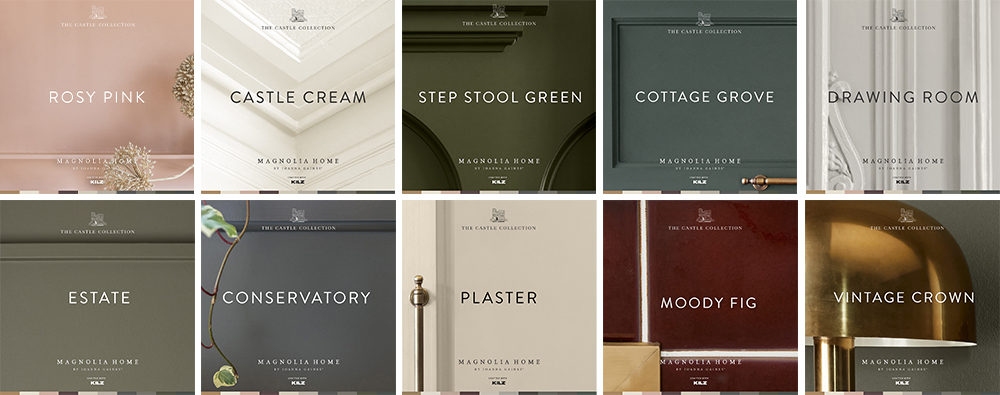
Inspired by these bedrooms and looking for complementary colors for your own space? The curated palette below offers shades that complement and coordinate with Estate and Rosy Pink from Magnolia Home by Joanna Gaines.
ROSY PINK COMPLEMENTARY PALETTE

Moody Fig (From the Castle Collection)

Garden Party

Rocking House

Solid Wood

Silos White
ESTATE COMPLEMENTARY PALETTE

Vintage Crown (From the Castle Collection)

Renewed

Coffee Nook

One Horn White

Vintage Weathervane
These paint colors are available at Ace Hardware, Lowe’s and Magnolia.com/shop.
RELATED ARTICLES
get inspired:
FOLLOw us:
@kilzbrand
SHOP
PRODUCTS

Primers Save You Time, Money, and Labor
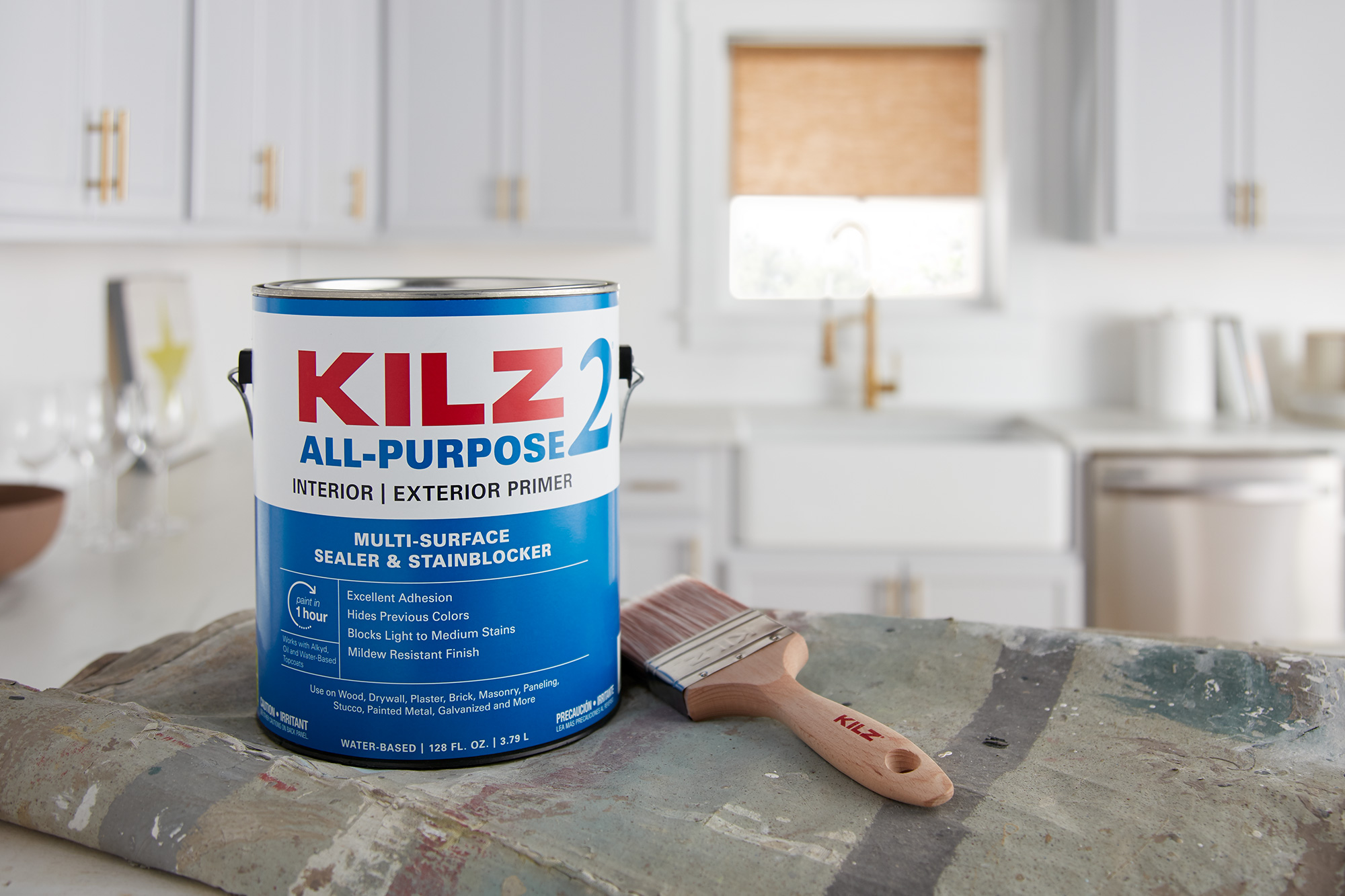
January 18, 2023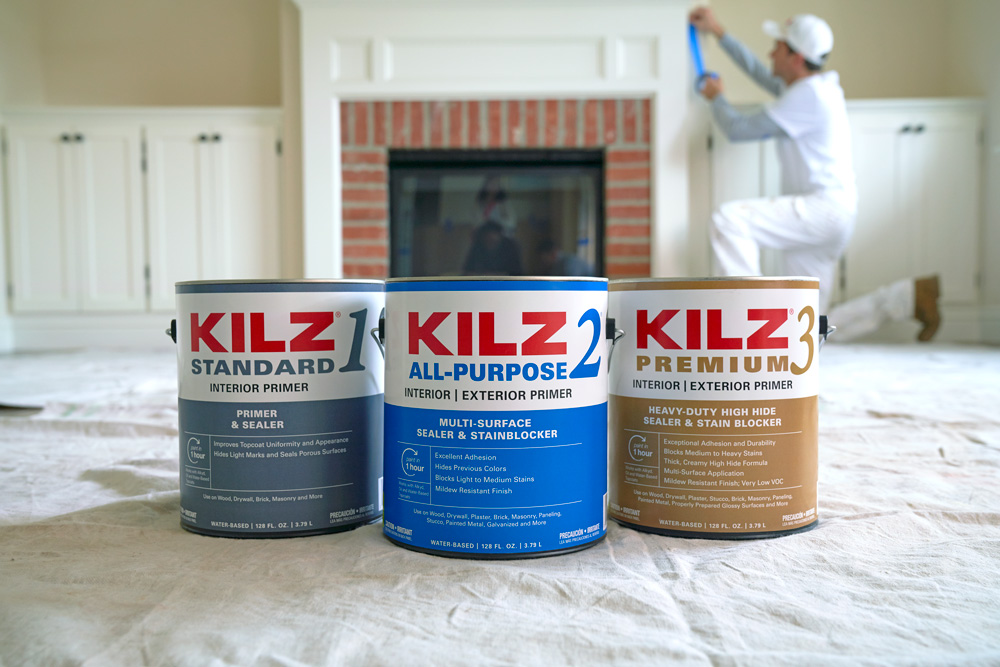 Primer is essential to properly prepare a surface for the best results for your paint project. Many issues can ruin a project and not make it look its best, affecting your time and money. This could lead to purchasing more paint due to a porous surface not being sealed or using more coats to hide that old color. Priming provides a clean slate for the color of your topcoat to shine. Additionally, primer helps hide any stains, such as water leaks, pet accidents, or years of smoke residue. Some paints have trouble adhering to certain surfaces, which could result in chipping, flaking, or peeling over time. Primer acts like glue to help the topcoat adhere and last longer.
Primer can save you time by sealing porous surfaces evenly and resulting in fewer coats of topcoats. Primer acts as an “anchor” for the paint to adhere to the painted surface, reducing the probability of retouching paint and re-doing a project sooner. For those more technically advanced, primers hold a unique feature that allows you to paint on a new concrete or masonry surface sooner.
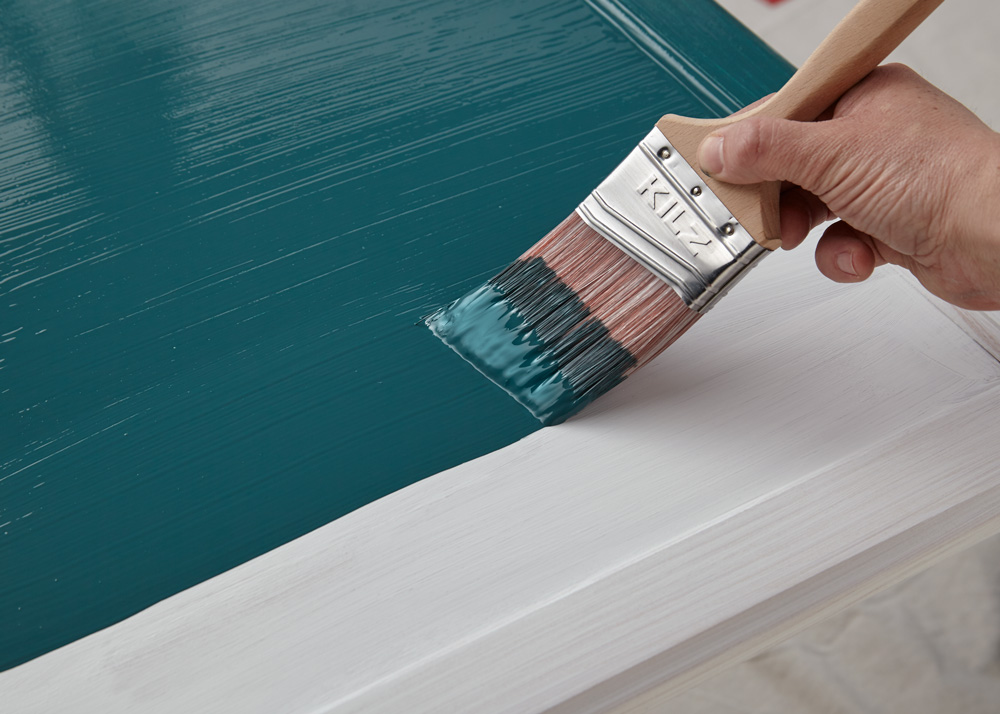
Primer can save you money because it is formulated to solve specific problems before you paint, creating a suitable surface for lasting results. Primer costs less than the topcoat, so using a primer first and then applying the topcoat would be cheaper than applying multiple coats of topcoat only. You also save money in the long term due to better, longer-lasting results, which means less need to repaint or repair.
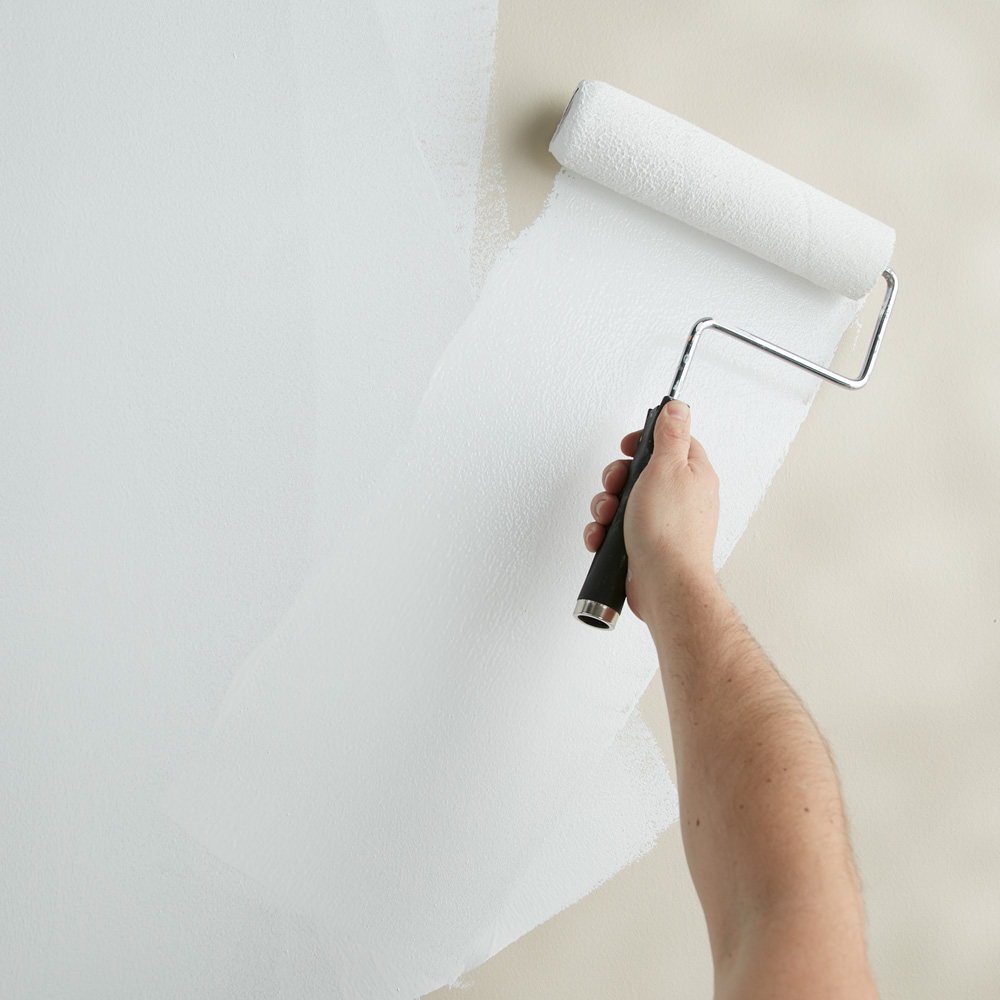
Primers can save you labor because they provide an ideal base coat to which the topcoat can adhere better and result in a better-looking, longer-lasting paint finish. Applying primer also can solve several problems, and best prepare the surface for painting, resulting in less time and later labor do-overs.
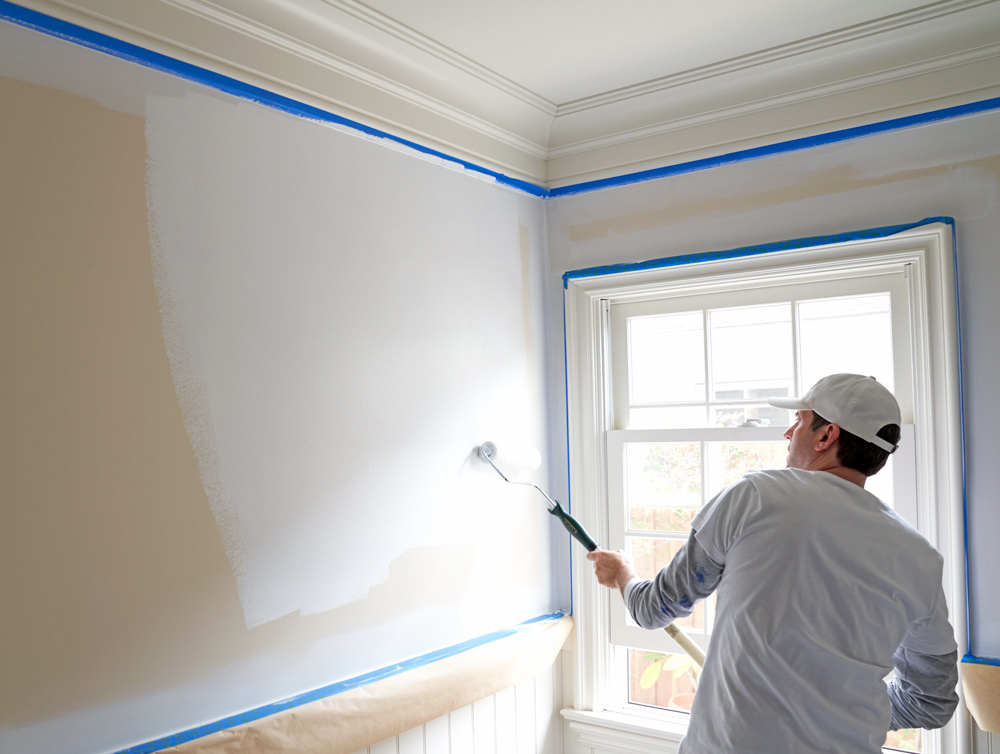
The KILZ brand offers primer for all types of substrate and surface issues. Check out our offering here!
Always remember to refer to our website kilz.com or product back labels for additional information on which primer is right for your project and detailed instructions on how to apply our products. Check out our Coverage Calculator to understand your estimated paint needs for your upcoming project.
RELATED ARTICLES
get inspired:
FOLLOw us:
@kilzbrand
SHOP
PRODUCTS
Tips from the Team
January 17, 2023
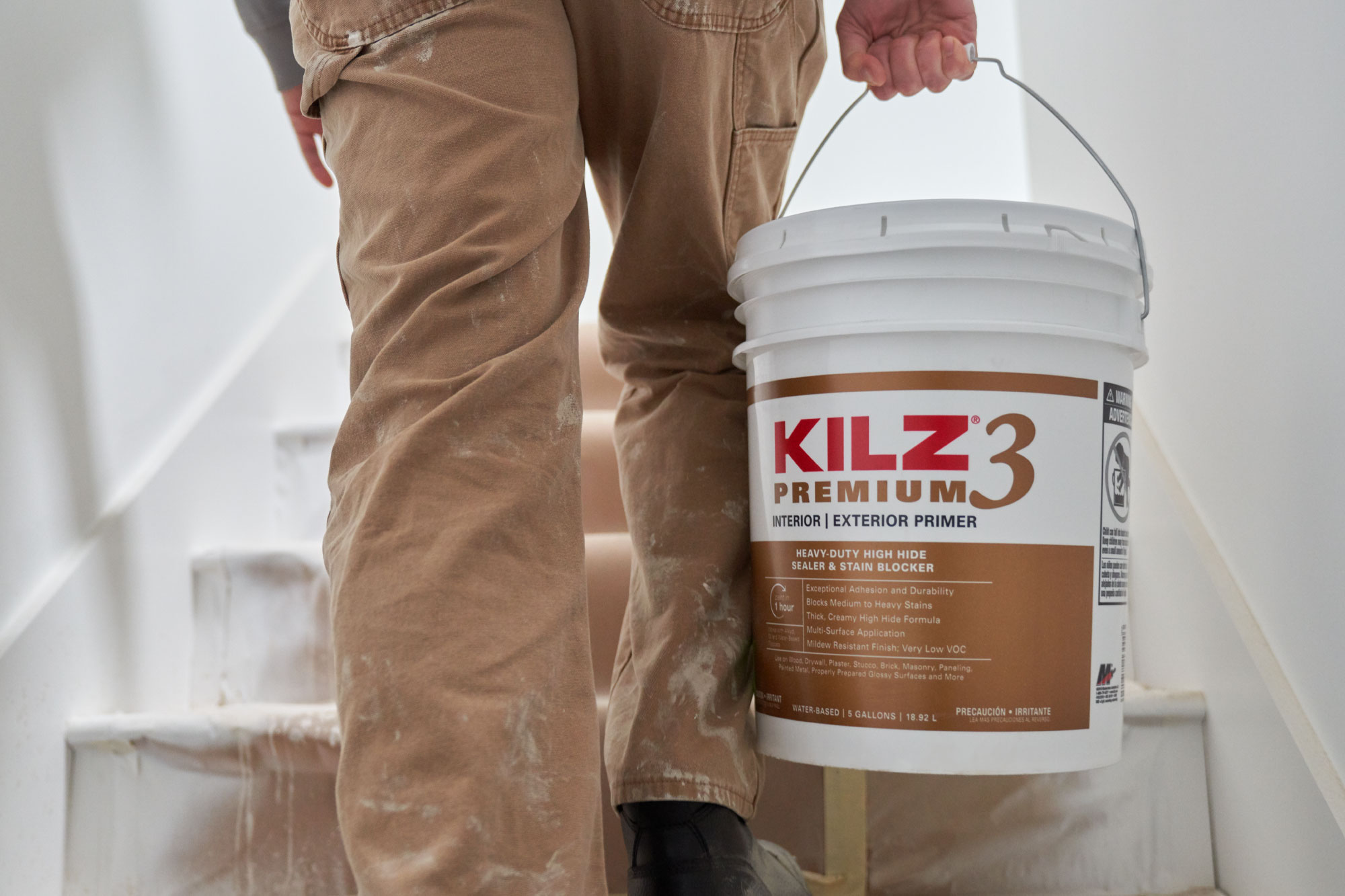
Here on the Perfect Finish, we are starting the year 2023 with our favorite paint category: Primer! Thomas McEvoy, a KILZ product trainer and training content developer, teaches us the importance of preparing the surfaces of your home and using primer during any painting project. Thomas’s favorite part of working for Behr Paint Company and with the KILZ team is the people and their enthusiasm to make the best products and service experience for our customers. Thomas has been with Behr for 20 years and is here to share his experience with you to help get prepared for your painting project.
Why should an individual prep the surfaces of their home?
Preparation is critical because most paint failures, such as paint peeling, old color bleeding through, and wear and tear over time, occur because of skipped prep steps. The best way to prep the surface is to promote adhesion (how the paint sticks to the surface), sealing (adding a protective coat), and stain-blocking if needed. Using a suitable primer promotes adhesion by bonding the surface that adheres to the topcoat. Using the right primer can achieve the aspects of a properly prepared surface.
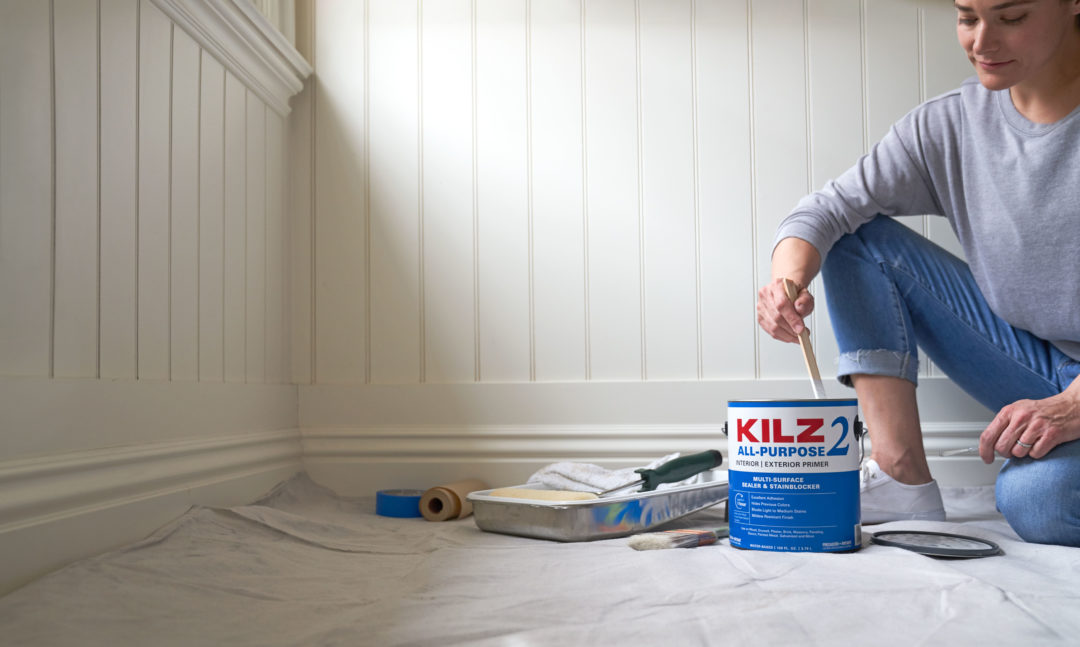
How do I properly prepare a surface before priming and painting?
Here are a few ways to prepare your surface.
1. Lightly sand hard or slick surfaces to promote adhesionSanding can also remove physical imperfections accumulated over time. Any surface that has been lightly sanded during prep will usually lead to a softer texture after painting.
2. Painting over unsealed surfaces can lead to color variation, unevenness in paint sheen, the need to apply more paint, and, eventually, the peeling of the paint. Using a good primer is an important step before painting.
3. When stain-blocking is needed, only the right primer can ensure no bleed through the topcoat. This prep step is critical to ensure we paint over a sound surface.

When is the best time to prepare your surface?
The best time to prep the surface is before you paint and after clearing the space as much as possible and protecting surfaces like carpet and furniture. Time spent on prep will save frustration and added expense later.
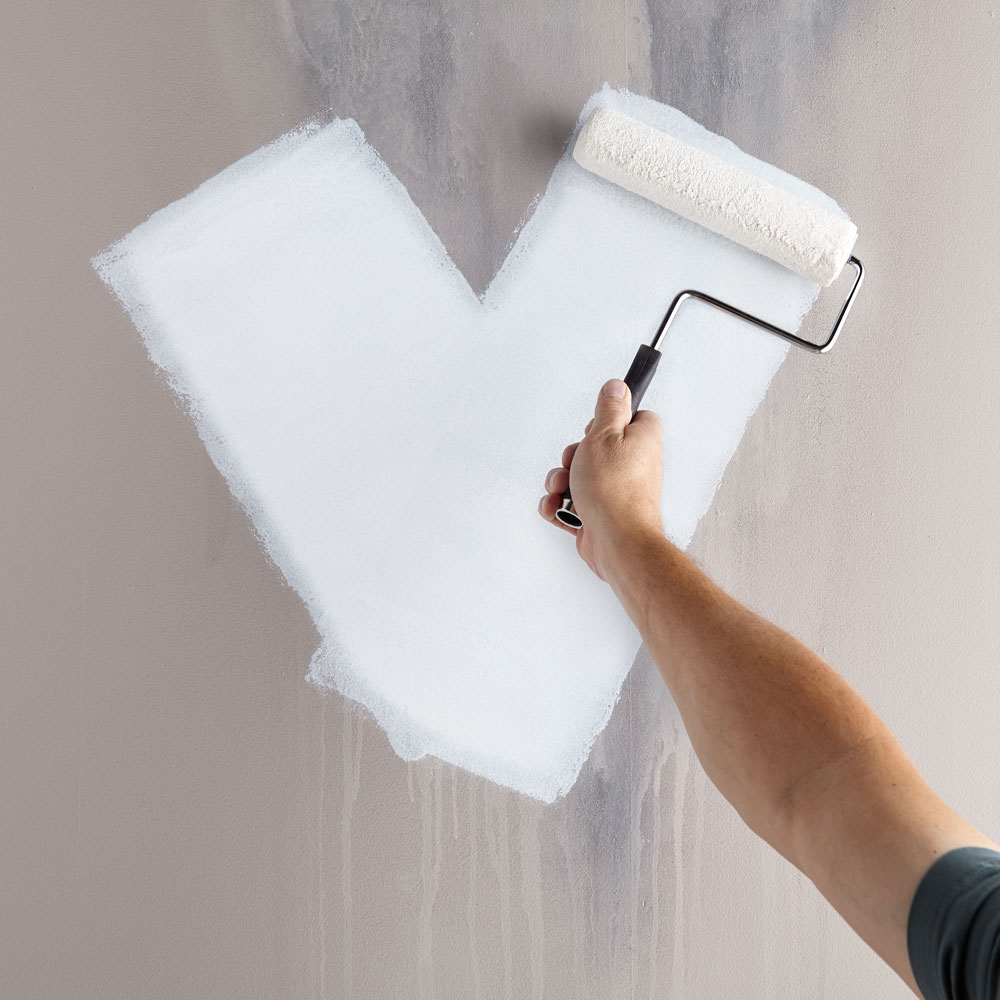
What tools do I need to prepare a surface?
There are many tools to have in a paint kit for current and future projects. A large plastic tote can hold several drop cloths and most smaller tools. I recommend the following tools to get the job done right:
• Dust mask
• Sanding pad, 80-200 grit
• Pole sander with sandpaper, 60-80 grit
• Step ladder
• Painter’s tape for protecting baseboards, doors, and window casing
• Drop cloths, canvas, or other reusable material
• Plastic, for protecting furniture
• Rags to wipe dirty and dusty surfaces
Having the right tools is a critical part of project success. Most of these tools can be used again for many other projects.

Where do I go to find the right primer?
Check out KILZ.com to research the right primer for your project. After, visit your local hardware store or retailer to engage with a thoughtful paint associate that can help with what works for you, and secure the rest of the tools needed for a successful project.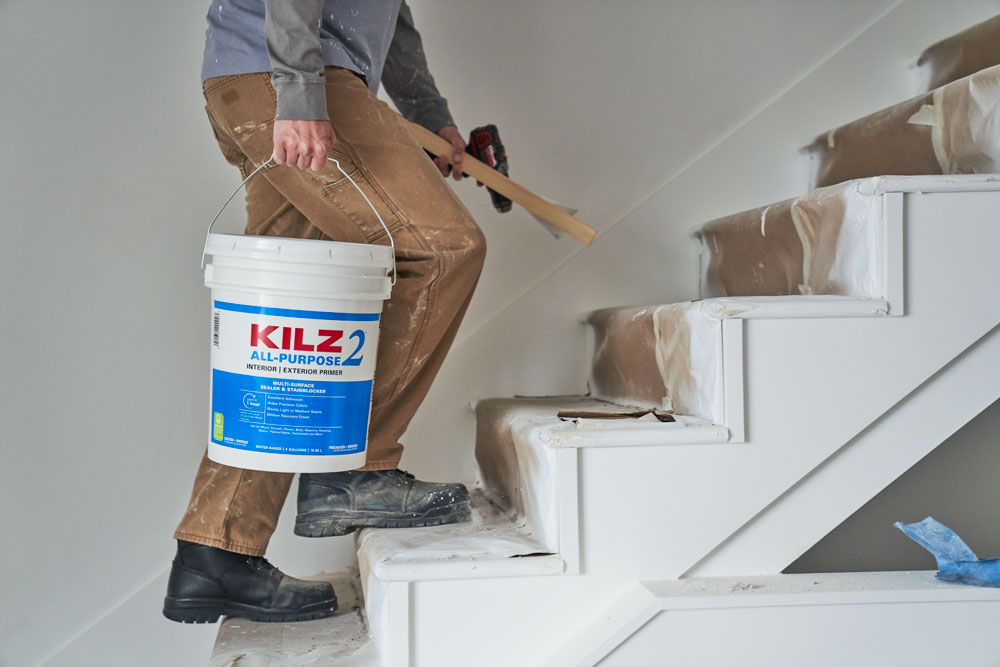
Can I do this myself? Or should I call an expert?
Both are options! You can do this job, or if you prefer, you can call a professional painter to complete your project. Check out your local hardware store and ask a paint associate to help coordinate what is needed for your specific project.
Always remember to refer to our website kilz.com or product back labels for additional information on which primer is right for your project and detailed instructions on how to apply
RELATED ARTICLES
get inspired:
FOLLOw us:
@kilzbrand
SHOP
PRODUCTS
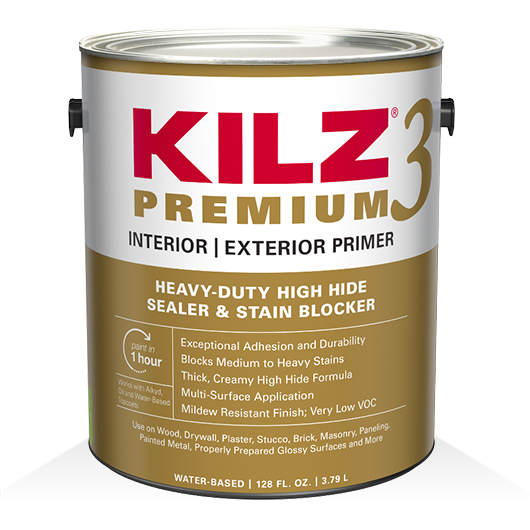
Our Favorite Projects of 2022
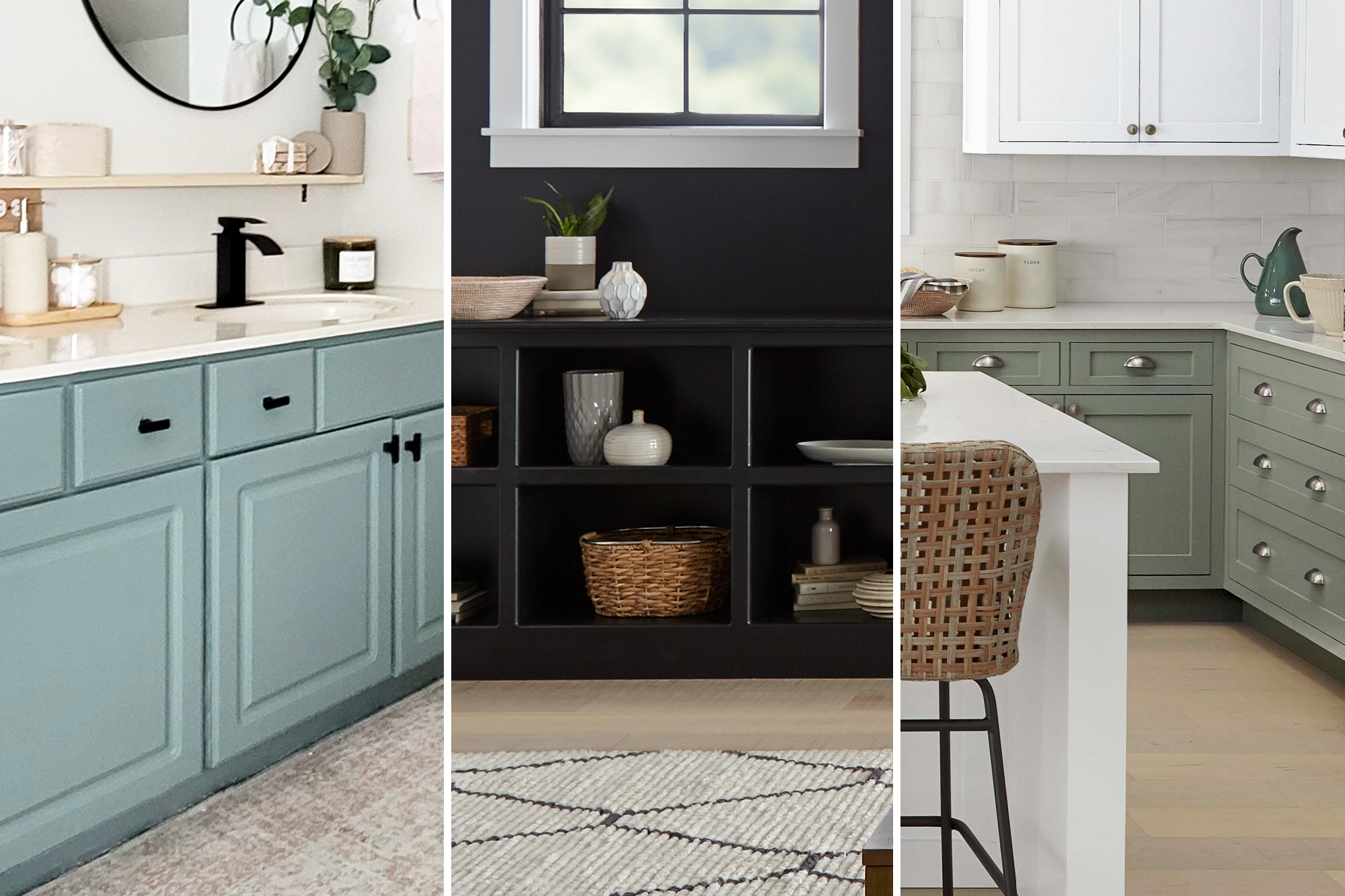
November 17, 2022The end of the year is right around the corner, which means it’s time to look back on some of our biggest accomplishments of 2022. What better way to recap the last 12 months than to revisit some of your favorite projects? From kitchens to bathrooms to living spaces, 2022 did not disappoint. When it came to updating, revamping, and overhauling, the year was full of inspiring home makeovers, so let’s recap some of our biggest standouts, and get excited to tackle another year of home improvement.
1. How to Prime Kitchen Cabinets for Color That Pops
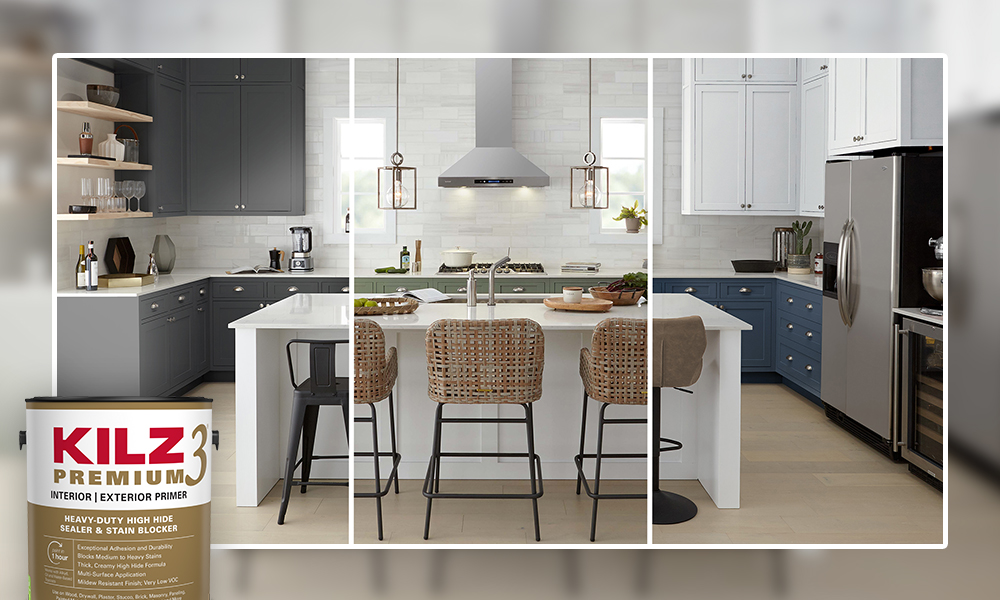
You may remember this gorgeous kitchen update from earlier in the year. This project featured three different kitchen inspirations, all using KILZ 3®PREMIUM Interior and Exterior Primer, which came to life thanks to varied design concepts and paint combos that gave the original space some much needed personality. Two toned kitchen cabinets were a theme for this project, and using subtle, yet distinct colors that played off one another, we achieved a polished effect that would make any pro proud. See the full project.
2. Pro Spotlight: Angela Cacace Creates a Spacious and Fresh Feeling Bathroom
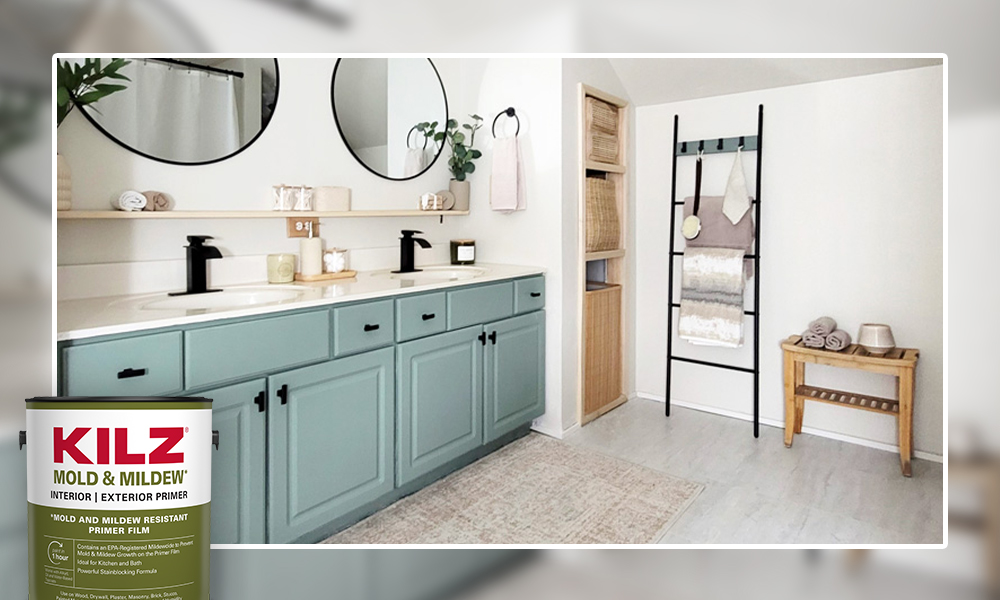
This outdated bathroom was in desperate need of a makeover, and pro designer and contractor, Angela Cacace, took everything from budget to aesthetic to difficulty into consideration. She used KILZ® Mold and Mildew Resistant Primer to start, and then finished the room using light and airy paint selections from the Magnolia Home by Joanna Gaines® collection to make the bathroom feel fresh, bright, and spacious. Achieving the creamy and neutral result was no small feat considering the hot pink “before” color of the walls and the heavy black cabinets. Primer was an absolute must for this project, and the true star of the show. See the full project.
3. Restoration vs. Original – What’s the Difference?
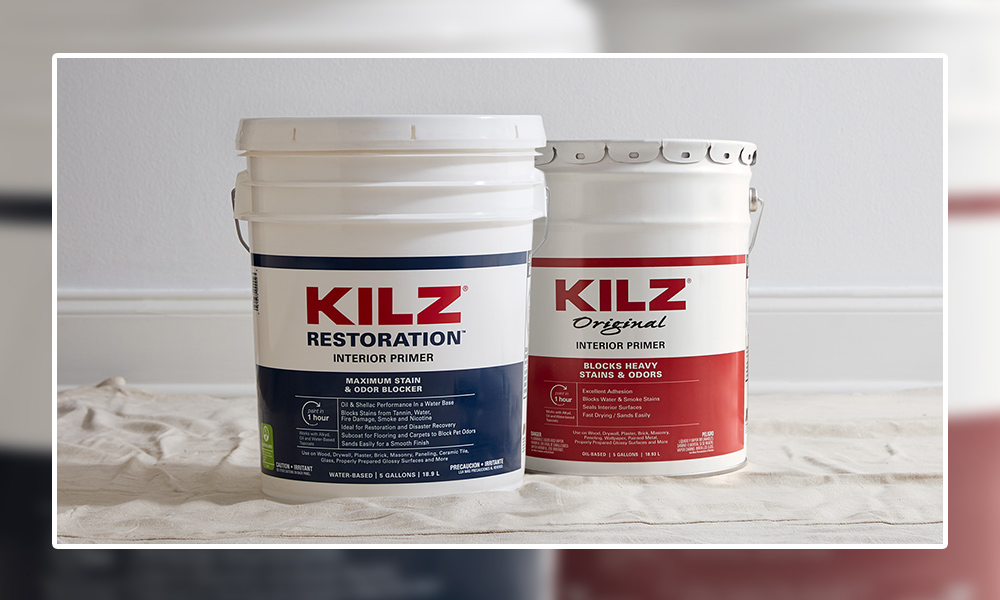
For this article, we talked to John Golamco, Project Manager and Primer Category lead with the KILZ® brand. His 25 years of experience gave him critical insight into this category. He explained the fundamental differences between the primers and compared them in more detail. According to John, KILZ® Original is an oil-based primer that works great for blocking severe stains and odors. It also has a more pungent solvent odor and requires mineral spirits or paint thinner to clean up. KILZ Restoration® on the other hand is a water-based primer that also blocks severe stains and odors but has lower VOCs and meets all national regulations. It’s a low-odor primer and can be cleaned up easily using soap and water. See the full article.
4. PRO SPOTLIGHT: Make A Front Door Pop with Jared Foster
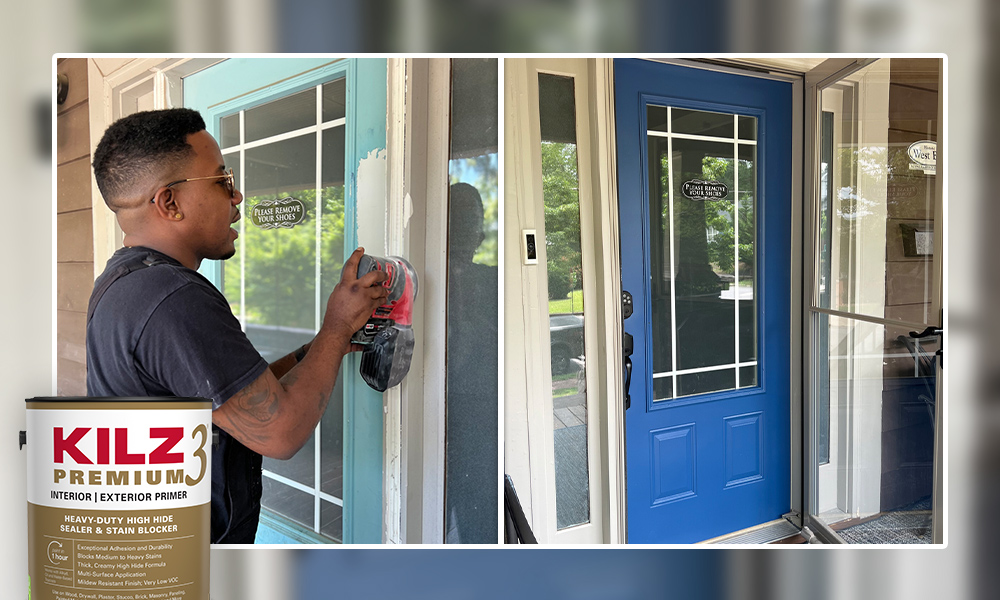
We know a thing or two about details, which is exactly what we wanted to highlight with this front door refresh. Carpenter, Jared Foster, sought to complement the already calm vibe of his front porch with an equally relaxed color scheme, and he walked us through his process in bringing it to life. “Once I laid on the primer and allowed it to dry, I was able to spray the door and trim using BEHR® paint, remove all the paper and tape and enjoy the new look. All and all, this project was completed in 48 hours. Having used KILZ 3® PREMIUM Interior and Exterior Primer,I knew this door color would pop,” said Jared. See the full project.
5. Creating a Family Room that Brings People Together
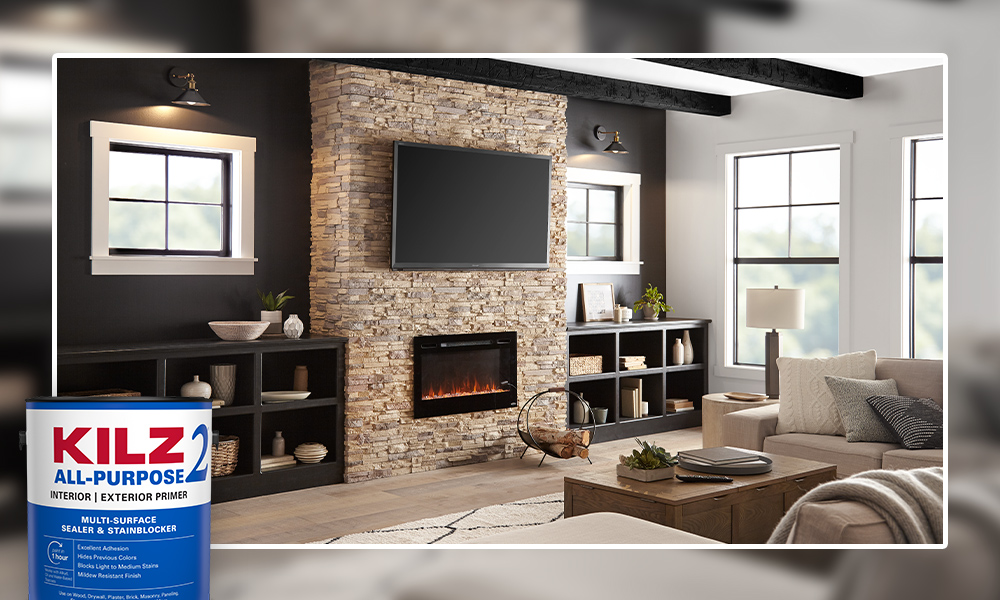
This chic, yet cozy family room makeover was all about encouraging togetherness. Using a modern farmhouse look as inspiration, we crafted a similar feel with soft white paint, dark accents, and intentional décor. Taking the room from light to dark meant priming the walls for the best possible paint application, so we used KILZ 2® All-Purpose Primer, which made the job a breeze thanks to its great adhesion and fast-drying formula. The finished room breathed new life into a familiar space and created a relaxed, yet sophisticated atmosphere, perfect for spending time with loved ones. See the full project.
This was a great year for DIY home makeovers, and even though the year is ending, we’re not slowing down. Whether you’re taking a little break or busy planning next year’s projects, we hope this inspirational list gives you the motivation you need to make your vision come to life. Thanks for spending the year with us. We can’t wait to see what new ideas you’ll bring to life in 2023.
Always remember to refer to our website kilz.com or product back labels for additional information on which primer is right for your project and detailed instructions on how to apply our products. Check out our Coverage Calculator to understand your estimated paint needs for your upcoming project.
RELATED ARTICLES
get inspired:
FOLLOw us:
@kilzbrand
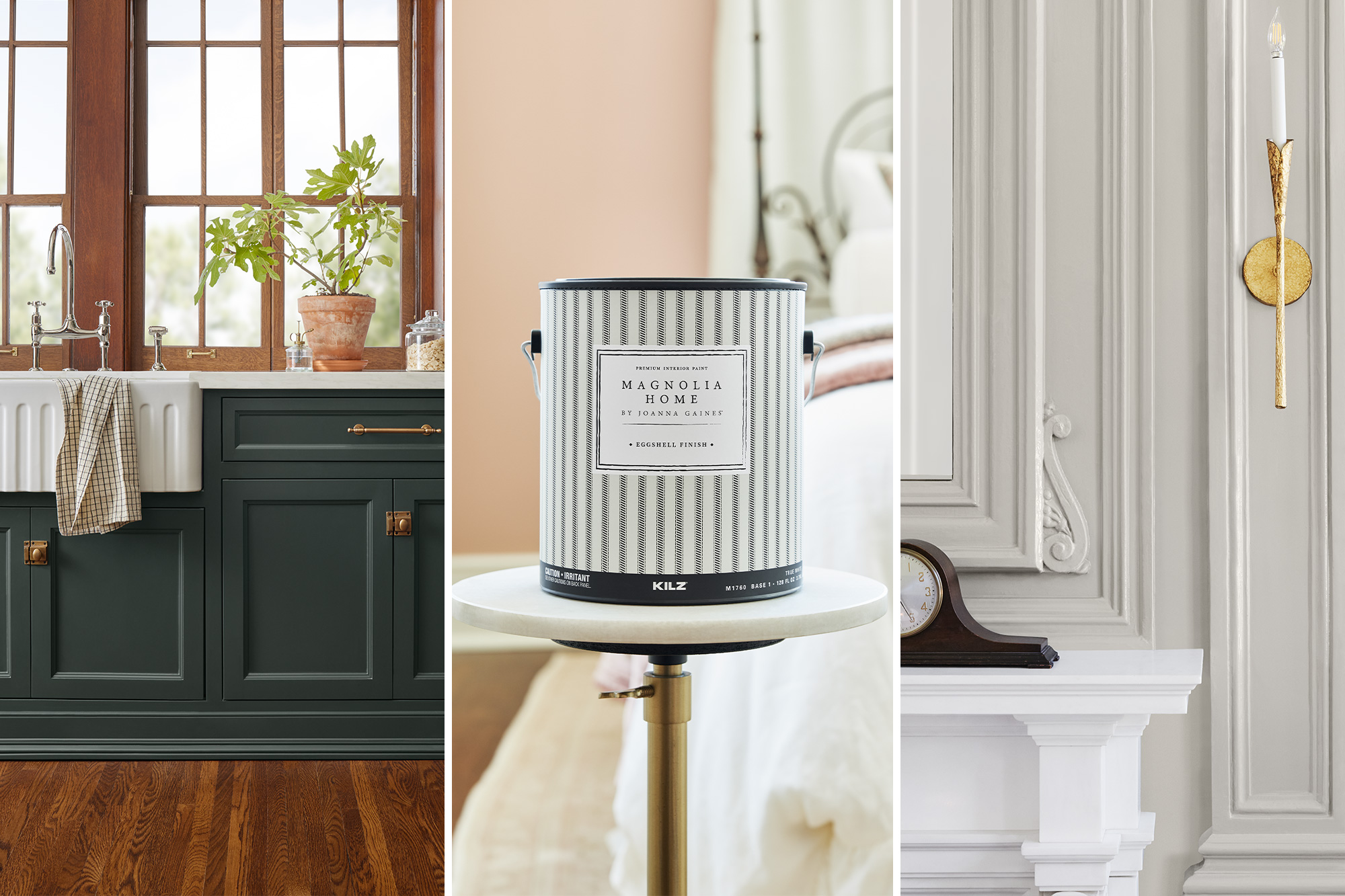
THE CASTLE COLLECTION: TEN NEW COLORS FROM MAGNOLIA HOME BY JOANNA GAINES®
October 14, 2022
The Castle Collection has been released by Magnolia Home by Joanna Gaines®, a paint palette of ten brand new colors inspired by Magnolia’s Castle renovation, a historic landmark in Waco, Texas. The Castle Collection is comprised of ten rich and timeless paint colors that honor the Castle’s history, each specially designed and curated by Joanna Gaines.
“I wanted to honor the history of the castle with rich, unique colors that would complement its grand and traditional aesthetic, while still creating a timeless palette for any style of home.” – Joanna Gaines
The Castle restoration is the centerpiece of the Gaines’s newest season of their hit TV show. A special edition of their series Fixer Upper: The Castle premiered on the Gaines’ Magnolia Network, Discovery+ and HBO Max on October 14th, 2022. The season follows Chip and Joanna through six episodes of the restoration journey, including the development of The Castle Collection color palette.
Different personal connections or Castle inspirations helped Joanna to name each of the ten unique colors from the Castle collection palette. They are used through the completed castle, and will be featured on Fixer Upper: The Castle.

Rosy Pink: A dusty subtle pink with a nostalgic tone

Castle Cream: A creamy, soft white with a timeless essence

Step Stool Green: A lively, deep olive

Cottage Grove: A moody navy infused with a deep green hue

Drawing Room: A soft French Gray

Estate: A deep sage, with a soft gray undertone

Conservatory: A rich and warm dark charcoal gray

Plaster: A light beige with a warm soothing tone
Moody Fig: A beautifully saturated burgundy
Vintage Crown: an elegant, muted gold
These paint colors are now available at Ace Hardware, Lowe’s and Magnolia.com/shop.
Visit Kilz.com/Magnolia for more information on the Castle Collection.
RELATED ARTICLES
get inspired:
FOLLOw us:
@kilzbrand
SHOP
join the conversation:
SHARE this post: